


Heavy Brass Pestle Mortar
These heavy brass pestle mortar sets are solid historical grinding vessels that bring enduring functional utility and rich tactile character to any interior.
Heavy Brass Pestle Mortar
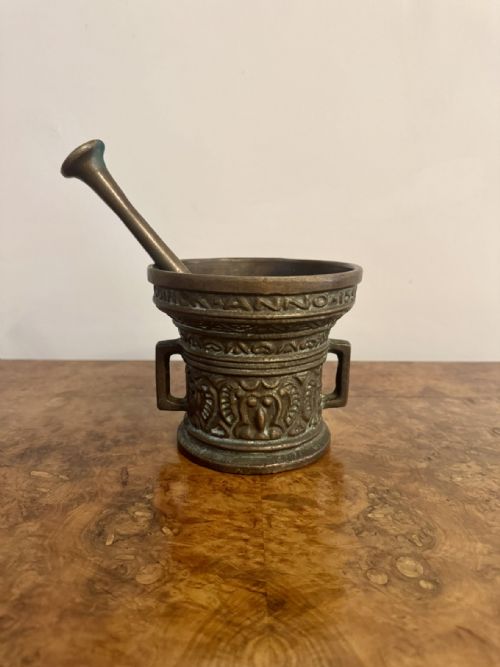
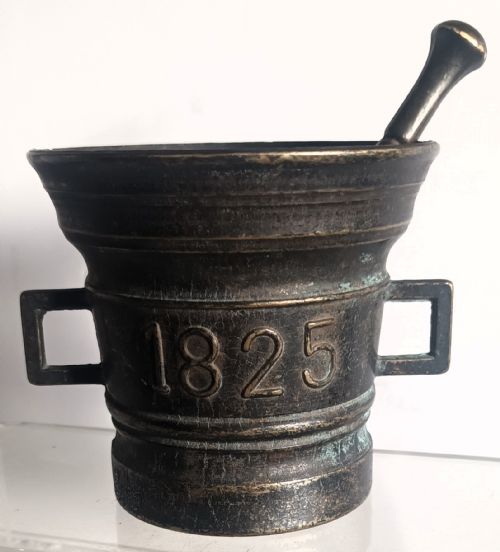
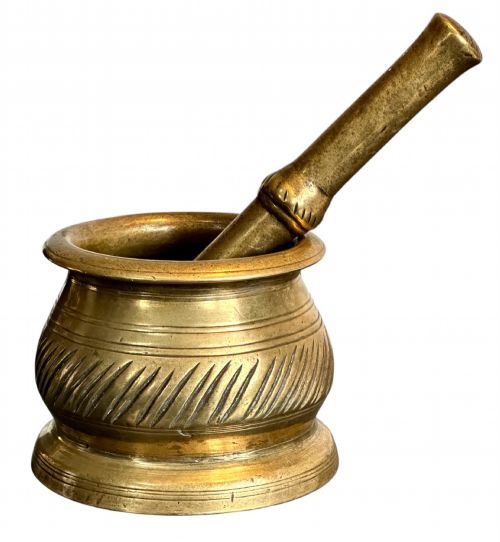
A heavy brass pestle mortar is a utilitarian grinding set historically employed in kitchens, apothecaries, and chemists for reducing herbs, spices, and medical compounds to powders. When you search for this phrase, you encounter robust metal vessels accompanied by matching heavy hand-held grinding rods.
The selections on this page span several centuries, with examples originating from the seventeenth century through the nineteenth century. Most pieces present English domestic or apothecary origins, often manifesting in Georgian or Victorian stylistic traditions.
Forms vary from plain, utilitarian kitchen grinders to more decorative iterations displaying Renaissance Revival or Gothic Revival motifs. The dominant material composition encompasses cast bronze, bell metal, and cast brass, creating substantial weight and density.
What varies in quality
Quality in these grinding sets rests upon the purity and weight of the metal alloy, with bell metal and high-copper bronze examples often exhibiting superior acoustic resonance and durability. Thicker, heavier castings demonstrate greater material substance and withstand centuries of physical use without structural compromise.
The fineness of the exterior surface detailing distinguishes standard kitchen wares from more elaborate apothecary or revival pieces. Sharp, well-defined cast decoration, pleasing proportions, and a harmonious balance between the mortar and its original pestle elevate the standing of an individual set.
Materials recorded on this page include bronze, brass, cast bronze, bell metal, and cast brass.
The Heavy Brass Pestle Mortar Glossary
- Pestle
- The heavy, club-shaped hand tool used for pounding and grinding substances against the interior base of the mortar. Its weight dictates the efficiency of the grinding action.
- Bell Metal
- A hard alloy consisting of copper and tin, historically utilised for both bells and high-grade mortars. It produces a clear, ringing tone when struck.
- Apothecary
- A historical practitioner who prepared and sold medicines and drugs. Mortars belonging to this trade often display robust proportions suited to pharmaceutical compounding.
- Renaissance Revival
- A nineteenth-century stylistic movement drawing inspiration from Renaissance art and architecture. Pieces in this style often incorporate classical motifs and ornamental relief bands.
Heavy Brass Pestle Mortar: Frequently Asked Questions
What were heavy brass pestle mortars used for?
These vessels served as essential tools for grinding dry ingredients, crushing seeds, and compounding medicines in both domestic kitchens and professional apothecary shops.
The heavy weight of the metal allowed users to pulverize tough botanical matter and chemical crystals into fine powders with minimal physical effort.
How do I date an antique mortar?
Dating relies on examining the casting style, rim profiles, surface decoration, and any associated foundry marks or wear patterns. Earlier seventeenth-century examples often feature simpler, thicker profiles with flared rims.
Later Victorian and revival pieces frequently incorporate more ornate decorative bands and standardised manufacturing techniques indicative of nineteenth-century production.
Are bronze and brass mortars different?
Yes, bronze is an alloy primarily of copper and tin, whereas brass is an alloy of copper and zinc. Both metals appear frequently in historical listings due to their strength and corrosion resistance.
Bronze often yields a darker, richer patina and heavier acoustic resonance, particularly when formulated as bell metal.
How should I clean my mortar?
Maintenance requires gentle dusting and occasional wiping with a soft, dry cloth to preserve the accumulated historical patina. Harsh chemical cleaners and abrasive polishes strip the aged surface character.
Allowing the natural oxidation to remain intact maintains the visual integrity and historical appearance of the metal.
Do the pestle and mortar always match?
Many surviving sets keep their original matching pestle through centuries of use, though some pairings assembled over time occur due to the loss of the original tool. A matching set demonstrates consistent wear, metal composition, and stylistic execution across both pieces.