


Hearth Storage Box
A hearth storage box keeps your fuel close to the fire while keeping the room tidy, moving from humble pine bins to polished brass scuttles.
Hearth Storage Box
When you search for a hearth storage box, you encounter a practical fireside container designed to hold coal, logs, or kindling near the fireplace. The selection spans straightforward utility to decorative household objects.
You are most likely to meet Victorian and Edwardian examples in timber and metal. Oak coal boxes, often called purdoniums, sit alongside brass bins and pine log boxes from the nineteenth century.
Origins stretch from English country houses to Scandinavian country kitchens, taking the form of coal scuttles, log bins, and fireside stores. Each piece reflects the fuel storage needs of period rooms.
Materials and construction
Makers utilised sturdy timbers including oak, mahogany, walnut, and pine, frequently combining them with metal liners to handle loose fuel. Iron bands, brass hinges, and copper plating added structural strength and decorative contrast.
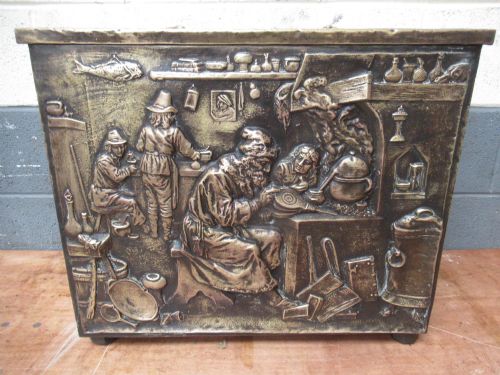
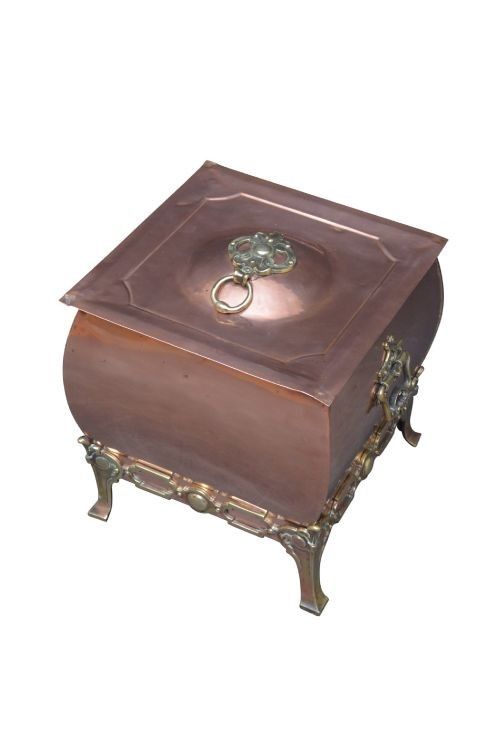
Metals such as brass and copper were beaten, cast, or riveted into scuttles and bins, sometimes featuring repoussé decoration or applied galleon designs. Hand-woven pine and blacksmith-made iron elements display traditional craftsmanship suited to daily hearth use.
What separates the examples
Quality rests on the integrity of the construction and the retention of original internal components. Pieces featuring intact metal liners, matching shovels, and sound timber framing demonstrate superior survival.
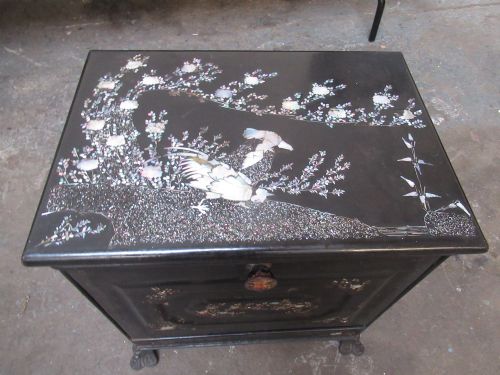
Refinement in surface treatment distinguishes standard utility items from finer examples. Inlaid woodwork, carved details, and substantial gauge brass elevate a simple fuel container into an accomplished decorative object.
The Hearth Storage Box Glossary
- Purdonium
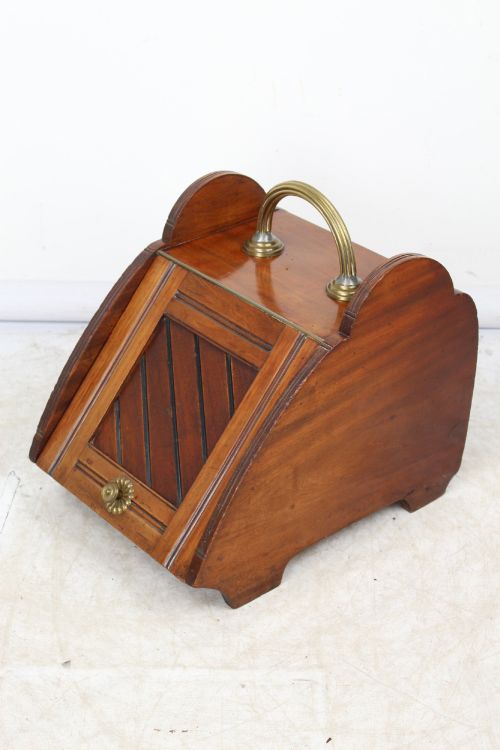
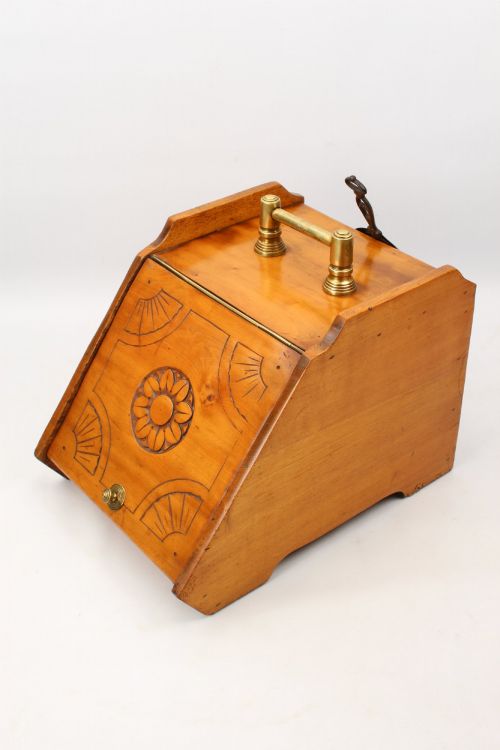
- A specialised coal box featuring a sloping front door and an internal metal liner designed for domestic hearths. They often incorporate a dedicated compartment for a small coal shovel.
- Coal Scuttle
- A deep bucket or container with a handle and lip designed for carrying and pouring fuel onto a fire. Brass and copper versions were polished for display beside the hearth.
- Log Bin
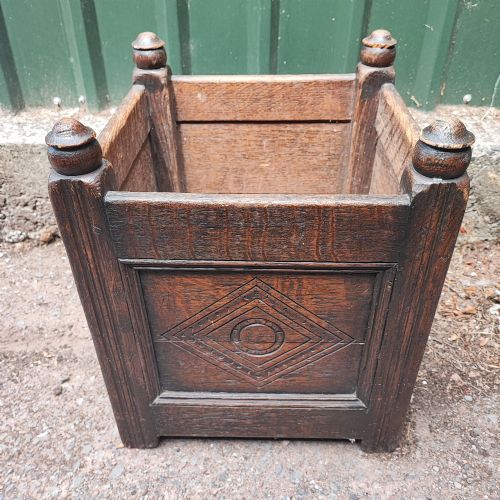
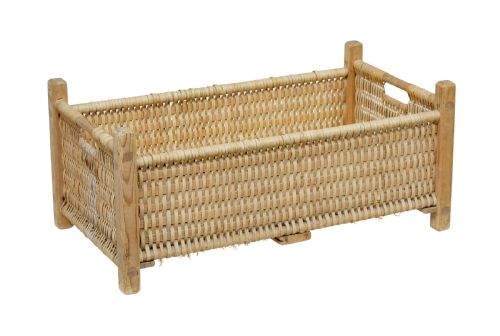
- A large container built to hold firewood rather than loose coal. These frequently appear in heavy oak, pine, or iron-banded timber construction.
- Aesthetic Period
- A late nineteenth-century design movement emphasising visual beauty over narrative meaning. Pieces from this time show distinct decorative motifs and disciplined form.
Hearth Storage Box: Frequently Asked Questions
What is a purdonium?
A purdonium is a dedicated Victorian or Edwardian coal box with a hinged, sloping front panel that drops open to reveal a metal container. This mechanism prevents coal dust from escaping onto the hearth.
Most examples include matching internal metal liners and side brackets to hold a small coal shovel. They combine functional fuel storage with polished cabinetwork suited to a formal drawing room.
How do I use a coal box today?
These boxes adapt easily to modern living as storage for firewood, kindling, or magazines beside an active fireplace or wood burner. Their original metal liners protect the outer wood or metal from dampness and debris.
Placing logs inside a period copper bin or oak box adds practical utility and texture to a room. They keep hearth accessories contained while displaying traditional craftsmanship.
Are these boxes meant for coal or wood?
The listings include containers built specifically for either fuel type, determined by their size and internal construction. Smaller scuttles and purdoniums were made for loose coal, while larger bins accommodated logs.
Inspecting the interior reveals whether a metal liner was intended for dusty coal or if the open timber space was meant for stacking dry wood. Many versatile bins suit either purpose in a modern setting.
How do I date a brass coal scuttle?
Dating relies on manufacturing techniques, handle fixings, and overall style characteristics such as Art Nouveau motifs or Victorian proportions. Heavier gauge metal and riveted construction often point to the nineteenth century.
Details like stamped maker marks or specific hinge types help narrow the period of production. Comparing the form to dated examples clarifies whether a piece originates from the Victorian era or later.