

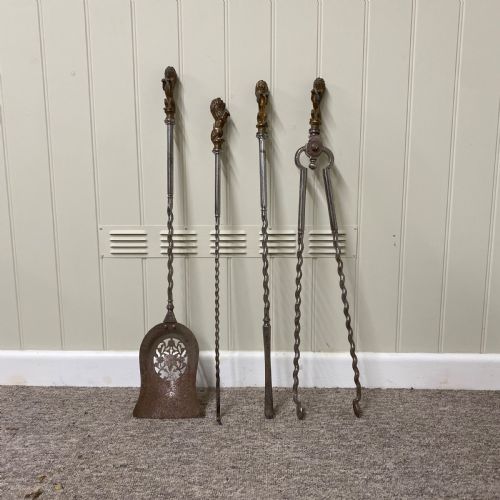
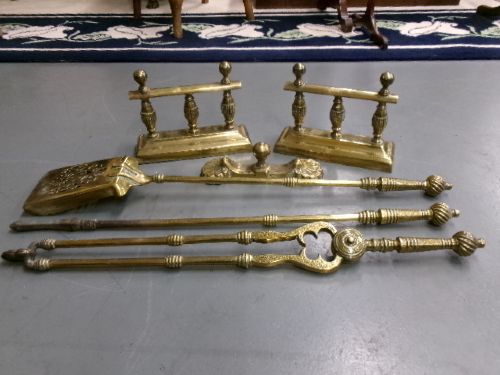
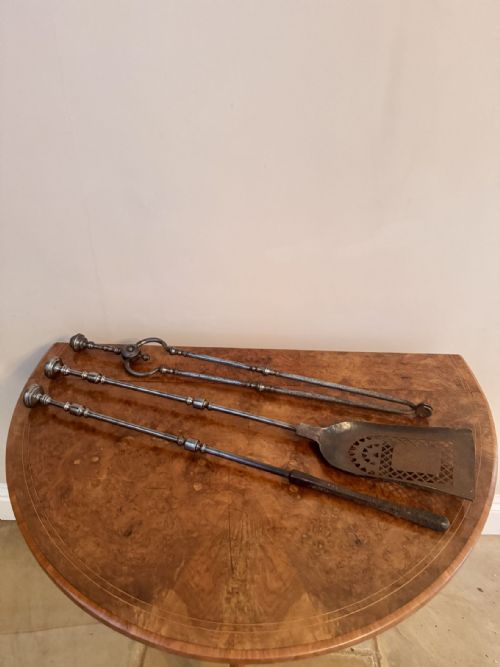
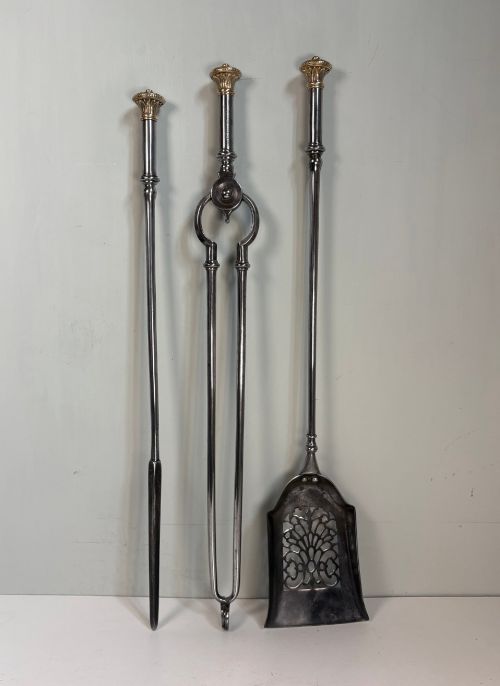




Hearth Poker and Shovel
These hearth poker and shovel sets are utilitarian metal implements designed to manage coal and wood fires while maintaining the decorative order of the fireplace.
Hearth Poker and Shovel
When you search for a hearth poker and shovel, you are looking at sets of metal implements created to tend domestic fires across the Georgian, Victorian, and Edwardian periods.
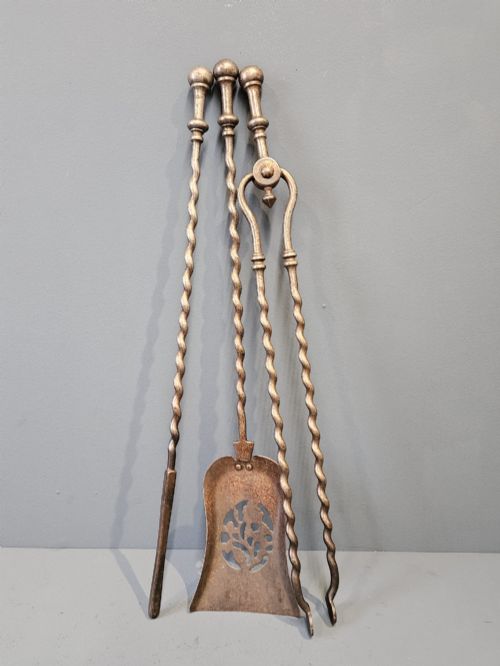
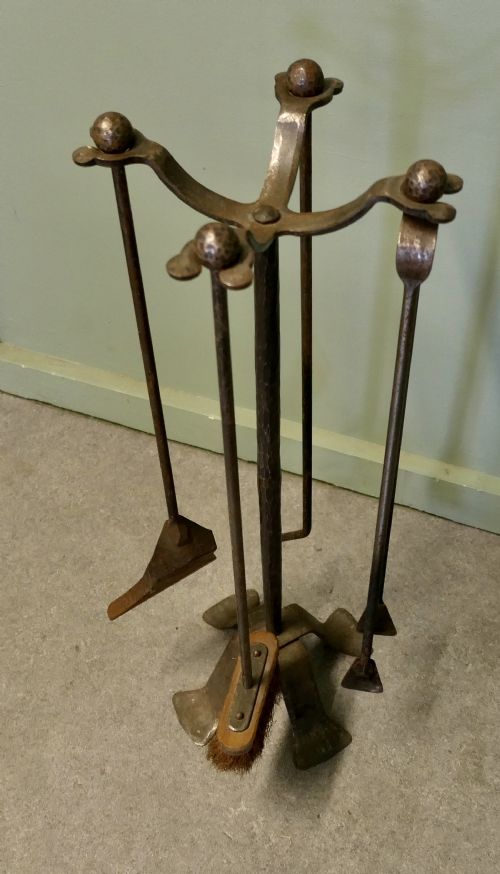
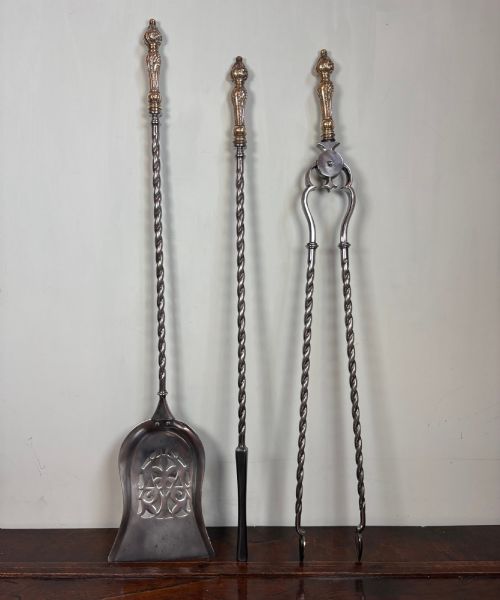
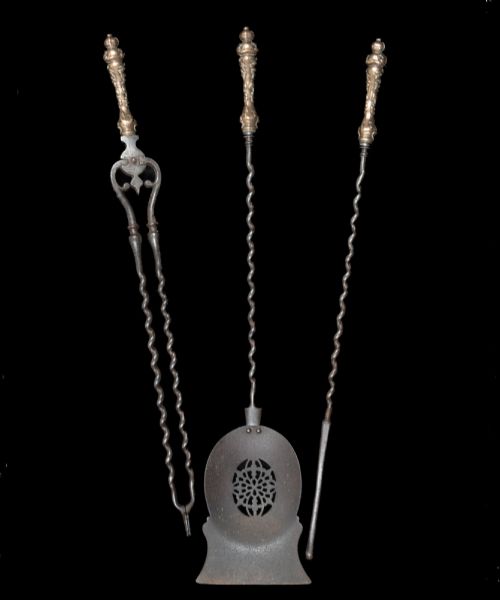
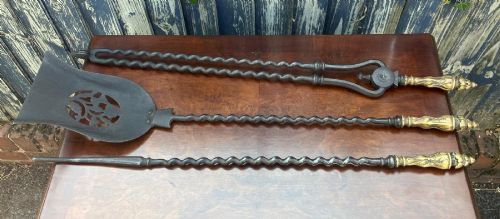
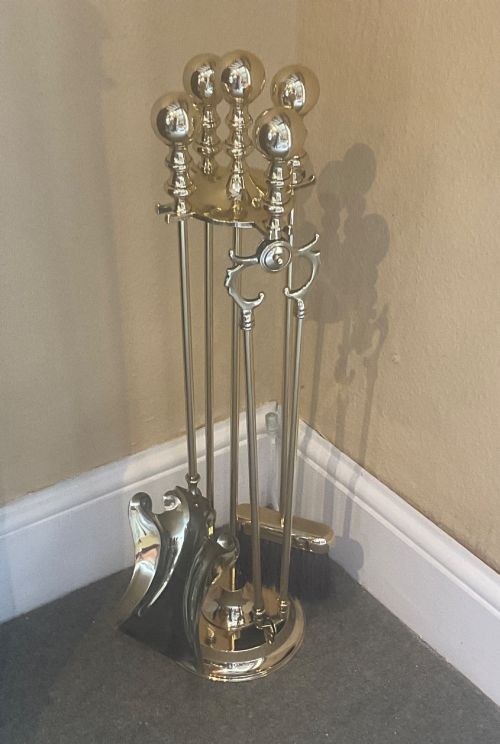
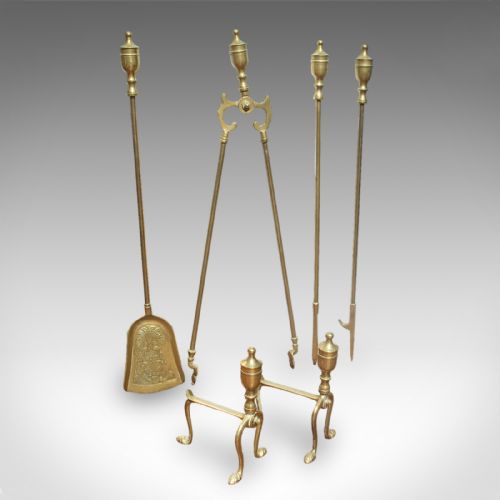
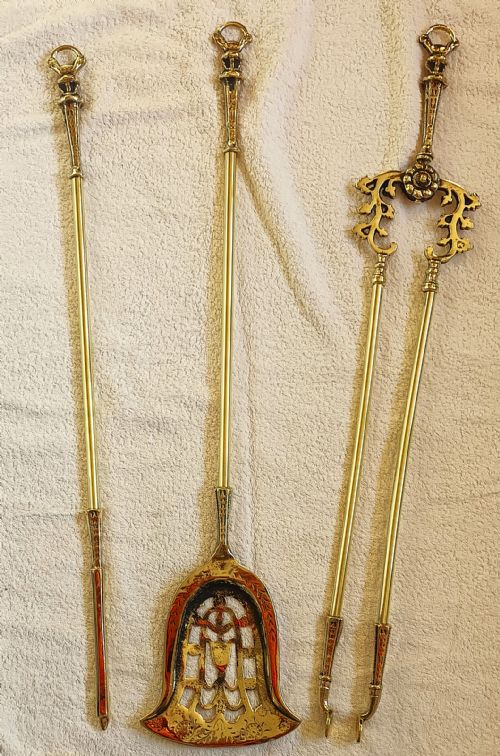
The pieces on this page typically arrive as matched assemblies of three or more tools, combining the poker for stirring embers, the shovel for clearing ash, and often companion tongs.
Originating largely from English country houses and town dwellings, these sets range from austere steel designs to ornamental brass suites complete with fire dogs.
Materials and construction methods
Blacksmiths and metalworkers shaped these tools from durable ferrous metals, forging iron and steel to withstand intense hearth heat without warping or fracturing.
Brass elements and decorative handles appeared through casting and turning, frequently soldered or pinned securely to the primary shafts.
Specialised finishes such as polished steel and gunmetal provided a brighter, light-reflecting surface suitable for formal drawing-room hearths.
Hearth Poker and Shovel Retail Price Guide 2026
Typical asking prices for hearth poker and shovel among the pieces listed under this phrase on Sellingantiques today, from the lower quarter to the upper quarter. They describe what is for sale here now, not the wider market.
Some nineteenth-century pokers bear subtle battle scars from generations of enthusiastic coal-stokers.
Assessing build quality and material integrity
The distinction between ordinary utility items and superior examples lies in the weight of the metal and the precision of the joints between handle and shaft.
Tougher wrought iron and deeply polished steel indicate higher workshop standards, whereas inferior pieces rely on hollow cast brass that dents easily under strain.
Consider the handling balance and the tactile finish of details like rope twist grips, which reveal the patience of the original maker.
The Hearth Poker and Shovel Glossary
- Companion set
- A matched group of fireplace tools, usually comprising a poker, shovel, and tongs, housed together on a stand or near the fender.
- Fire irons
- The collective term for long-handled metal tools used to manage a coal or wood fire, kept beside the hearth.
- Rope twist
- A decorative spiral pattern chased or turned into the metal shaft or handle of a tool to catch the firelight.
- Fire dogs
- Andirons placed inside the hearth to support burning logs, frequently found accompanying period tool suites.
Hearth Poker and Shovel: Frequently Asked Questions
How were these tools used daily?
Servants or homeowners utilised the poker to break up cinders and encourage airflow through the fuel bed. The shovel cleared fallen ash from the grate bottom to keep the hearth clean.
Together, the matched set kept the fire burning efficiently while remaining visually presentable for guests in the principal rooms.
Where should I place a companion set?
These metal tool sets rest naturally directly beside the fireplace opening, often nestled against the fender or supported by dedicated fire dogs.
Ensure they sit clear of heavy foot traffic while remaining within arm's reach for tending the flames during colder months.
How do I clean antique steel tools?
Polished steel and iron require dry maintenance to prevent active rust from forming in damp domestic environments. Lightly wiping them with an oiled cloth preserves the original sheen.
Avoid abrasive metal polishes on historic surfaces, as excessive scrubbing removes the patination accumulated over centuries.
How do I date a brass and steel set?
Georgian iterations lean toward restrained steel forms with minimal brass accents, reflecting neoclassical taste. Victorian and Edwardian examples introduce heavier cast brass, rope twist handles, and Rococo styling.
Examining the fastening methods and the specific alloy composition helps anchor the pieces to their nineteenth or early twentieth-century origins.