





Hearth Accessory Bin
These hearth accessory bin designs are practical fuel containers shaped by centuries of fireside use.
Hearth Accessory Bin
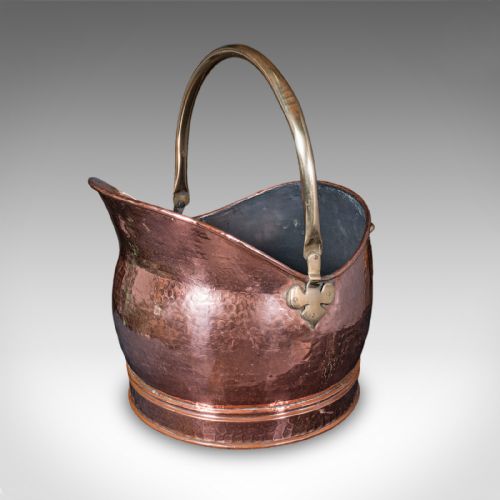
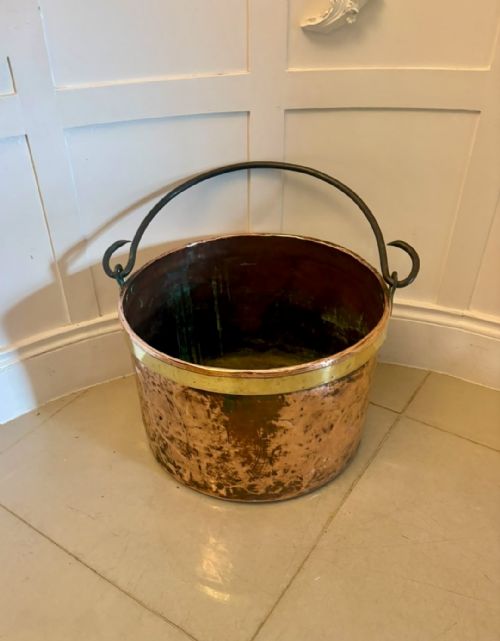
A hearth accessory bin serves as a functional storage vessel for coal, logs, and kindling beside the fireplace. When you search for a hearth accessory bin, you encounter utilitarian copper and brass buckets alongside elaborate wooden scuttles and boxes.
The material selection ranges from traditional oak and rosewood to beaten copper, cast iron, and polished brass. Many examples date from the Victorian and Edwardian eras, incorporating styling from Georgian, Arts and Crafts, and Art Nouveau periods.
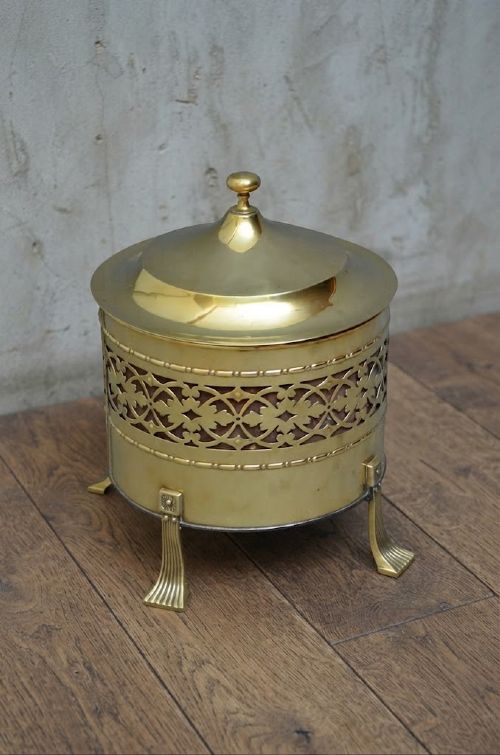
Common formats include lidded buckets, helmet scuttles, copper planters utilised as log bins, and metamorphic wooden boxes fitted with original metal liners. These pieces reflect domestic heating needs across the eighteenth, nineteenth, and early twentieth centuries.
Construction and materials
Metal vessels rely heavily on sheet brass and copper, frequently joined with hand-beaten rivets, embossed decorative panels, and brass banding. Iron appears in structural frames, handles, and heavy-duty fire buckets, while wrought iron forms simpler fuel keepers.
Wooden bins employ traditional joinery techniques including coopered staves for cylindrical fire buckets, carved oak panels, and inlaid rosewood surfaces. Many containers incorporate applied brass mounts, swing handles, and internal metal liners designed to contain ash and debris.
Hearth Accessory Bin Retail Price Guide 2026
Typical asking prices for hearth accessory bin among the pieces listed under this phrase on Sellingantiques today, from the lower quarter to the upper quarter. They describe what is for sale here now, not the wider market.
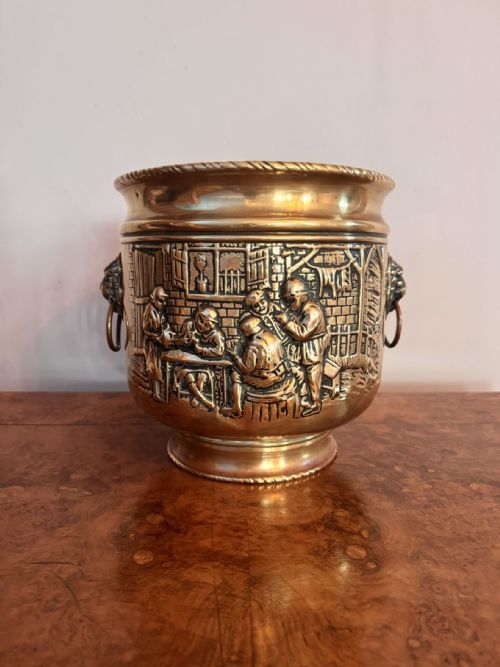
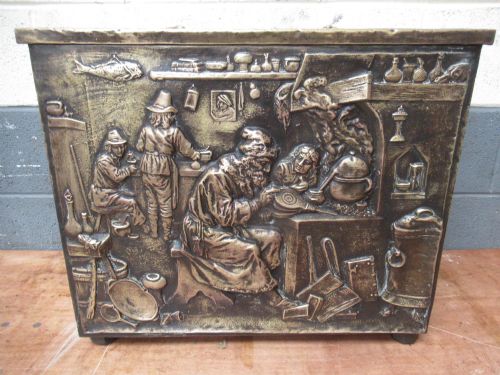
Some Victorian brass coal buckets feature cheerful embossed tavern scenes, bringing a local alehouse atmosphere directly to the fireside rug.
Judging quality and execution
Superior examples distinguish themselves through the thickness of the metal gauge, the crispness of repoussé embossing, and the integrity of dovetailed or coopered joints in wooden models. Finer pieces retain original components such as matching shovels, interior liners, and sturdy swing handles.
Decorative ambition separates standard utility items from top-tier work, seen in specialised fretwork, aesthetic movement motifs, tavern scene engravings, and fine timber veneers like walnut or rosewood.
The Hearth Accessory Bin Glossary
- Coal scuttle
- A container designed to hold coal for domestic fires, often featuring a funnel shape or a hinged lid for easy pouring.
- Purdonium
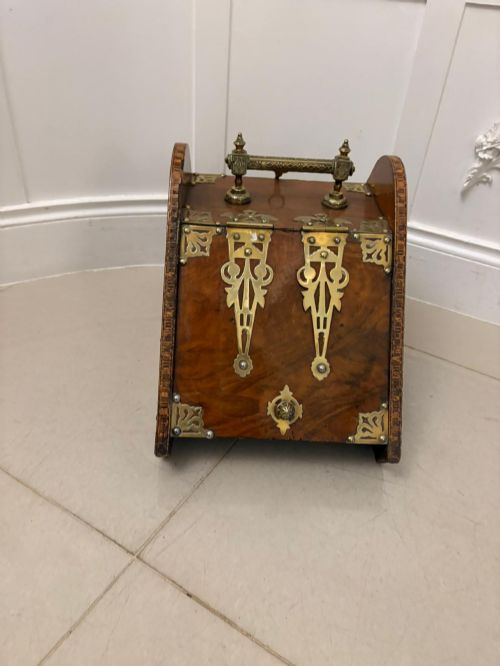
- A specific type of Victorian coal box, frequently constructed from wood with an inclined front and a drop-down door concealing a metal liner.
- Coopered
- Built using wooden staves bound together with metal hoops, a traditional method borrowed from barrel-making for sturdy fire buckets.
- Repoussé
- A metalworking technique where the design is hammered into relief from the reverse side, commonly seen on Victorian brass and copper bins.
- Metamorphic
- Describing a piece of furniture that transforms its function, such as a wooden coal scuttle that conceals its storage compartment behind decorative cabinetry.
Hearth Accessory Bin: Frequently Asked Questions
What is a hearth accessory bin used for?
These bins store solid fuel such as coal, logs, and kindling directly beside an open fire or stove. They keep hearth areas tidy while ensuring fuel remains within easy reach.
Historically, they also housed tools and protected flooring from loose debris and dust associated with solid fuel heating.
How do I date a brass or copper bin?
Dating relies on manufacturing techniques, material choices, and decorative styles visible on the body and handles. Georgian and early nineteenth-century pieces often feature heavier hand-hammered construction and simpler brass banding.
Victorian and Edwardian versions introduce machine rolling, elaborate embossed patterns, and specific artistic movements like Arts and Crafts or Art Nouveau.
Are these bins still practical for modern firesides?
Most antique bins function effectively for storing logs and kindling in modern living spaces. Many retain their original metal liners, which protect wooden or metal structures from moisture and dirt.
Care should be taken with unlined wooden models to prevent damp wood from marking internal surfaces.
What materials are typical for these fuel containers?
Metals dominate the category, with polished brass and warm copper being the most widespread choices for buckets and scuttles. Iron and wrought iron provide sturdy alternatives for industrial or simpler country house settings.
Wooden varieties utilise oak, rosewood, and walnut, frequently incorporating coopered staves or fine cabinetry details.