



Heart Picture Frame
Heart picture frame pieces are silver and wood keepsakes from the Victorian, Edwardian and later periods, offering a sentimental way to display personal portraits.
Heart Picture Frame
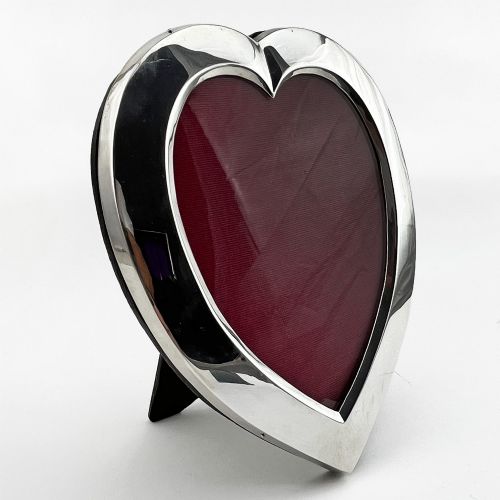
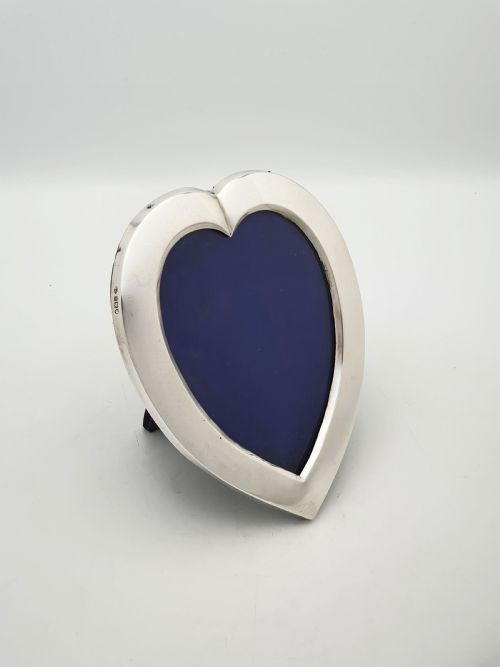
A heart picture frame unites romantic symbolism with domestic display, appearing most frequently in sterling silver across this selection. These pieces date predominantly from the late nineteenth century and the Edwardian era, spanning the Victorian, George V and 1940 periods.
The dominant material format is sterling silver mounted over wooden backs, often complemented by original velvet or fabric linings. While dedicated heart-shaped photo frames represent the core of these listings, related items include double silver picture frames and classical prints.
Materials and construction
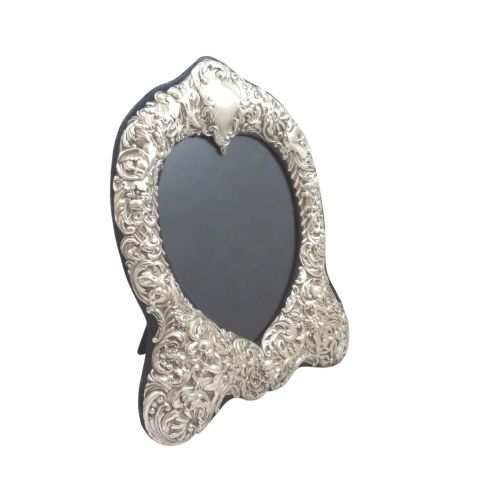
Silversmiths constructed these frames using sterling silver sheets, which were frequently embossed, pierced or planished by hand. Makers mounted the metalwork onto supportive wooden backings lined with velvet, glass and paper elements.
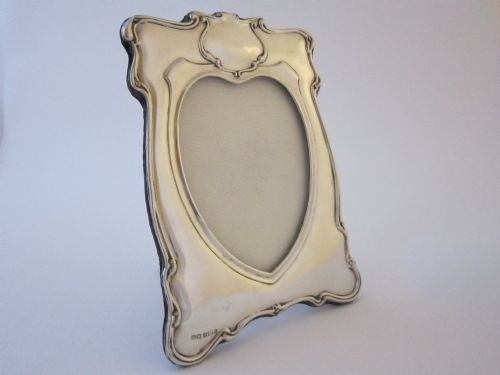
Moulding and planishing techniques defined the surface textures, ranging from smooth polished finishes to the characteristic undulating curves of the Art Nouveau style.
One historical frame preserves its original red velvet, ready to cradle a Victorian portrait for eternity.
Distinctions in quality
Quality rests in the crispness of the silversmith's chasing and the robustness of the structural backing. Substantial gauge silver maintains its integrity around the curved margins better than lighter metals.
The survival of original components, such as velvet linings and glass panels, distinguishes a complete example from one with replaced elements.
William Comyns·Syner and Beddoes
The Heart Picture Frame Glossary
- Sterling silver
- A silver alloy containing 92.5 percent pure silver and 7.5 percent other metals, usually copper, providing durability for decorative metalwork.
- Planished
- A metal surface finish achieved by hammering with a polished tool, leaving subtle, flat facets across the silver.
- Art Nouveau
- A decorative style characterised by fluid, organic lines and asymmetrical motifs, prominent during the Edwardian period.
- Velvet
- A tufted fabric with a dense, short pile, frequently used as an internal backing material in period picture frames.
Heart Picture Frame: Frequently Asked Questions
What periods do these frames represent?
The pieces span the Victorian, Edwardian, George V and mid-twentieth-century eras. Most examples date between 1890 and 1920.
Craftsmanship during this window relied heavily on sterling silver and traditional hand-finishing techniques.
How were these frames used?
They served as desktop or mantelpiece ornaments designed to hold cherished portrait photographs of family members. The heart shape added a specific sentimental dimension to personal gifting.
Many incorporated wooden struts at the rear to allow upright placement on domestic surfaces.
Are the backings original?
Survival rates for original wooden struts and fabric linings vary across the inventory. Many retain their early velvet or paper components.
Inspecting the interior materials reveals the standard of period preservation.
How do I identify Art Nouveau examples?
Art Nouveau pieces display characteristic flowing lines, plant motifs and planished silver surfaces. These design traits emerged strongly around the turn of the twentieth century.
Such frames break away from strict geometric symmetry in favour of organic curves.