
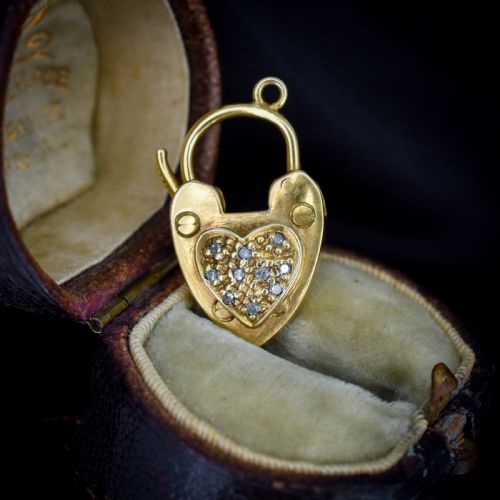
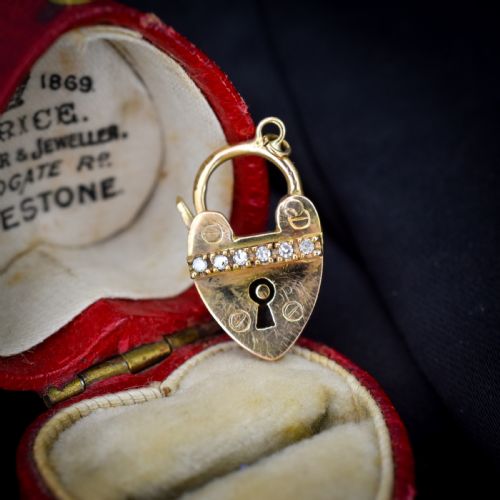


Heart Padlock Clasp
These heart padlock clasp pieces are enduring symbols of affection, securing bracelets and pendants with distinct Victorian and Edwardian character.
Heart Padlock Clasp
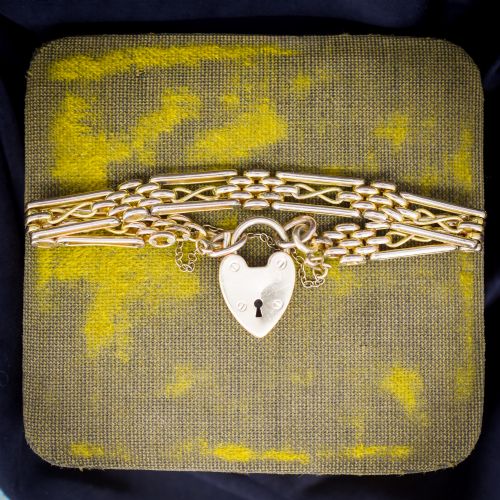
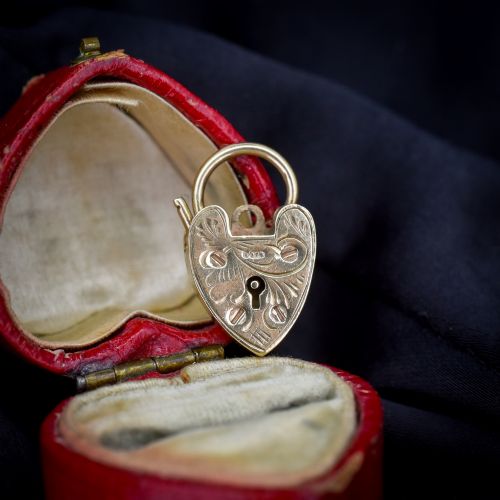
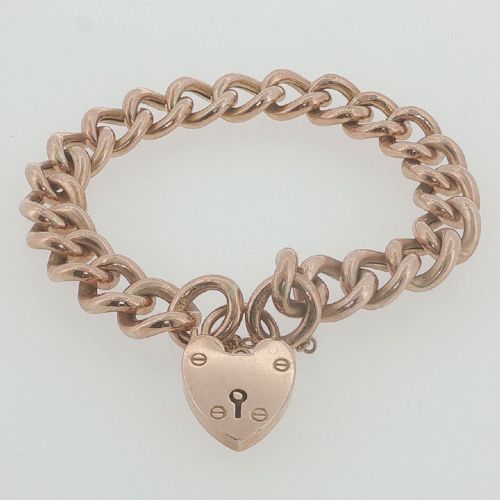
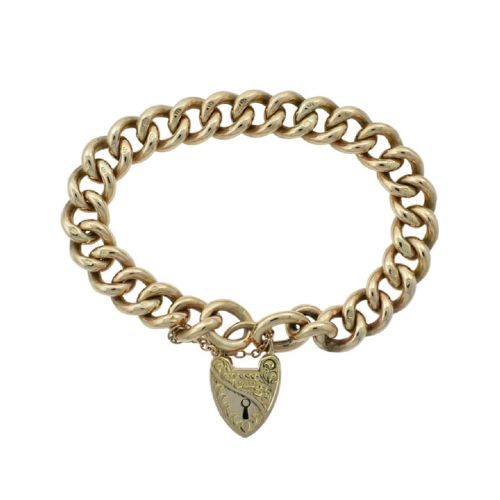
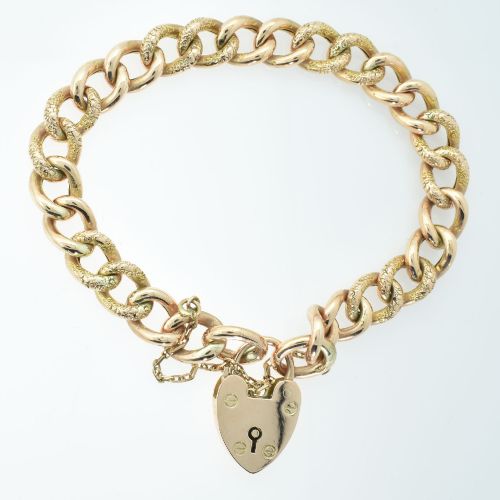
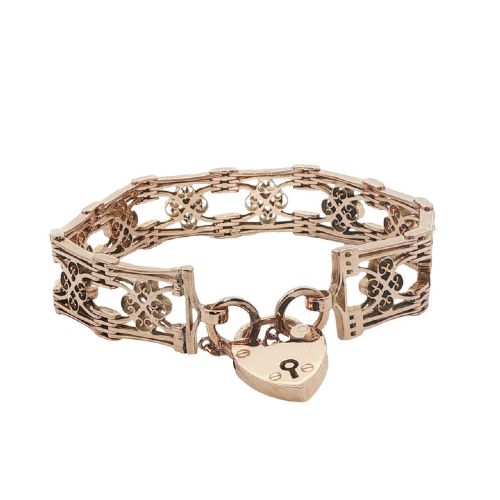
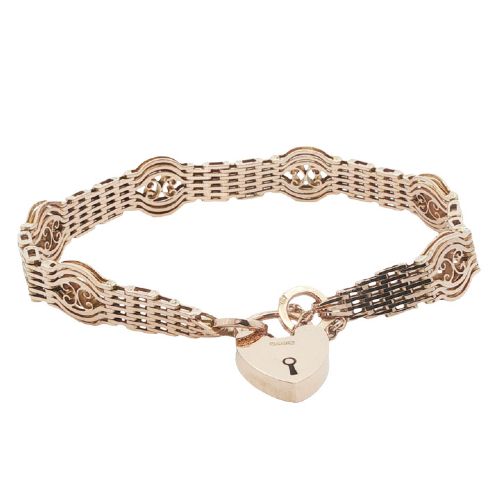
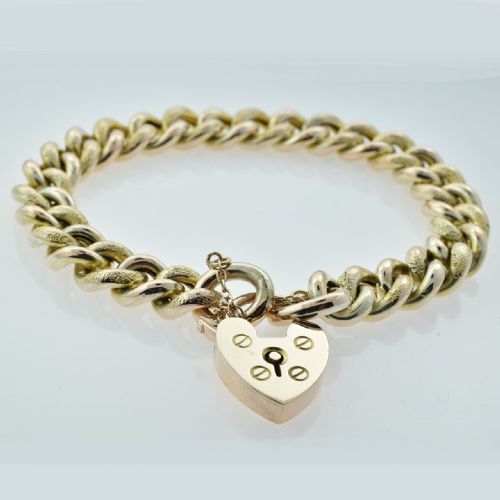
When you search for a heart padlock clasp, you encounter charming functional jewellery components and pendants dating from the Victorian and Edwardian eras, through to the 1960s. The most common forms are secure fasteners attached to curb link or gate bracelets, or worn independently as charms and pendants.
Many examples incorporate decorative engraving, while others feature gem-set faces adorned with diamonds, rubies, pearls, or amethysts. These pieces originate from distinct historical periods including the late Victorian era, 1900, 1910, and mid-century revivals.
Bracelets fitted with a heart padlock clasp often utilise robust curb links or intricate knot designs. Pendants present the familiar padlock silhouette as a standalone charm, sometimes designed as an opening purse.
Materials and Construction
The materials recorded in these pieces rely heavily on various iterations of 9ct gold, specifically 9ct rose gold and 9ct yellow gold, alongside rolled gold variants. Goldsmiths utilised these metals to form durable chains, gate bracelets, and the hollow or solid bodies of the padlocks themselves.
Gemstones such as diamonds, rubies, pearls, and amethysts are flush or prong-set into the gold surfaces to enhance the visual appeal. Artisans applied hand engraving techniques to create intricate patterns across the front of the padlock and surrounding links.
Materials across the selection range from 9ct rose gold and yellow gold to rolled gold, incorporating pearls, diamonds, rubies, and amethysts.
Assessing Quality and Craftsmanship
The quality of a heart padlock clasp rests upon the crispness of the hand engraving and the structural integrity of the spring mechanism. Finer examples maintain a crisp, deep chasing that retains its definition through decades of use.
The choice of materials also dictates the tier of the piece, with solid 9ct rose gold and multi-gem settings representing a higher standard of manufacture compared to rolled gold alternatives. Hallmarks stamped into the metal provide crucial evidence of origin and standard.
The Heart Padlock Clasp Glossary
- Heart padlock clasp
- A secure fastening shaped like a heart, typically used on antique bracelets and occasionally worn as a pendant.
- Curb link
- A type of chain composed of identical links that lie flat when interlocked. It forms the primary structure for many traditional charm bracelets.
- Gate bracelet
- A style of bracelet constructed from parallel vertical bars linked together by small connecting chains. They frequently feature a padlock fastening.
- Rolled gold
- A material made by fusing a thin layer of gold to a base metal core. It offers the appearance of solid gold at a different tier of manufacture.
- Hallmark
- An official stamp applied to precious metals indicating purity and origin. Assay offices in cities such as London and Birmingham administered these marks.
Heart Padlock Clasp: Frequently Asked Questions
What is a heart padlock clasp?
A heart padlock clasp is a secure mechanical fastener shaped like a heart, designed primarily to secure antique curb link and gate bracelets.
They also function independently as charms and pendants, suspended from chains.
How do you open a heart padlock clasp?
Most padlocks operate using a small internal spring mechanism accessed by pressing a tiny protruding nib or lever on the side or base.
The hinged bail then swings open to release the bracelet ring.
Are these padlocks solid gold?
The listings show pieces made from solid 9ct rose gold and 9ct yellow gold, alongside rolled gold alternatives.
Assay office hallmarks often confirm the specific gold standard and origin.
What styles are common?
Common styles include Victorian and Edwardian curb link bracelets, gate bracelets, and engraved padlock charms.
Some feature gemstones like rubies, pearls, amethysts, and diamonds.
When were these pieces made?
The records span the Victorian era, Edwardian period, and specific years around 1900, 1906, 1907, 1908, 1910, and the 1960s.
Victorian revival styles also appear across the selection.