



Heart Link Bracelet
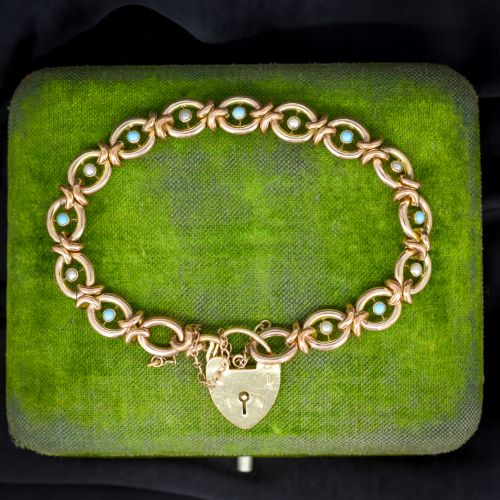
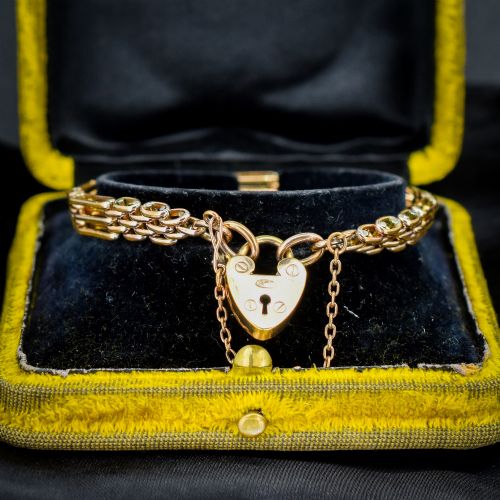
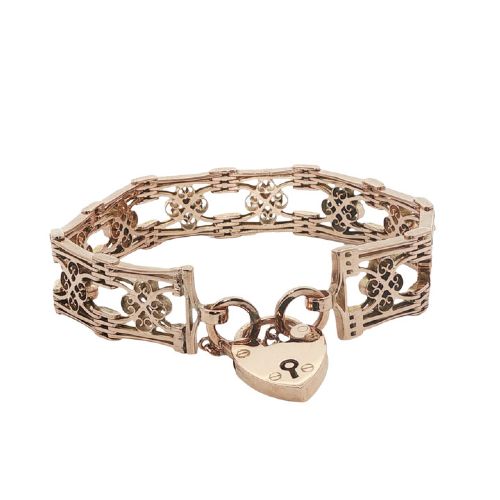
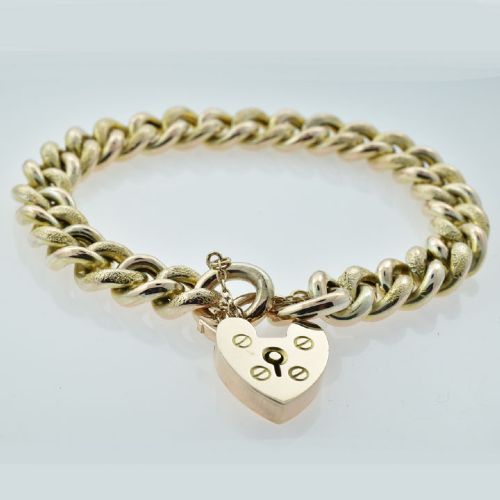
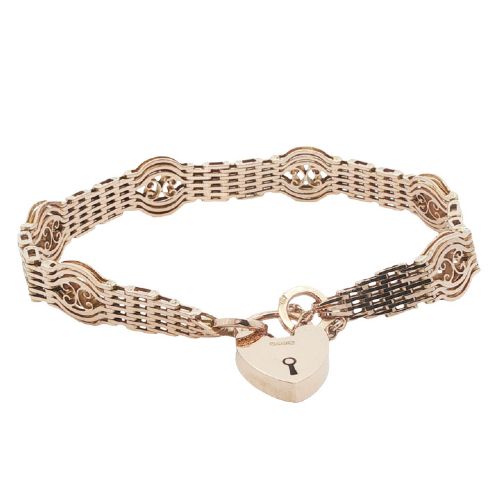
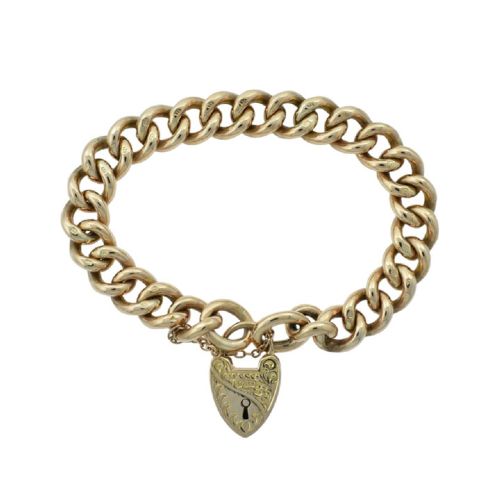
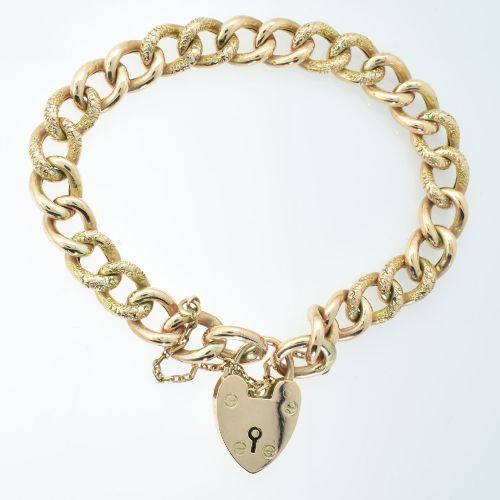
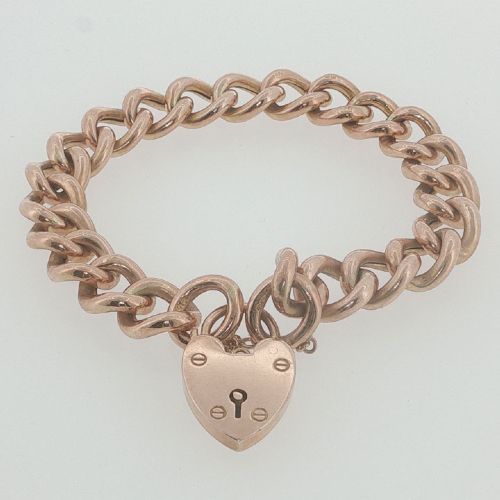
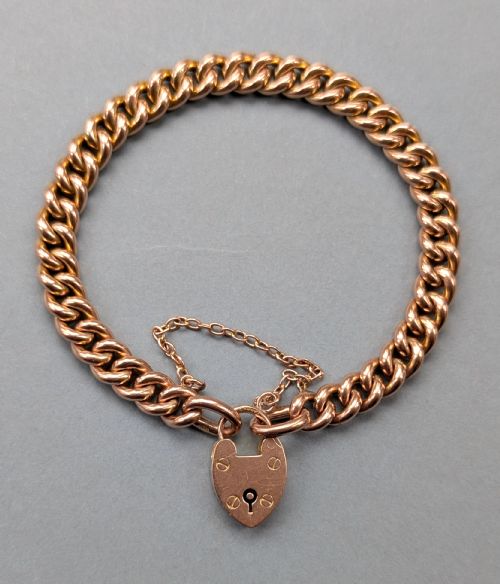
These heart link bracelet examples span the late Victorian and Edwardian periods, bringing together warm gold tones and secure padlock clasps.
Heart Link Bracelet
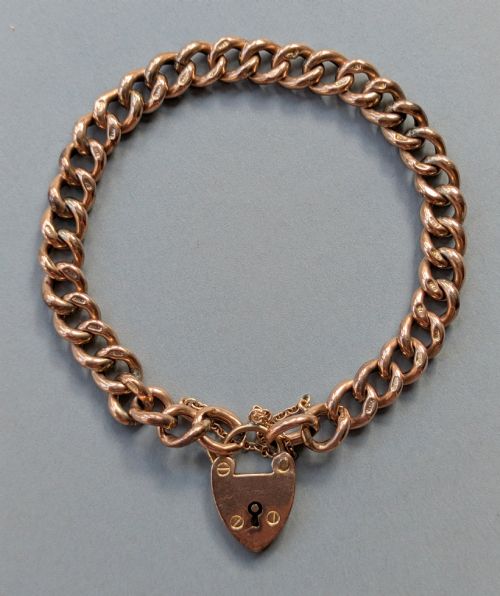
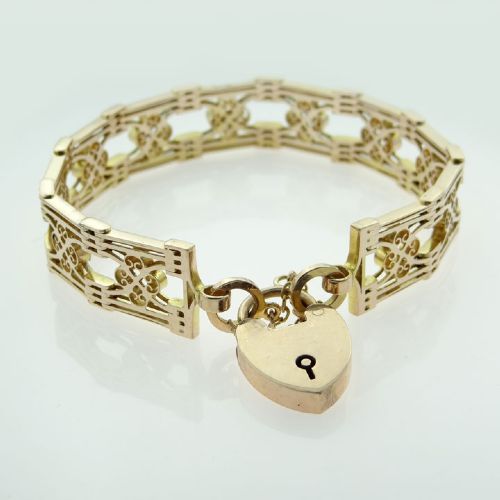
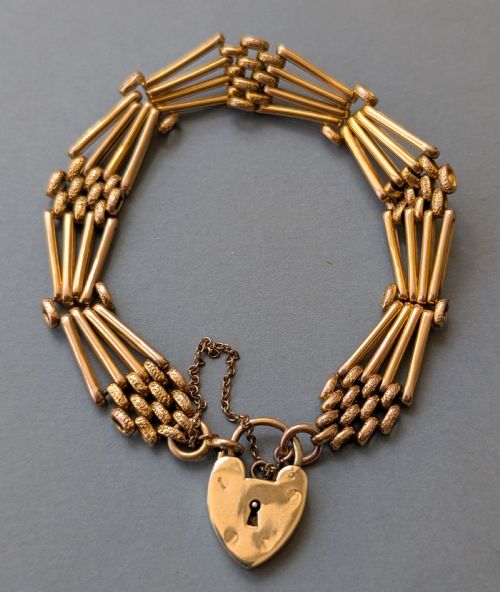
A heart link bracelet brings together sturdy chain links and a distinct heart-shaped padlock clasp, forming a design that defined much of the late Victorian and Edwardian jewellery output. These pieces most commonly appear as robust curb chains or intricate gate bracelet configurations fashioned from various tones of gold.
The selections on this page range from plain polished curb links to half engraved patterns and complex gate structures. Many incorporate functioning padlocks that serve as both the primary fastening and the decorative centrepiece of the wristwear.
Originating largely from the turn of the twentieth century, these items reflect the metalworking standards of their era, drawing on 9ct rose gold, yellow gold, and rolled gold materials. Collectors encounter both simple everyday chains and elaborate variations set with stones such as ruby and pearl.
Materials and construction methods
Makers constructed these chains primarily from 9ct rose gold and yellow gold, frequently employing hollow or solid curb links alongside structured gate designs. The metal is often worked to create half engraved surfaces that catch the light across each individual link.
Padlocks are engineered with functional spring mechanisms, allowing them to secure the chain while displaying detailed surface chasing or mounted gemstone accents. Certain heavier variants utilise 18ct rolled gold over a base metal core to achieve substantial presence without prohibitive weight.
Heart Link Bracelet Retail Price Guide 2026
Typical asking prices for heart link bracelet among the pieces listed under this phrase on Sellingantiques today, from the lower quarter to the upper quarter. They describe what is for sale here now, not the wider market.
The current selection spans the Victorian and Edwardian periods, utilising materials from silver and niello to 9ct rose gold and 18ct rolled gold.
Assessing build quality and variation
Quality in these pieces is dictated by the structural integrity of the individual links and the precision of the engraving work. Finer examples maintain crisp detail in their patterned surfaces and robust hinge action within the padlock mechanism.
Weight and metal purity also separate standard production from superior pieces, with solid gold iterations and complex multi-strand gate structures representing the upper tier of period output. Original components, including matching safety chains and fully operational padlocks, distinguish the most desirable items.
The Heart Link Bracelet Glossary
- Curb chain
- A type of jewellery chain consisting of uniform links that have been twisted or flattened to lie flat against the wrist. This format provides the durable foundation for many padlock bracelets.
- Gate bracelet
- A style featuring rigid parallel bars connected by small links, resembling a miniature gate. It became a prominent form during the late nineteenth and early twentieth centuries.
- Padlock clasp
- A miniature locking mechanism shaped like a heart that secures the two ends of the bracelet together. It often bears maker marks or registration numbers.
- Niello
- A black metallic alloy used as an inlay on engraved metal, contrasting sharply with the bright surface of the silver beneath. This technique highlights intricate patterns on select period pieces.
- Rolled gold
- A manufacturing method where a layer of gold is mechanically bonded to a base metal core. This provided the durability and appearance of solid gold at a different scale of production.
Heart Link Bracelet: Frequently Asked Questions
Are these bracelets solid gold?
The material varies across the selection, encompassing solid 9ct gold, 9ct rose gold, and 18ct rolled gold variations. Each listing specifies the exact metal composition determined by hallmarks or testing.
Rolled gold items feature a substantial layer of gold fused to a base metal core, offering durability while differing from fully solid precious metal constructions.
How do I date my bracelet?
Dating relies on stylistic markers such as curb link dimensions and gate construction, alongside official hallmarks stamped onto the metal or the padlock itself. Pieces from the Edwardian era often display distinct manufacturing hallmarks indicating specific assay offices and production years.
Compositions featuring half engraved decoration and heart padlocks point firmly to the late Victorian and early twentieth-century periods.
Can I wear this daily?
These historical bracelets are built with durable link configurations like curb and gate patterns suited for regular wear. However, their age requires mindful handling during physical activities to protect delicate engravings and clasp springs.
Removing the bracelet before swimming or heavy labour preserves the integrity of the metal and prevents undue wear on the padlock hinge.