




Heals Single Beds
Heals single beds bring honest early twentieth-century design and solid timber construction directly into modern bedrooms.
Heals Single Beds
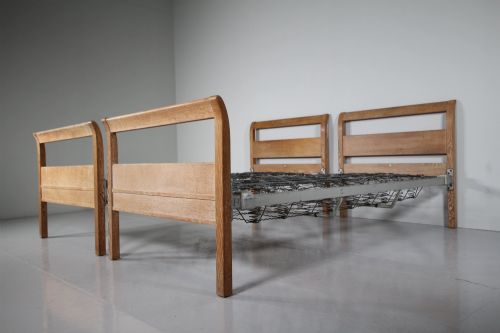
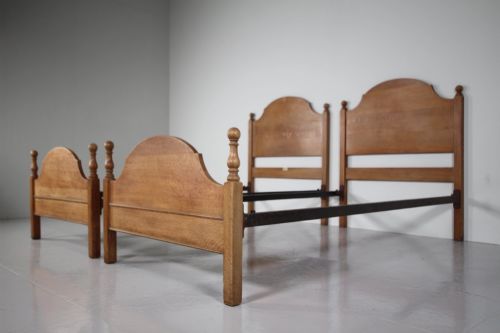
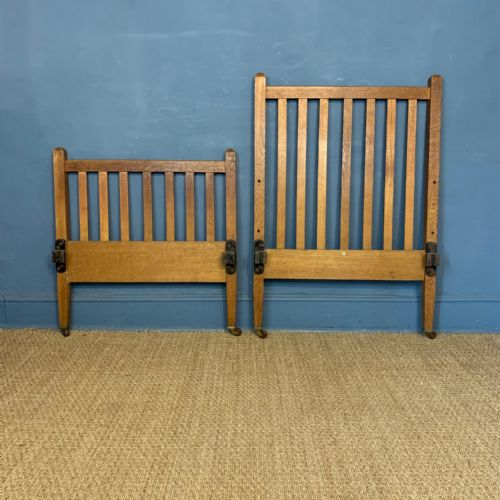
When you search for heals single beds, you encounter sturdy timber furniture produced from the Edwardian era through the interwar decades. Oak dominates the selection, appearing frequently in pairs with original maker labels or stamps attached to the frames.
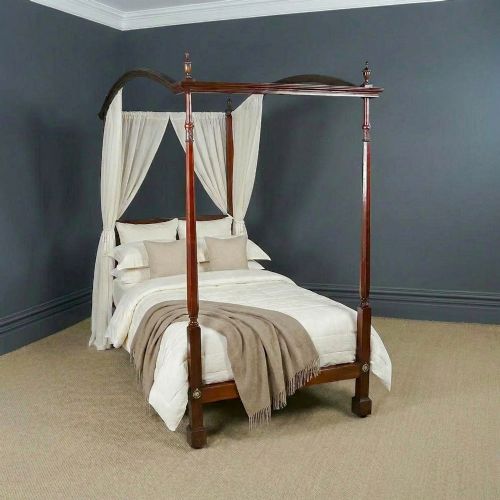
Edwardian examples showcase panelled timber and inlaid mahogany, while pieces from the nineteen twenties and nineteen thirties often display limed finishes or simpler Arts and Crafts lines. Single four poster beds, cottage range variants, and child-sized iterations also surface across the inventory.
Most pieces survive as matched pairs rather than lone frames, reflecting the domestic requirements of the periods in which they were made. Buyers frequently select these beds for guest rooms or period properties where proportions remain modest.
Standards of Quality
Quality rests upon the preservation of original maker labels and the integrity of the timber framing. Pieces bearing clear paper labels or stamped signatures hold greater documentary interest for collectors.
The presence of matching side rails and original bases distinguishes complete sets from modified or mismatched components. Finer examples retain their factory surface treatments and undamaged cane or panel inserts.
Heal and Son·Heals of London
The Heals Single Beds Glossary
- Limed oak
- A wood finishing technique that fills the grain with a whitish paste to create a pale appearance. This treatment gained popularity during the interwar period on modern domestic furniture.
- Bergere panels
- Woven cane inserts set into wooden frames, often utilised for headboards and footboards to introduce texture and lightness. The technique derives from traditional French seating design.
- Bobbin framing
- Turned woodwork shaped to resemble a string of beads or bobbins, characteristic of seventeenth-century revival styles adopted by early twentieth-century cabinet makers.
- Tilden design
- A specific model of oak bed produced by the firm during the early twentieth century. These pieces reflect the functional aesthetic associated with contemporary cottage furnishings.
- Four poster bed
- A bedstead featuring four vertical columns that support an upper canopy structure. Edwardian interpretations of this form remain exceptionally large for single proportions.
Heals Single Beds: Frequently Asked Questions
Are heals single beds easy to assemble?
Most antique wooden bed frames utilise standard iron bed bolts and tenon joints to secure the side rails to the headboard and footboard. Standard tools allow straightforward construction without specialised equipment.
Buyers should check that original side rails and brackets accompany the frame to ensure standard modern mattress dimensions fit correctly between the posts.
How do I identify a genuine piece?
Authentic pieces frequently bear paper trade labels or timber stamps identifying the maker on the inner surfaces of the headboard or rails. The combination of construction quality and characteristic period timbers like oak or limed oak offers further verification.
Similarities to documented designs from the early twentieth century help distinguish workshop productions from later imitations.
Can I use a modern mattress?
Standard single mattress sizes often fit within nineteenth and twentieth-century dimensions, though older four poster beds or custom widths may require bespoke upholstery. Slatted wooden bases or modern wooden slats can be added to support contemporary mattresses safely.
Verifying internal width and length measurements before purchase prevents fitting issues with standard bedding.
What periods do these beds cover?
The available selection spans from the nineteen hundreds through the Edwardian era and into the nineteen twenties, nineteen thirties, and nineteen forties. Arts and Crafts and Art Deco stylistic influences appear across these chronological brackets.
Earlier pieces favour darker polished hardwoods, while later interwar examples frequently employ limed oak finishes.