

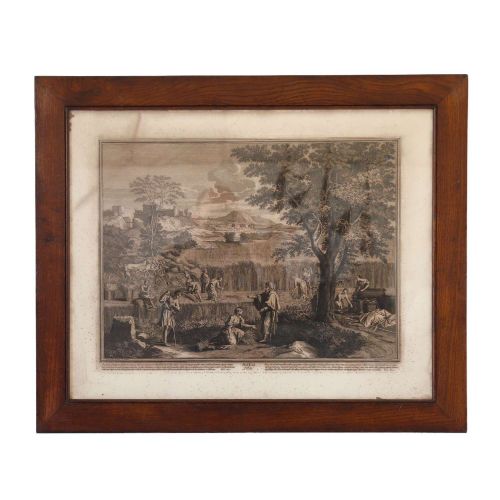


Harvest Landscape Picture
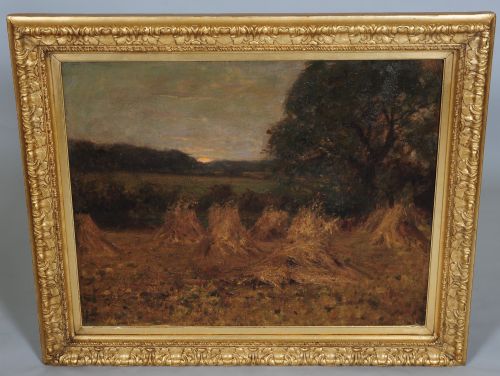
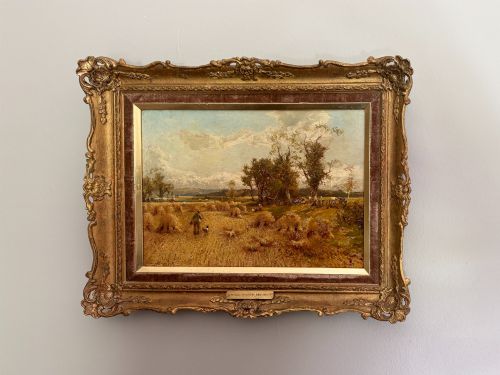
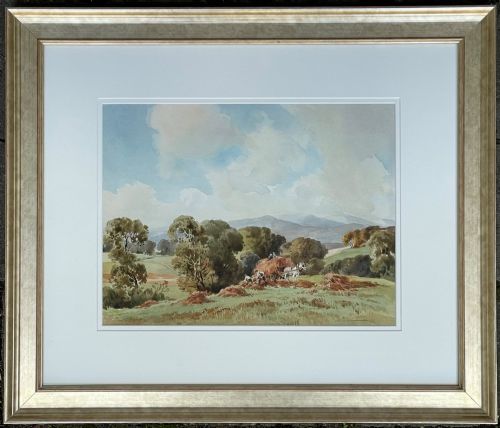
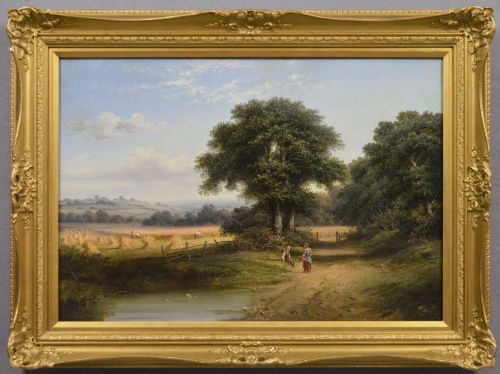
When you search harvest landscape picture, you find nineteenth and early twentieth century watercolours and oil paintings recording rural British fields and haymaking.
Harvest Landscape Picture
A harvest landscape picture captures agricultural scenes of hay cutting, cornfields, and rural farming across Britain. These works range from mid-nineteenth century canvas oils to early twentieth century watercolours on paper.
The material on this page leans heavily towards traditional framed watercolours and oil paintings on canvas or paper. Subjects feature figures in harvest fields, horse and cart loading, and pastoral valleys.
Works span periods from the Victorian era through the Edwardian years and into the 1930s and 1950s. Regional British scenes from Hampshire, Nottinghamshire, and Yorkshire appear frequently alongside unnamed pastoral settings.
Materials and Technique
Artists painted these scenes using oil paint on canvas or watercolour and gouache on paper. Many examples retain their period wood and gilt framing under glass.
Techniques combine brushwork and pigment application to render rural light, skies, and agricultural fields. Support materials vary between stretched canvas, heavy paper, and framed engravings.
Harvest Landscape Picture Retail Price Guide 2026
Typical asking prices for harvest landscape picture among the pieces listed under this phrase on Sellingantiques today, from the lower quarter to the upper quarter. They describe what is for sale here now, not the wider market.
Listings feature watercolours, oil paintings on canvas, and engravings spanning the 19th century to the 1950s.
Evaluating Quality
Quality rests in the handling of light, atmosphere, and the naturalistic depiction of figures and working horses. Stronger compositions convey depth within the rural landscape rather than relying on formulaic field layouts.
Condition of the paper or canvas, stability of the paint surface, and the presence of original period frames influence the character of each piece. Signed works by named artists carry distinct attribution weight.
Percy Lancaster·Walter Heath Williams·Henry John Boddington·John Atkinson·Henry H Parker·Rowland Henry Hill·Arthur Walker Redgate·Walter Duncan·George Hamilton Constantine·William Greaves·Joseph Thors·Alfred Augustus Glendening Snr·David Heward·William Kay Blacklock·Wilmot Pilsbury·George Graham·Reginald Mills·Robert Thorne Waite·Charles H Passey
The Harvest Landscape Picture Glossary
- Watercolour
- A paint consisting of pigment suspended in a water-based solution, typically applied to paper.
- Oil on Canvas
- Pigment mixed with drying oil applied to a woven fabric stretched across a wooden frame.
- Gouache
- An opaque water-based medium that provides denser colour application than standard watercolour.
- Engraving
- A printmaking technique where an image is incised into a plate to transfer ink to paper.
Harvest Landscape Picture: Frequently Asked Questions
What periods do these pictures cover?
The listings span from the nineteenth century through the Edwardian period and into the mid-twentieth century.
Most items date between the 1860s and the 1930s, reflecting Victorian and later British artistic traditions.
Are these works signed by the artists?
Many of the watercolours and oil paintings carry artist signatures or attributions.
Archival and listed pieces include works by named British painters and watercolourists from the period.
What framing do the pictures have?
Pieces frequently arrive in period wood frames, often with gilt details and protective glass coverings.
Original framing helps preserve the paper watercolours and canvas oil paintings from environmental wear.
Where do these agricultural scenes originate?
The subjects depict British rural life, including specific locations in Hampshire, Nottinghamshire, and Yorkshire.
Artists recorded local hay fields, valleys, and farming communities across the English countryside.