



Harvest Field Painting
A harvest field painting captures the labour and quiet of the countryside, bringing the traditional rural landscape onto the wall.
Harvest Field Painting
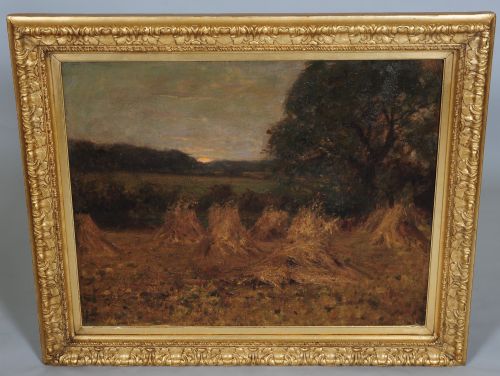
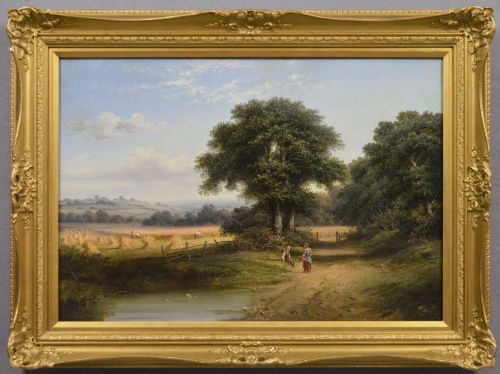
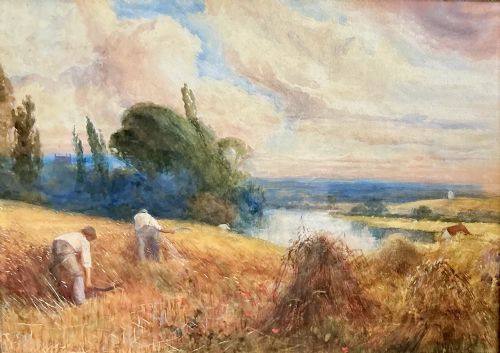
A harvest field painting depicts figures at work or tranquil rural views during the gathering of crops across the nineteenth and twentieth centuries. These works record agricultural scenes from locations including Sussex, Wharfedale, and the Grampians, capturing the changing light of the British countryside.
The pieces on this page appear primarily as oil paintings on canvas and watercolours on paper. Buyers frequently encounter nineteenth-century pastorals and early twentieth-century realism depicting farmers gathering wheat or hay.
Artists working in British and Scottish impressionism also render these agricultural subjects with looser brushwork and atmospheric skies. Such variations offer collectors a choice between meticulous Victorian detail and later impressionist interpretations.
What varies in quality
Quality rests upon the artist's handling of natural light and shadow across the landscape, distinguishing a lively composition from a rigid one. The convincing portrayal of human figures within the agricultural setting demands distinct draughtsmanship.
The preservation of the original canvas, pigment stability, and the integrity of the period wood and gold leaf frame contribute significantly to the standing of each piece.
Harvest Field Painting Retail Price Guide 2026
Typical asking prices for harvest field painting among the pieces listed under this phrase on Sellingantiques today, from the lower quarter to the upper quarter. They describe what is for sale here now, not the wider market.
Periods represented on this page range from the nineteenth century through the 1950s.
Hugh Barry-Scott·Walter Heath Williams·Frederick Hines·William Grant Murray·James William Booth·Henry H Parker·Helmut Reuter·Walter Williams·Arthur Walker Redgate·Herbert Royle·Frederick J Knowles·Joseph Paulman·Henry John Kinnaird·Walter Duncan·Reginald Mills
The Harvest Field Painting Glossary
- Oil on Canvas
- Pigment mixed with drying oil applied to a woven fabric support stretched over a wooden frame. This medium allows for rich colour depth and textured brushwork.
- Watercolour Painting
- A work executed with water-soluble pigments on paper. This technique produces translucent washes of colour particularly suited to luminous skies.
- Victorian Pastoral
- An artistic style from the nineteenth century focusing on idealized rural life and agricultural labour. These scenes emphasise the harmony between workers and the English countryside.
- Gouache
- An opaque water-based paint containing pigment and a binding agent mixed with a white filler. It provides solid areas of flat colour and sharp detail.
Harvest Field Painting: Frequently Asked Questions
What periods do these paintings cover?
The selection spans from the nineteenth century through the mid-twentieth century, encompassing Victorian pastoral works and later impressionist interpretations.
Dates across the pieces range from the 1860s up to the 1950s, reflecting changing artistic approaches to rural subject matter.
Where were these rural scenes painted?
Artists painted specific British locations such as Wharfedale, Arundel Castle, and the Grampians, alongside scenes near Cooksbridge in Sussex.
Many works also depict generalized countryside settings focused on the seasonal labour of gathering hay and wheat.
How do I care for an oil painting?
Keep the canvas away from direct sunlight and stable environmental humidity to prevent the oil paint and wood stretcher from degrading.
Dust the surface gently with a soft, dry brush and avoid using any liquid cleaners on the canvas or the gold leaf frame.
What is the difference between oil and watercolour?
Oil paint utilises a drying oil binder on canvas, allowing for thick impasto and deep, layered colour blending over time.
Watercolour uses water-soluble pigments on paper, creating translucent effects that require mounting behind glass for protection.