








Hardwood Display Shelves
Hardwood display shelves bring intricate oriental carving and dense timber into a room to hold treasured ornaments.
Hardwood Display Shelves
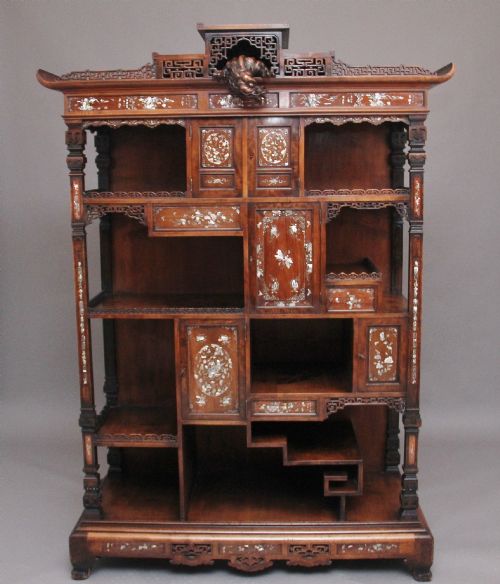
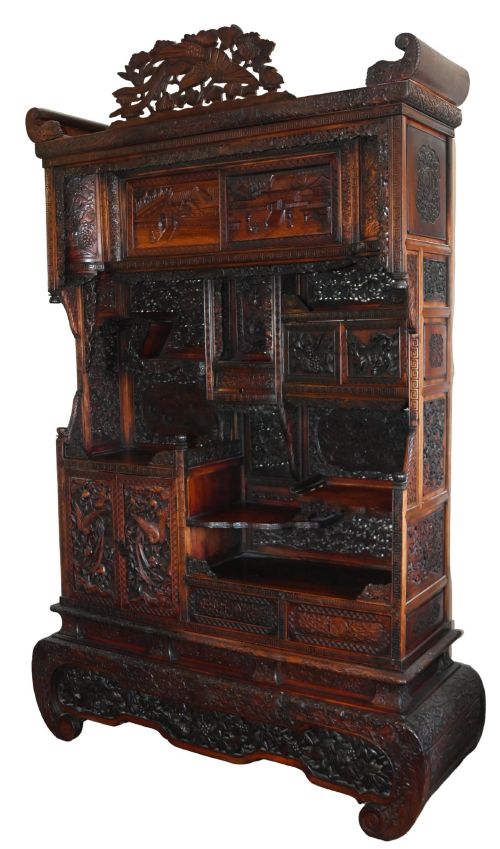
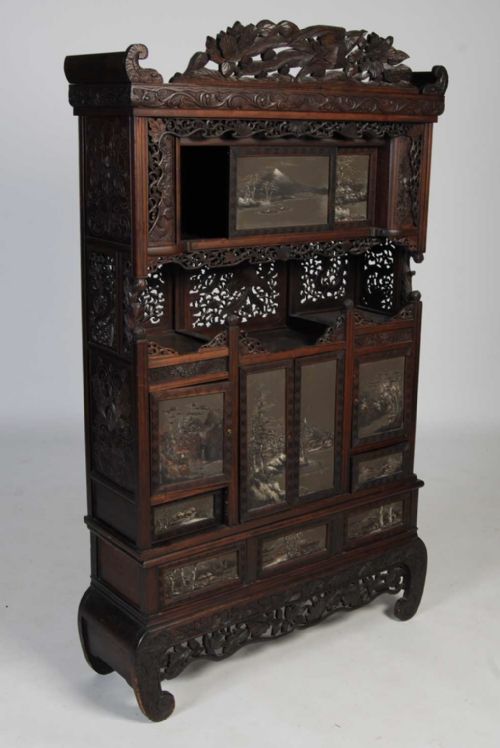
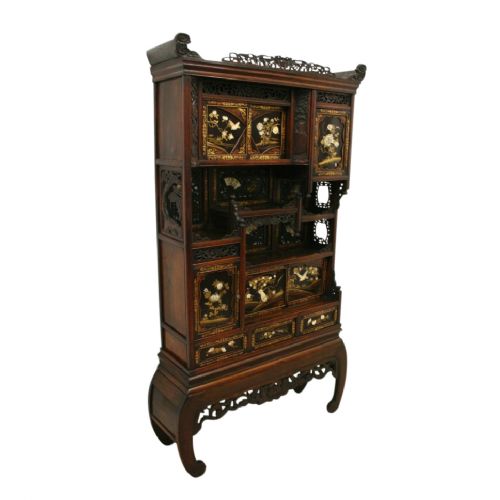
Hardwood display shelves encompass ornate Asian cabinets, stands, and open shelving units created during the late nineteenth and early twentieth centuries. These pieces derive primarily from Japanese Meiji period workshops and Chinese Qing dynasty traditions, spanning styles like Chinoiserie and Japonisme.
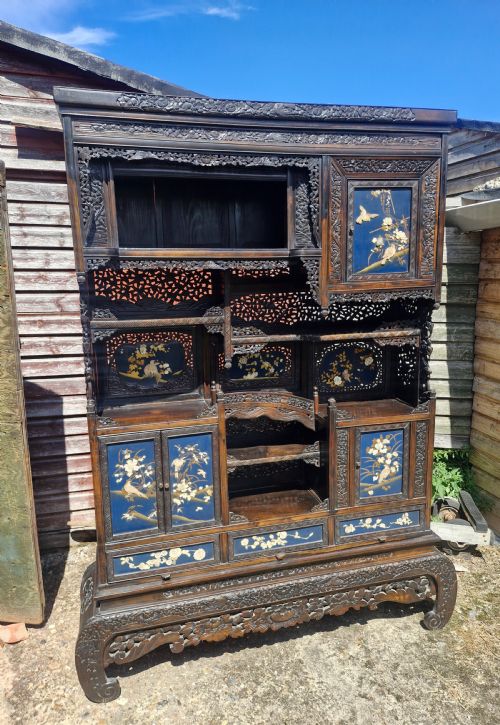
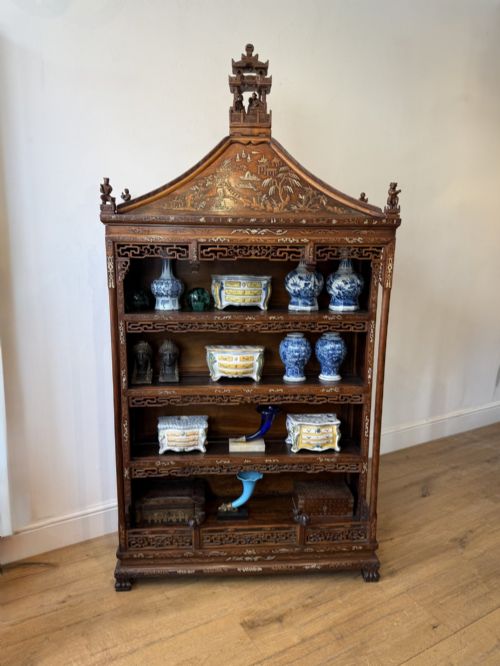
A buyer examining this selection will frequently encounter Japanese shodona cabinets alongside Chinese Hongmu open cabinets and pagoda display cabinets. The forms range from dwarf side-cabinets and whatnot stands to tall cabinets equipped with multiple tiers for exhibition.
How they were made
Craftsmen built these pieces using dense hardwoods and rosewood, frequently incorporating Hongmu timber for its rich grain and weight. Construction relied on traditional joinery to support elaborate, asymmetrical shelving and multi-tiered compartments.
Decoration required meticulous hand-carving alongside detailed mother of pearl inlay, bone inlay, and brass highlights. Certain examples added glass panels, lacquer finishes, and subtle touches of ivory or metalwork to accent the primary timber structure.
Hardwood Display Shelves Retail Price Guide 2026
Typical asking prices for hardwood display shelves among the pieces listed under this phrase on Sellingantiques today, from the lower quarter to the upper quarter. They describe what is for sale here now, not the wider market.
Pagoda display cabinets bring miniature rooflines indoors, letting your ornaments reside in tiny architectural estates.
What varies in quality
Quality separates simple production from master craftsmanship through the depth and precision of the carving. Profusely carved surfaces demonstrate sharper relief and greater control over complex motifs than simpler versions.
The selection of materials dictates distinction at the higher end, where solid rosewood and Hongmu support intricate mother of pearl or bone inlay without warping. Superior pieces balance structural integrity with harmonious asymmetry across numerous display tiers.
The Hardwood Display Shelves Glossary
- Shodona
- A Japanese cabinet featuring staggered shelves, cupboards, and sliding doors designed for displaying small art objects. These pieces originate predominantly from the Meiji period.
- Hongmu
- A dense, dark tropical hardwood valued in Chinese furniture making for its strength and deep natural lustre. It provides a stable base for intricate carving.
- Japonisme
- A western artistic style influenced by Japanese art and design, visible in nineteenth-century decorative pieces imported to Europe.
- Chinoiserie
- European decorative style reflecting Chinese artistic motifs, often combined with traditional local cabinet-making techniques.
- Whatnot
- A piece of furniture consisting of open shelves for displaying ornaments, common in nineteenth-century interiors.
Hardwood Display Shelves: Frequently Asked Questions
How do I identify Chinese Hongmu furniture?
Hongmu refers to a category of dense, heavy tropical hardwoods used in traditional Chinese furniture construction.
These pieces show deep natural colouration and readily accept the profuse, detailed carving seen on nineteenth-century cabinets and stands.
Where were these display cabinets made?
These cabinets originate from workshops in Japan and China, created during the late nineteenth and early twentieth centuries.
Many pieces were produced specifically for export to Western markets during the height of the Japonisme and Chinoiserie movements.
How should I clean hardwood display shelves?
Maintain the timber surfaces by dusting gently with a dry, soft cloth to protect the intricate carvings and delicate inlays.
Avoid using liquid polish or chemical cleaners, as moisture can damage older lacquer, bone, and mother of pearl elements.