

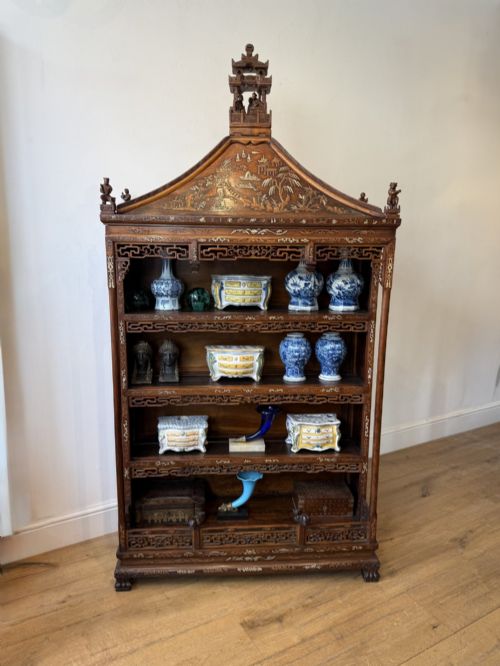
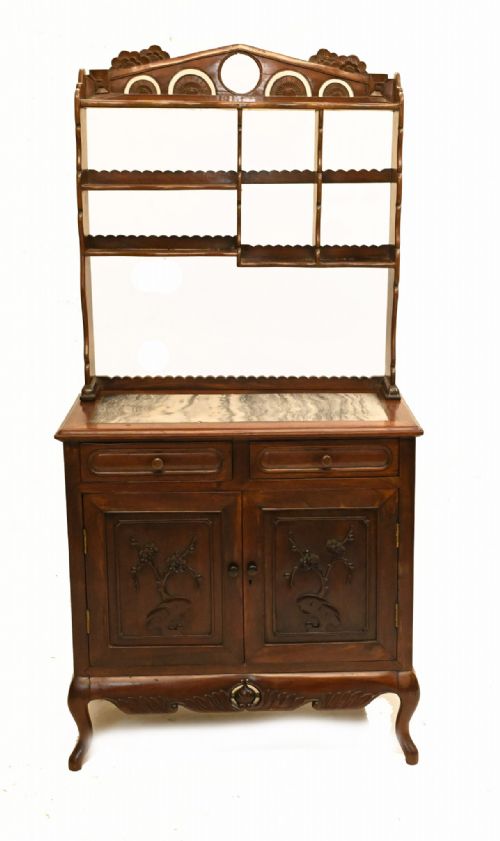


Hardwood Chinese Bookcase
These hardwood Chinese bookcase examples bring substantial Qing Dynasty presence and intricate timber framing into a room.
Hardwood Chinese Bookcase
A hardwood Chinese bookcase encompasses display cabinets, dressers, and open shelving units originating from Asian export and Qing Dynasty traditions. Buyers searching for a hardwood Chinese bookcase encounter nineteenth-century pieces alongside early twentieth-century examples.
Forms range from pagoda display cabinets and glazed upright cases to dwarf side-cabinets and whatnot configurations. The selection frequently includes rosewood, cherrywood, and hongmu timbers fashioned into varied shelving and storage formats.
How they were made
Construction relies on dense hardwoods such as rosewood, cherrywood, and hongmu, providing structural integrity for substantial framing. Joinery accommodates intricate carving and housing for glass panels.
Decoration incorporates surface work including bone inlay and mother of pearl detailing. Brass mounts frequently accent the timber framework and doors.
Hardwood Chinese Bookcase Retail Price Guide 2026
Typical asking prices for hardwood chinese bookcase among the pieces listed under this phrase on Sellingantiques today, from the lower quarter to the upper quarter. They describe what is for sale here now, not the wider market.
Current listings feature pieces spanning from the mid-nineteenth century through to nineteen-ten, utilising rosewood, cherrywood, and hongmu.
What varies in quality
Depth and crispness of carved ornamentation distinguish pieces, ranging from restrained mouldings to profuse sculptural work. The integration of contrasting materials like bone inlay and mother of pearl alters the visual weight.
Timber selection and grain figure affect the overall presence, with dense rosewood and hongmu carrying greater natural gravitas than simpler domestic woods. Proportions and the execution of glazing or open shelving framework dictate the success of the silhouette.
The Hardwood Chinese Bookcase Glossary
- Hongmu
- A category of dense, heavy Asian hardwoods highly prized for traditional cabinetry and dark colouration. It takes a fine finish and supports intricate carving.
- Shodana
- A term applied to tiered display cabinets featuring asymmetrical shelving arrangements. These pieces originate from East Asian furnishing traditions.
- Bone inlay
- A decorative technique where small pieces of bone are set flush into the wooden surface to form patterns. It creates striking contrast against dark hardwood.
- Qing Dynasty
- The final imperial dynasty of China, spanning from the seventeenth to the early twentieth century. Pieces from this era often display deep carving and formal symmetry.
Hardwood Chinese Bookcase: Frequently Asked Questions
What is a hardwood Chinese bookcase?
A hardwood Chinese bookcase is a display or storage cabinet constructed from dense timbers such as rosewood, cherrywood, or hongmu. These pieces often feature glass doors, open shelving, or intricate carved details.
Originating across the nineteenth and early twentieth centuries, they serve as both practical storage and focal points for displaying collections.
How do I date these cabinets?
Dating relies on stylistic markers associated with periods like the Qing Dynasty, alongside material choices such as bone inlay or brass hardware. Construction methods and timber types also offer clues to the decade of manufacture.
Examining the depth of carving and structural framing helps distinguish nineteenth-century examples from early twentieth-century pieces.
Where should I place a display cabinet?
These cabinets work well in living rooms, studies, or dining spaces where their detailed carving and glass doors can be appreciated. They require stable environmental conditions away from direct heat sources to protect the hardwood.
Ensure the floor is level to support the weight of dense timbers and heavy glazed doors.
What woods were commonly used?
Maker workshops utilised dense Asian hardwoods including rosewood, cherrywood, and hongmu. Elm also appears in specific regional furniture traditions.
These timbers provided the necessary strength for elaborate fretwork and load-bearing shelves.