

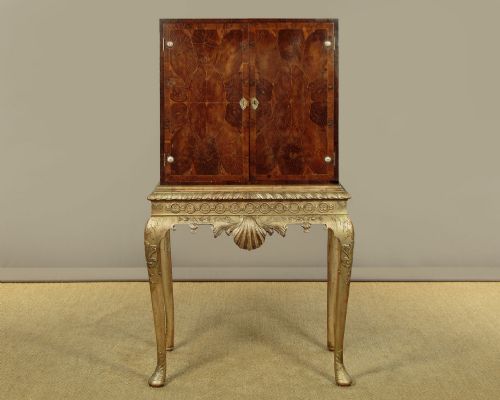


Brown Lacquer Cabinet
A brown lacquer cabinet brings centuries of Asian and European craftsmanship into your room, offering deep tones and intricate finishes for your storage needs.
Brown Lacquer Cabinet
When you search for a brown lacquer cabinet, you are looking at items designed for display and storage, ranging from Chinese apothecary chests to Japanese shodana cabinets and European revival pieces. These objects bring together rich surface finishes and practical compartments in diverse forms.
The version you are most likely to meet on this page is a nineteenth-century Japanese or Chinese example, or a European piece influenced by Asian design traditions. They appear as side cabinets, display cabinets, and corner cupboards utilising elm, hardwood, and bamboo.
Originating across different periods including the Georgian era, the late nineteenth century, and the early twentieth century, these pieces reflect global trade and design revivals. Their forms vary from tall shelving units to low storage chests with distinctive surface treatments.
How they were made
Construction relies on traditional joinery applied to hardwoods, elm, and bamboo, forming sturdy carcases for shelving units, side cabinets, and chests. Artisans built these structures to support the weight of stored objects while maintaining refined proportions.
Surfaces received layers of lacquer, sometimes combined with painted decoration, brass fittings, glass panels, or bone inlays. This technique created deep, lustrous finishes that protect the underlying wood and showcase intricate artistic motifs.
Brown Lacquer Cabinet Retail Price Guide 2026
Typical asking prices for brown lacquer cabinet among the pieces listed under this phrase on Sellingantiques today, from the lower quarter to the upper quarter. They describe what is for sale here now, not the wider market.
Secret compartments inside nineteenth-century apothecary chests remind us that previous owners hid more than just dried herbs.
What varies in quality
The refinement of the lacquer work and the complexity of the internal compartments separate the standard examples from the finest pieces. Superior items feature smooth, even finishes and well-executed joinery that stands up to decades of use.
The quality of secondary materials, such as brass hardware, glass panes, and bone accents, contributes significantly to the overall integrity of the piece. Better execution in these details elevates the visual weight and historical interest of the furniture.
The Brown Lacquer Cabinet Glossary
- Shodana
- A traditional Japanese display cabinet featuring asymmetrical shelving and small cupboards.
- Tansu
- A traditional Japanese mobile storage chest built with sturdy wooden frames and metal hardware.
- Chinoiserie
- European artistic style reflecting Chinese decorative motifs, popular during the Georgian and Victorian periods.
- Vernis Martin
- A French imitation of East Asian lacquer work developed in the eighteenth century and utilised in later vitrines.
- Elm
- A durable hardwood commonly used in Chinese provincial furniture for its strong grain and flexibility.
Brown Lacquer Cabinet: Frequently Asked Questions
What is a shodana?
A shodana is a Japanese display cabinet designed with multiple levels of staggered shelves and small cupboards.
Craftsmen created these pieces to exhibit decorative objects and scholar's items in traditional interiors.
How were apothecary chests used?
Apothecary chests were utilised to store dried herbs, medicinal ingredients, and powders in small partitioned drawers.
Their many compartments made them practical for organising large quantities of distinct substances.
What defines Chinese provincial furniture?
Chinese provincial furniture includes practical items made for regional domestic use rather than imperial courts.
These pieces typically employ elm and straightforward joinery combined with durable lacquer finishes.