




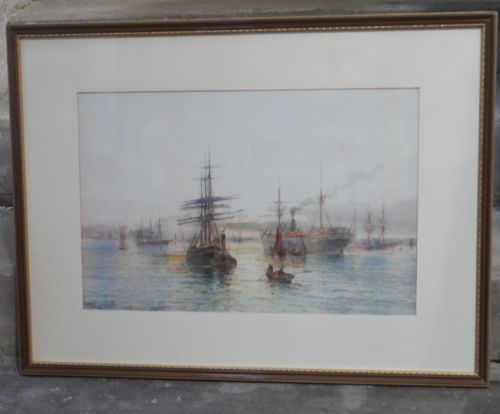
Harbour Watercolor
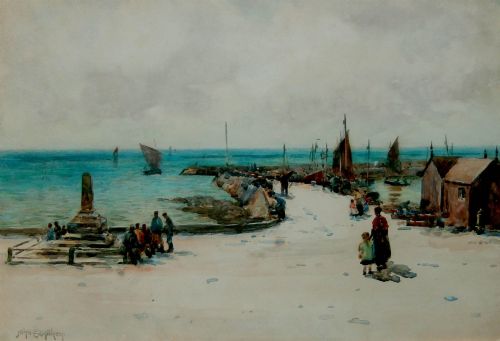
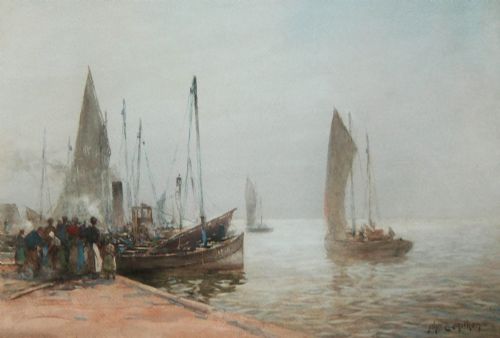
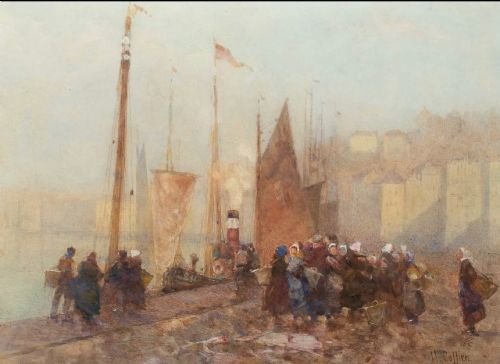
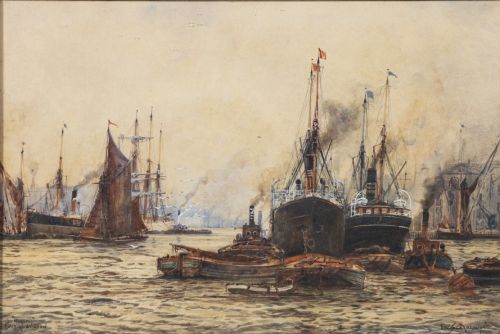
These harbour watercolor paintings capture bustling maritime scenes and quiet coastal havens through delicate pigment washes on paper.
Harbour Watercolor
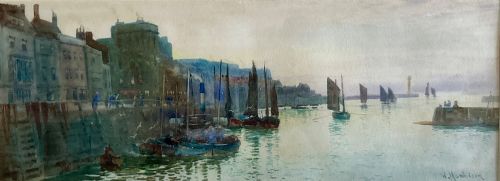
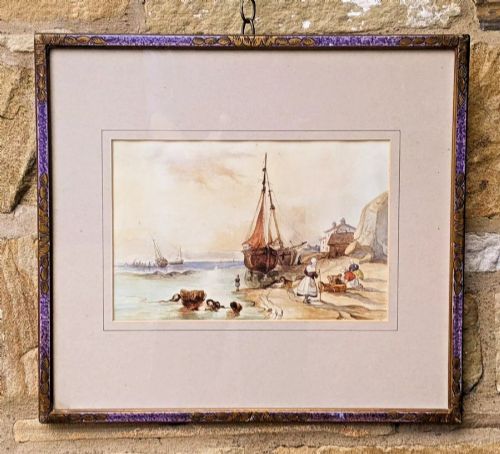
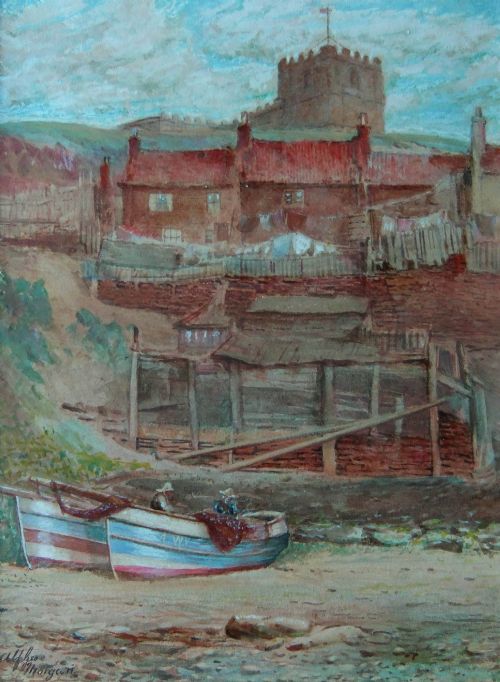
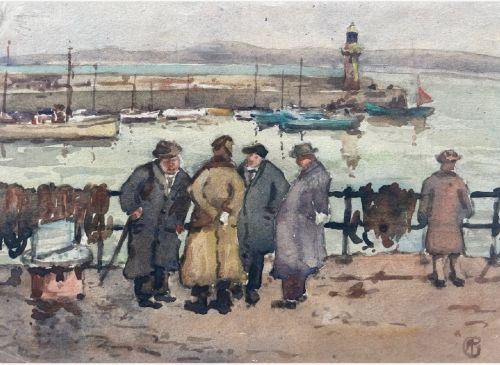
A harbour watercolor presents coastal life, fishing docks, and maritime activity through the medium of pigment applied to paper. These works span from the Victorian era through the mid-twentieth century, recording British and European ports with considerable variety.
The most common examples encountered here originate from the late nineteenth and early twentieth centuries, reflecting regional schools like Newlyn and British Impressionism. Subjects frequently focus on Yorkshire, Cornish, and Scottish fishing havens alongside continental ports.
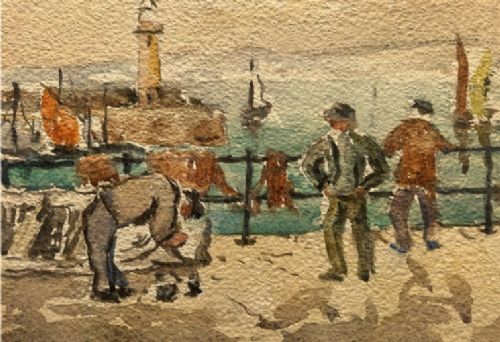
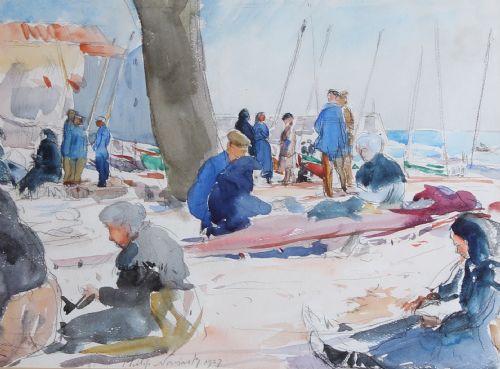
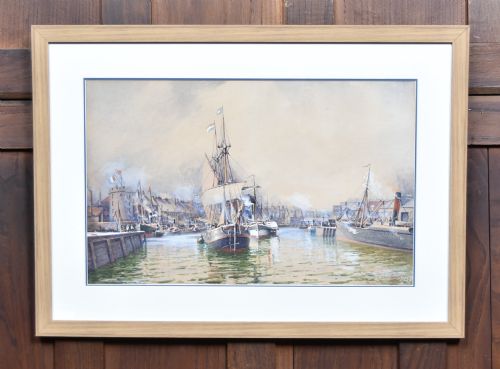
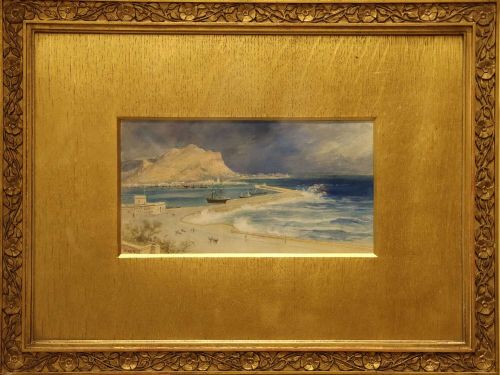
Compositions range from intimate depictions of mending nets on quaysides to broader vistas of shipping lanes and abbey backdrops. Framed in wood and gilt surrounds, these paintings offer a direct window into historical maritime commerce and coastal communities.
Materials and Technique
Artists relied primarily on watercolour pigment dissolved in water and applied to heavy paper surfaces, occasionally incorporating ink for fine linear definition. The absorbent quality of the paper demanded swift, confident brushwork since corrections remained difficult to conceal.
Finished sheets were protected behind glass and housed within wooden or gilt frames to prevent environmental damage. This combination of paper, pigment, and glass preserved the subtle transparency characteristic of the medium over decades of display.
Harbour Watercolor Retail Price Guide 2026
Typical asking prices for harbour watercolor among the pieces listed under this phrase on Sellingantiques today, from the lower quarter to the upper quarter. They describe what is for sale here now, not the wider market.
Listings feature paper, watercolour pigment, glass, wood, and gilt wood across Victorian and early twentieth-century periods.
Evaluating Quality
Quality rests upon the artist's handling of light, atmospheric perspective, and spatial depth within the harbour scene. Stronger works demonstrate confident brush control and a deliberate use of unpainted paper to capture sunlight on water and stone.
Condition plays a vital role, distinguishing works preserved with vibrant pigment from those degraded by excessive exposure to light or moisture. The skill of the composition and the specific topographical interest of the port further elevate individual examples.
George F Pennington·Philip Naviasky·James E Aitken·Frank William Scarbrough·Hector Caffieri·Alfred G Morgan·William Matthison·Commander Eric Tufnell·Richard Harry Carter·William Lee Hankey·Fred Lawson·Thomas Bush Hardy·Ernest Dade·Arthur Tucker·Tom Clough·Fred Waugh·James Thomas Watts·Samuel Owen·Kate E Booth·Jan van Couver·Ernest F Hill·Stanley Orchart·William Wyld·Frederick Stuart Richardson·Alfred Robert Quinton
The Harbour Watercolor Glossary
- Watercolour
- A painting method where fine pigment is mixed with water-soluble binders and applied to paper. The technique relies on translucent layers to create luminosity.
- Gilt Wood
- Timber framing finished with a thin layer of gold leaf or metallic gilt paint. This traditional finish was frequently used to complement maritime art.
- Newlyn School
- An artist colony based in Cornwall during the late nineteenth and early twentieth centuries. Painters associated with this group focused on plein-air realism and coastal community life.
- Provenance
- The documented history of ownership surrounding an artwork. Clear provenance assists in verifying attribution and authenticity.
Harbour Watercolor: Frequently Asked Questions
What subjects do harbour watercolor paintings feature?
These works primarily depict fishing fleets, busy docks, coastal architecture, and moored vessels across British and European ports.
Scenes frequently capture daily maritime routines such as landing the catch, mending nets, and boats departing on morning tides.
How should I frame and display a watercolor?
Display these works away from direct sunlight and high humidity to prevent the paper from fading and the pigments from degrading.
Ensure framing includes acid-free mounts and protective glass to keep the delicate paper surface safe from environmental damage.
How can I tell the period of a painting?
Dating relies on stylistic clues, artist signatures, framing methods, and the specific attire or vessel types depicted within the scene.
Victorian and Edwardian works often exhibit distinct handling of light and pigment compared to mid-twentieth-century maritime pieces.
Are these paintings original works?
The listings consist of original hand-painted watercolours created directly by the artists rather than modern reproductions or prints.
Brushstrokes, paper texture, and artist signatures confirm the unique hand-executed nature of each individual piece.