



Hanging Wooden Candle Box
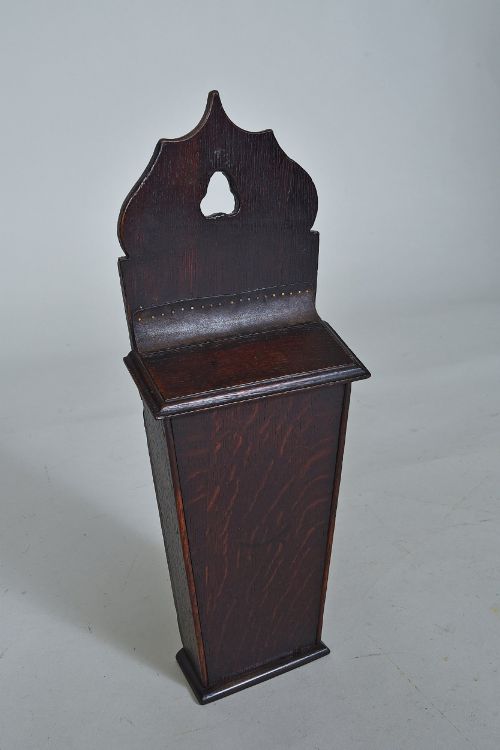
A hanging wooden candle box brings dependable wall storage into a room, fashioned to keep tallow dips safe from damp and mice.
Hanging Wooden Candle Box
When you search for a hanging wooden candle box, you encounter practical storage vessels designed to mount directly onto a wall. These pieces date across several eras, including the 17th century, the Georgian period, and the Victorian age.
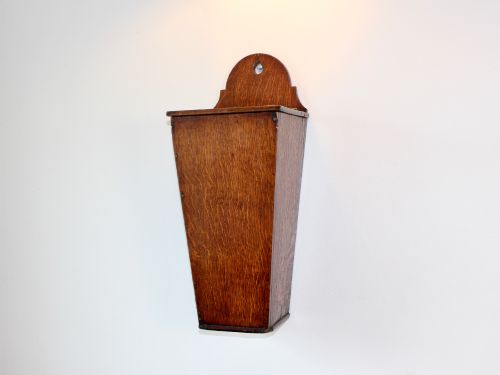
You are most likely to meet examples rendered in oak, reflecting the robust vernacular traditions of British cabinet making. Pine and walnut also appear, often showing the simple joinery required for everyday household utility.
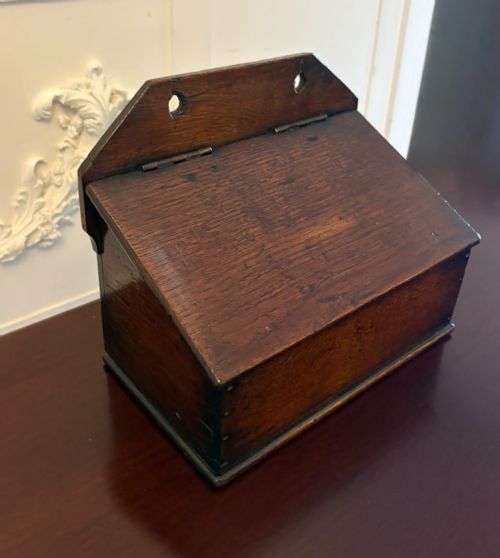
Forms vary from tapered rectangular wall boxes to pieces sharing characteristics with salt boxes. Many retain hinged lids and suspension holes or brackets intended for hanging near a hearth or doorway.
How they were made
Maker's hands shaped these boxes using solid timbers such as oak and pine, frequently joined with pegged mortise and tenon joints or simple nailed construction. Surfaces display the tool marks of early planes and saws rather than modern mechanical finishing.
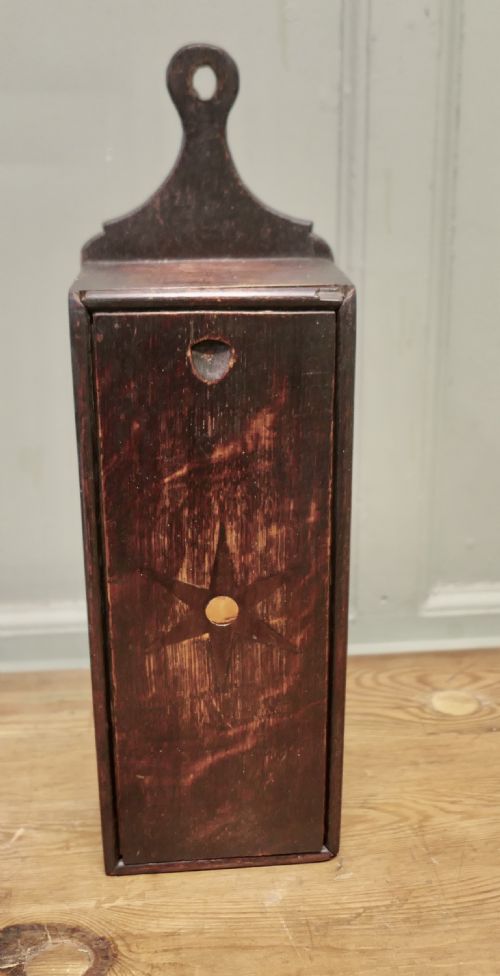
Hardware consists of iron hinges, latches, and brass details that secure the lid and reinforce the hanging points. Some examples retain traces of early red paint or decorative boxwood inlay to accent the grain of the wood.
Hanging Wooden Candle Box Retail Price Guide 2026
Typical asking prices for hanging wooden candle box among the pieces listed under this phrase on Sellingantiques today, from the lower quarter to the upper quarter. They describe what is for sale here now, not the wider market.
One surviving box retains stubborn traces of old red paint, proving our ancestors liked a splash of colour near the hearth.
What varies in quality
Quality rests upon the integrity of the timber selection and the restraint of the maker's hand. Thick oak boards with tight growth rings and undisturbed original surfaces command greater attention than heavily restored equivalents.
The sophistication of the joinery and the presence of original hardware distinguish utilitarian workshop output from more considered vernacular design. Subtle details like tapered proportions and surviving traces of early paint elevate the character of a piece.
The Hanging Wooden Candle Box Glossary
- Tapered rectangular
- A box shape where the sides narrow gradually from top to bottom, often seen on wall-mounted lighting containers.
- Salt box
- A utilitarian wall container with a sloping hinged lid and a high backboard pierced for hanging, sharing a similar form to candle boxes.
- Boxwood inlay
- Small contrasting insertions of pale boxwood set into the primary timber surface to create simple geometric decoration.
- Vernacular
- Objects made by local craftsmen for everyday domestic use, following regional traditions rather than formal academic design styles.
Hanging Wooden Candle Box: Frequently Asked Questions
How were these boxes used?
These boxes hung on walls near hearths or doorways to keep fragile tallow dips and beeswax candles clean and dry.
Households needed easy access to illumination before electric lighting, so storing dips safely away from pests was essential.
Where should I hang one?
Mount a box securely to a wall using the original suspension hole or bracket integrated into the backboard.
Keep the piece away from direct heat sources and damp walls to protect the dry historic timber and iron hardware.
How do I date the wood?
Examine the tool marks, board thickness, and construction methods to understand the period of manufacture.
Eighty-year-old pine and eighteenth-century oak display distinct surface patination and joinery techniques that separate eras.
Are original hinges common?
Many boxes retain their original iron or brass hardware, which secures the pivoting lid to the backboard.
Replacements appear frequently due to centuries of heavy domestic use, so inspecting the fastening points reveals much about the piece's history.