




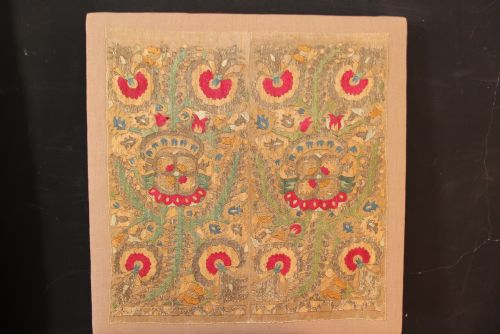


Hanging Folk Art
When you search for hanging folk art, you are looking at utilitarian objects and domestic textiles shaped by regional hands across the eighteenth and nineteenth centuries.
Hanging Folk Art
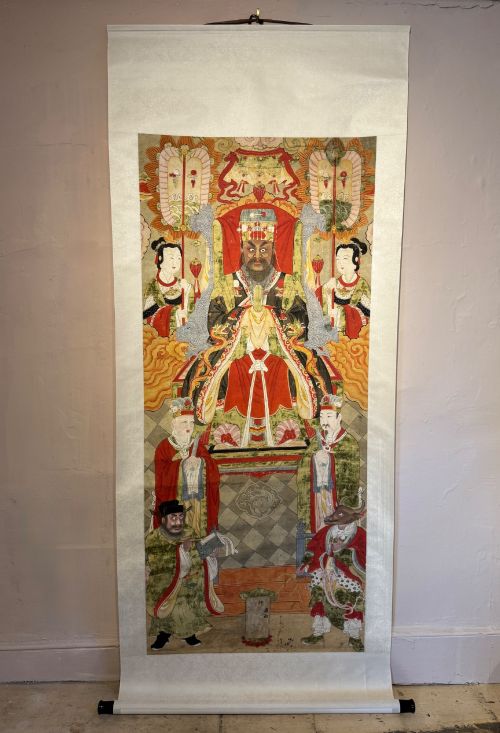
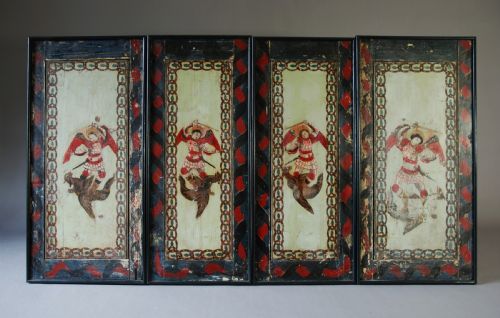
Hanging folk art encompasses domestic items designed for vertical display, from pine cupboards and wall shelves to embroidered textiles, tapestries, and carved panels originating across Europe, Asia, and the Mediterranean. These pieces reflect the traditional domestic life and regional aesthetics of their makers, serving both decorative and practical household functions.
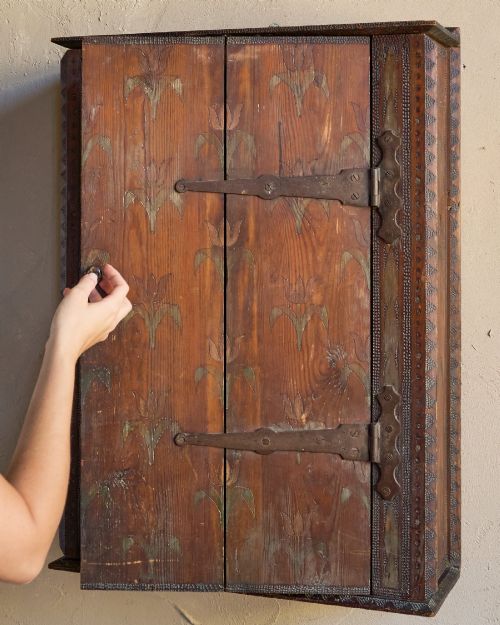
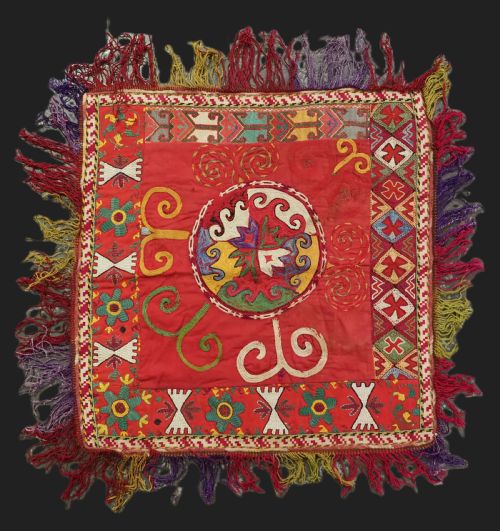
The items most frequently encountered on this page include painted pine wall cupboards from Sweden and Finland, Central Asian embroideries such as Suzanis and dowry hangings, and carved wooden boards. Such objects bring textured character and historical depth to domestic walls through their varied materials and straightforward construction.
How they were made
Makers utilised available local materials, employing pine, oak, elm, and sheet metal for carved and constructed wooden pieces like wall cupboards, spoon racks, and mangle boards. Surfaces were frequently treated with hand-applied paint, chip carving, or simple joinery methods suited to domestic workshops.
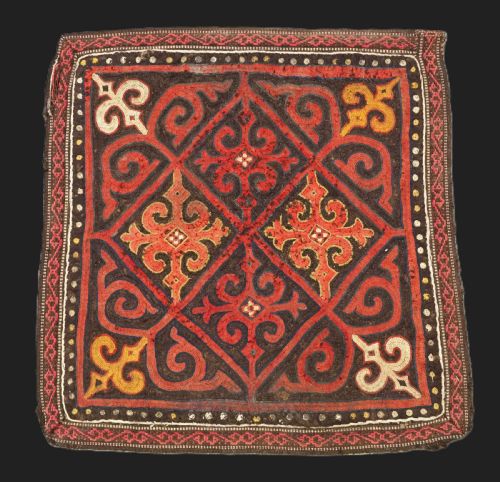
Textile pieces rely on cotton, wool, silk, and felt grounds worked with embroidery threads to create wall hangings, coverlets, and pillows. These works demonstrate traditional needlework techniques passed down through regional communities and nomadic tribes.
Hanging Folk Art Retail Price Guide 2026
Typical asking prices for hanging folk art among the pieces listed under this phrase on Sellingantiques today, from the lower quarter to the upper quarter. They describe what is for sale here now, not the wider market.
Listings feature eighteenth and nineteenth-century pine, oak, cotton, wool, and silk across Scandinavian, Central Asian, and European domestic forms.
What varies in quality
Quality in these pieces rests upon the strength of the regional design, the confidence of the maker's hand, and the preservation of original painted or textile surfaces. Objects displaying crisp chip carving or fluid, unhesitating brushwork stand apart from simpler utilitarian items.
The survival of original surface finishes, whether early paint or natural wood patination, dictates the visual impact of wooden articles. Similarly, textiles maintain higher desirability when embroidery work remains dense, complete, and structurally sound on the original ground fabric.
The Hanging Folk Art Glossary
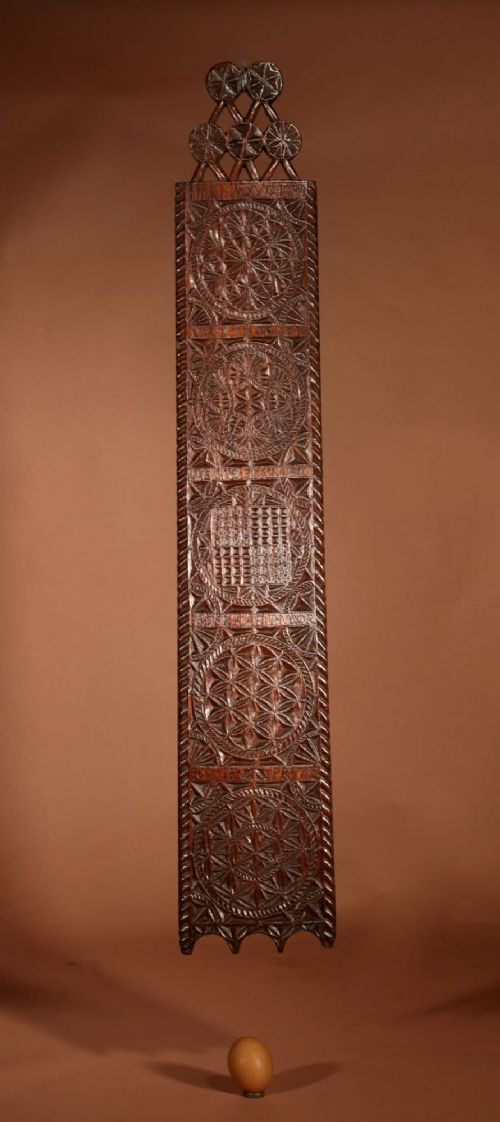
- Mangle board
- A long wooden board carved with handles and text, historically used in Scandinavia and northern Europe to press linen smooth. They were rolled with a wooden cylinder and often given as betrothal gifts.
- Rya
- A traditional Scandinavian knotted pile rug or wall hanging with a deep pile. Originally utilised for warmth, later examples focus on decorative geometric and floral patterns.
- Chip carving
- A primitive woodworking technique where chips are removed from a wooden surface to form geometric or pictorial relief patterns. It appears frequently on domestic boxes, boards, and shelves.
- Potichomania
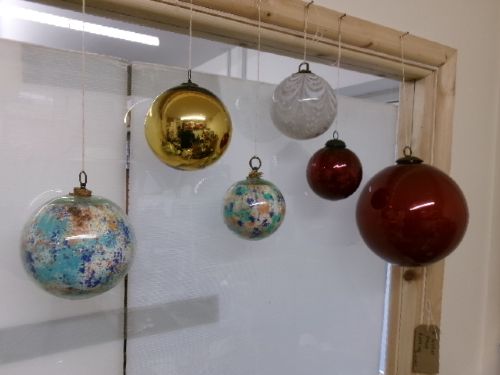
- A nineteenth-century Victorian craft technique involving the coating of glass vessels with printed paper cut-outs to imitate Chinese porcelain. The resulting decorative objects were often hung in windows or rooms.
Hanging Folk Art: Frequently Asked Questions
What is hanging folk art?
Hanging folk art comprises decorative and practical domestic objects designed for wall display, made by regional craftspeople during the eighteenth and nineteenth centuries.
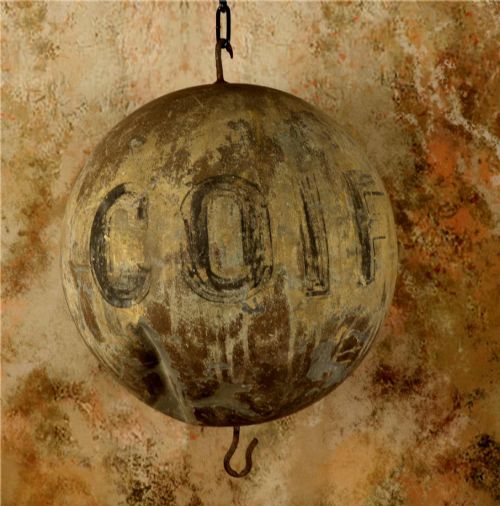
These pieces include painted wooden cupboards, embroidered textiles, carved panels, and metal signs from various European and Asian traditions.
How were wooden wall cupboards used?
Wooden wall cupboards served to store small household valuables, spices, spoons, or dry goods safely off the floor in modest rural homes.
Their painted pine or oak construction protected contents while adding a spot of decorative colour to farmhouse interiors.
How do I care for antique textiles?
Antique textiles and embroideries require protection from direct sunlight to prevent the fading of natural silk, wool, and cotton threads.
Display them away from damp environments and support their weight evenly across the entire hanging surface rather than suspending them from single points.
How can I tell regional styles apart?
Regional styles reveal themselves through distinct colour palettes, specific motifs, and local construction techniques native to the makers' geographic area.
Scandinavian pine cupboards often feature soft painted floral schemes, whereas Central Asian Suzanis display bold botanical embroidery on dark or red cotton grounds.