




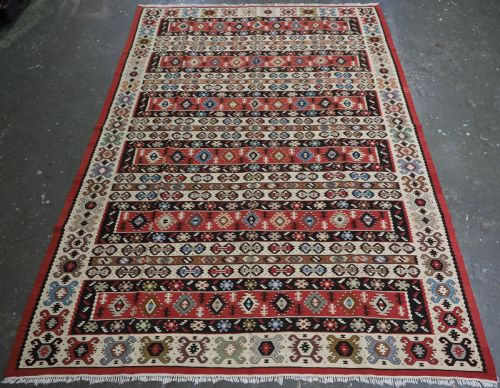


Handwoven Vintage Tapestry
Handwoven vintage tapestry brings rich textile history into a room, offering tactile warmth and complex woven patterns from nomadic and regional traditions.
Handwoven Vintage Tapestry
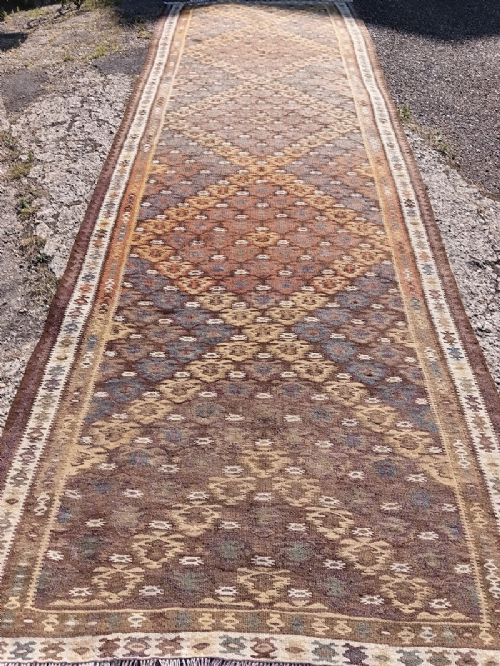
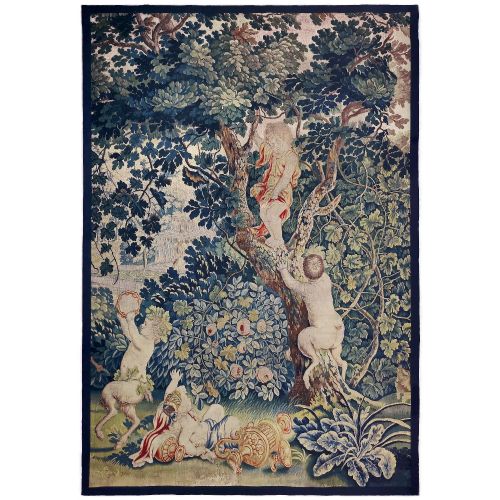
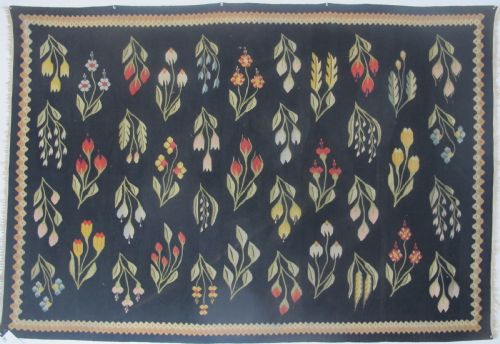
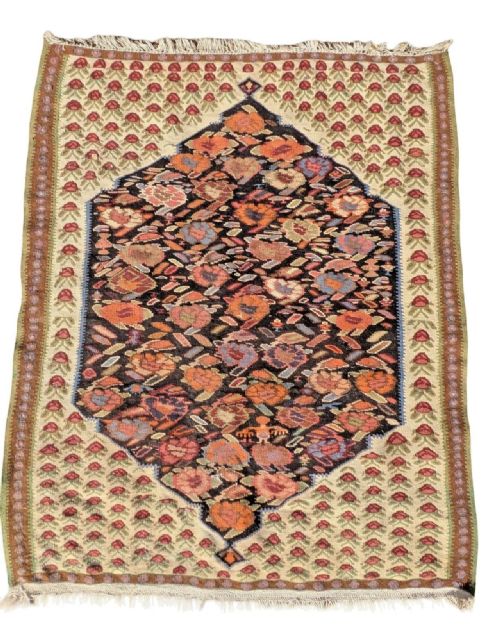
A handwoven vintage tapestry encompasses flatweave rugs, decorative cushions, textile panels, and ceremonial covers produced across Persia, Central Asia, Anatolia, and Europe. These historic objects originate from tribal workshops, village looms, and formal European weaving houses spanning the nineteenth and early twentieth centuries.
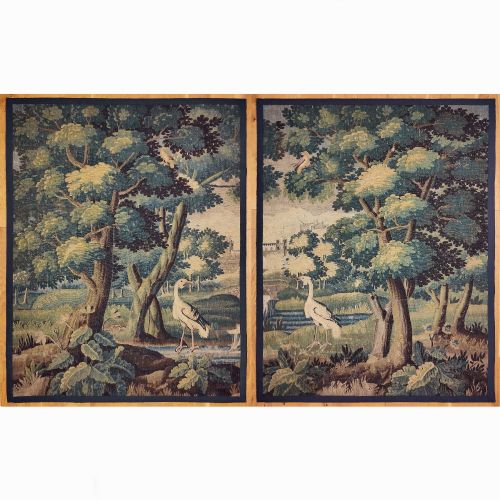
The selections encountered on this page frequently include resilient kilims, Aubusson panels, embroidered Suzani textiles, and patterned horse blankets or storage bags. Each textile reflects the domestic practices, regional motifs, and utilitarian needs of the makers who constructed them by hand.
Buyers select these works to introduce genuine history, textured surfaces, and deep colour to contemporary interiors. Whether placed upon a floor or mounted as a wall hanging, every textile serves as a durable focal point shaped by traditional weaving methods.
How they were made
The construction of these textiles relies primarily on natural fibres such as wool, cotton, silk, linen, and camel hair, often hand-spun to create sturdy yarns. Weavers utilised traditional flatweave and embroidery techniques, interlocking or wrapping threads by hand to build intricate geometric and floral designs.
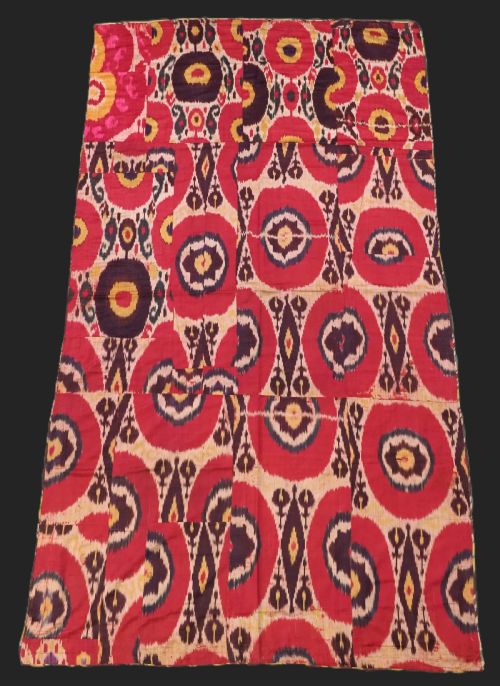
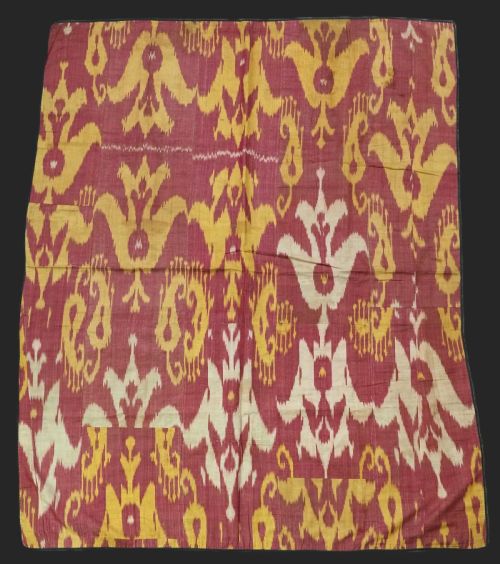
Many items employ multiple narrow strips stitched together, as seen in regional kilims and Uzbek floor coverings, or incorporate dense pile and flat sections. Natural dyeing methods yielded the varied background shades and patterned borders recorded across the surviving pieces.
Handwoven Vintage Tapestry Retail Price Guide 2026
Typical asking prices for handwoven vintage tapestry among the pieces listed under this phrase on Sellingantiques today, from the lower quarter to the upper quarter. They describe what is for sale here now, not the wider market.
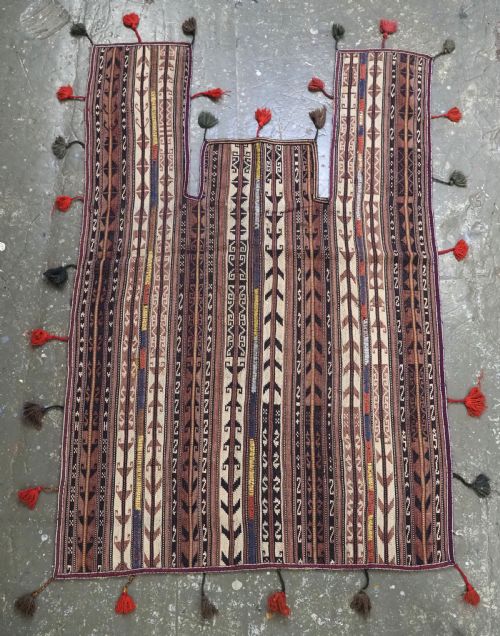
An Afghan horse blanket once served ceremonial duties before finding a second life as a treasured interior textile.
What varies in quality
Quality in these textiles depends heavily on the tightness of the weave, the structural integrity of the base fabric, and the clarity of the design motifs. Finer examples display precise execution in complex geometric repeats or detailed floral panels, maintaining structural balance across the entire piece.
The choice of materials also influences the standard of an item, with hand-spun wools, silk additions, and well-preserved natural dyes commanding greater appreciation. The overall condition of the weave and the fidelity of the regional patterns determine how successfully a textile has endured over time.
The Handwoven Vintage Tapestry Glossary
- Kilim
- An untufted flatwoven carpet or rug produced in regions including Anatolia, the Caucasus, and Central Asia. These textiles are constructed by tightly interweaving warp and weft strands.
- Suzani
- A type of embroidered textile panel originating from Central Asia, traditionally worked with silk or cotton threads on a cotton or linen ground. They frequently feature bold floral arrangements and symbolic motifs.
- Aubusson
- A style of tapestry or rug originating from French weaving houses, noted for verdure scenes or classical pastoral designs. These panels were traditionally woven on vertical or horizontal looms.
- Sofreh
- A woven spread or cloth used in nomadic and village households for sharing meals or processing dough. They often display minimalist tribal patterns specific to their producing region.
- Pasementerie
- Decorative edgings, trimmings, or passement work applied to textiles and cushions. These elements add structural reinforcement and visual framing to the edges of historic panels.
Handwoven Vintage Tapestry: Frequently Asked Questions
How should I clean a vintage tapestry?
Surface dust is best managed through gentle suction using a low-power vacuum with a mesh screen covering the nozzle.
Professional textile conservation cleaning is recommended for deeper treatments to avoid damaging fragile natural fibres and historic dyes.
Can these textiles be hung on walls?
Many flatweaves and panels are suitable for wall display when supported evenly across the upper edge. Using a fabric sleeve or specialised textile clips prevents excessive weight strain on a single point.
Direct, prolonged sunlight should be avoided to protect natural dyes from fading over time.
What is the difference between a kilim and a rug?
A kilim is strictly a flatweave textile made without a pile, created by interlocking warp and weft threads to form the pattern.
Other rug types may incorporate knotted pile surfaces, thicker wool layers, or varied structural techniques depending on their origin.
How do I identify regional tribal designs?
Regional styles reveal themselves through distinct colour palettes, specific geometric symbols, and structural weaving widths. Comparing edge finishes and material combinations helps pinpoint the probable origin among nomadic or village groups.