


Handwoven Tapestry Carpet
A handwoven tapestry carpet brings deep historical texture and rich dye palettes into a room through flatweave and pile techniques.
Handwoven Tapestry Carpet
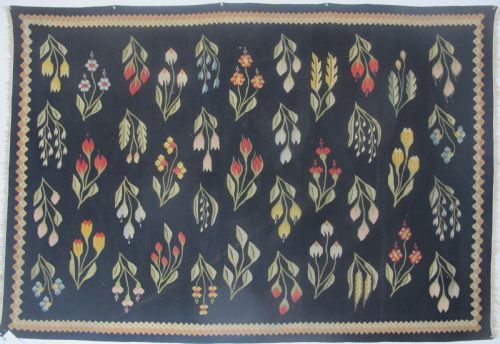
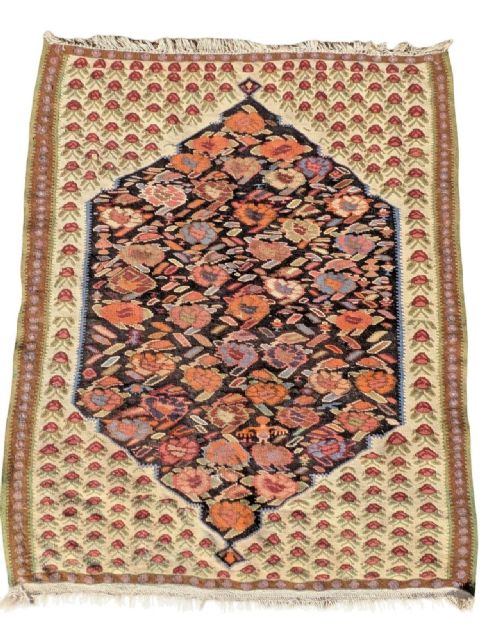
When searching for a handwoven tapestry carpet, buyers encounter flatwoven kilims, tribal panels, and French or European room-sized rugs originating from the nineteenth and early twentieth centuries. These pieces encompass diverse regional traditions, from Balkan folk art and Eastern European floral designs to Central Asian tribal work and Persian weaving.
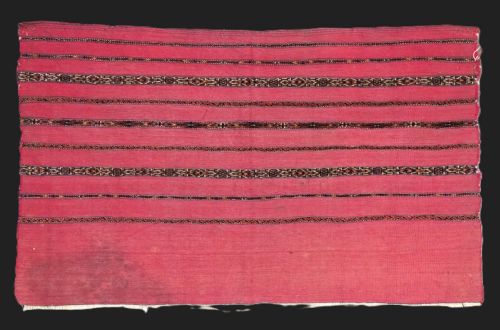
The most common examples on this page are antique kilims and regional flatweaves dating primarily from the decades around nineteen hundred. Buyers also find specialised items such as storage bag faces, eating cloths, and needlepoint or Aubusson pieces that reflect specific domestic and nomadic uses.
Materials and construction
The primary materials recorded across these listings are wool and cotton, often complemented by natural dyes, linen, canvas, and occasional camel hair grounds. Weavers worked these fibres by hand into flatweaves, embroideries, and structural panels joined in multiple strips.
Techniques range from slit-tapestry weaving in regional kilims to detailed needlepoint and heavy wool pile construction found in European and tribal carpets. Natural dye baths produced the soft, faded red, warm neutral, and polychrome palettes seen across the inventory.
Several textiles in this collection began life as camel hair eating cloths or grain sacks before finding retirement on modern floors.
Distinguishing quality in weaving
Quality in these textiles rests upon the fineness of the weave, structural integrity, and the clarity of the graphic or floral design. Pieces woven in multiple narrow strips or fine single panels demonstrate significant technical control by the maker.
Depth and balance in the colour palette also separate standard examples from superior ones, particularly where natural dyes have aged gracefully. The handling of traditional motifs, whether geometric diamond medallions or repeating floral trees, dictates the visual impact of each textile.
The Handwoven Tapestry Carpet Glossary
- Kilim
- A flatwoven carpet or rug produced without a pile by tightly interweaving warp and weft threads. These textiles often feature sharp geometric patterns and versatile reversible designs.
- Chuval
- A large nomadic storage bag face produced by Turkmen tribes for domestic utility and household organisation. They typically display distinctive guls and fine tribal weaving.
- Sofreh
- A woven eating cloth or spread used traditionally for meals within nomadic and village communities in Central Asia and Persia. These textiles often carry specific minimalist or symbolic flatweave designs.
- Aubusson
- A style of French woven carpet or tapestry originating from workshops in the town of Aubusson. They generally feature classical European floral or architectural motifs in softer muted tones.
- Rya
- A traditional Scandinavian piled rug type characterised by a deep, thick woollen surface. Early twentieth-century examples provide substantial warmth and distinct northern European aesthetics.
Handwoven Tapestry Carpet: Frequently Asked Questions
What is a handwoven tapestry carpet?
A handwoven tapestry carpet is a textile created entirely by hand on a loom, encompassing flatwoven kilims, embroidered panels, and pile rugs. These pieces derive from various folk, tribal, and European traditions spanning the nineteenth and early twentieth centuries.
Buyers utilise them as decorative floor coverings or wall hangings to introduce authentic historic pattern and texture into modern interiors.
How do I care for an antique flatweave?
Caring for an antique flatweave involves gentle vacuuming without a beater bar and keeping the textile away from direct, harsh sunlight to protect natural dyes. Professional specialist cleaning ensures the historical wool and cotton fibres remain stable over time.
Underlays help prevent slipping and reduce friction between the rug and hard flooring.
How do I distinguish regional styles?
Regional styles reveal themselves through specific structural traits, colour palettes, and characteristic motifs like geometric medallions or floral sprays. Central Asian and Caucasian pieces often display bold geometric graphics, while European examples favour botanical or classical compositions.
Examining the weave structure and materials provides further clues to geographic origin.