
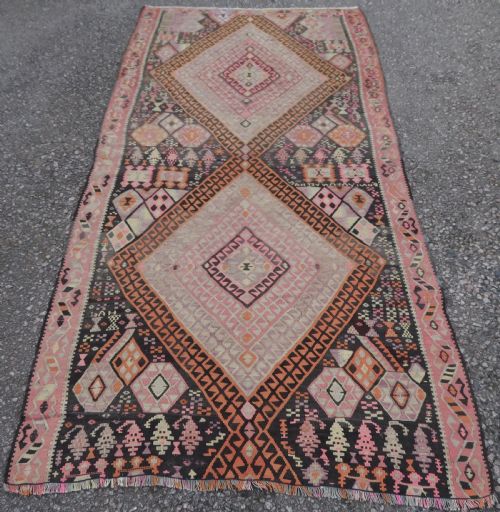
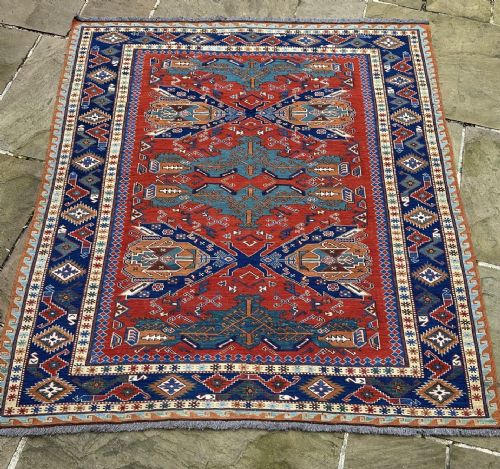
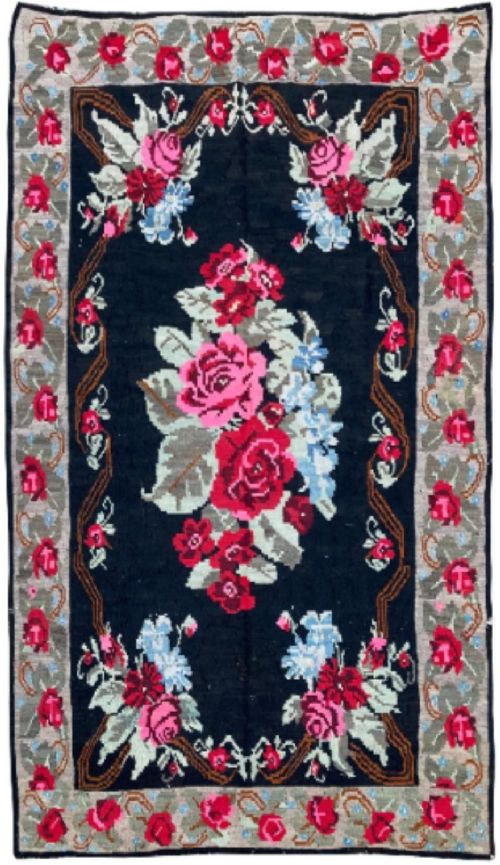
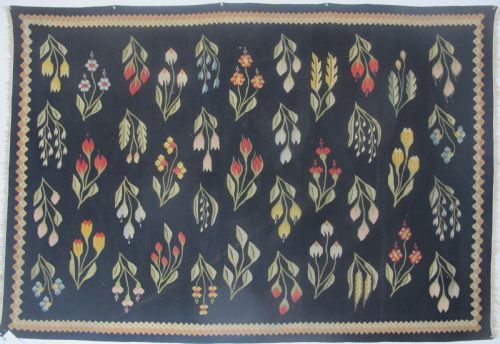

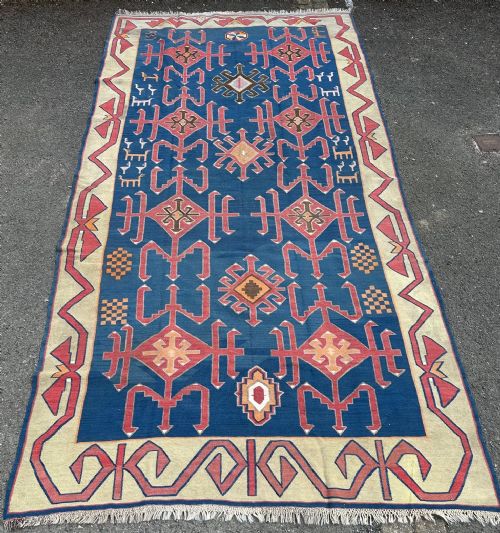


Handwoven Flatweave Carpet
A handwoven flatweave carpet brings textured tribal geometry and history into a room through tight interlocked wefts.
Handwoven Flatweave Carpet
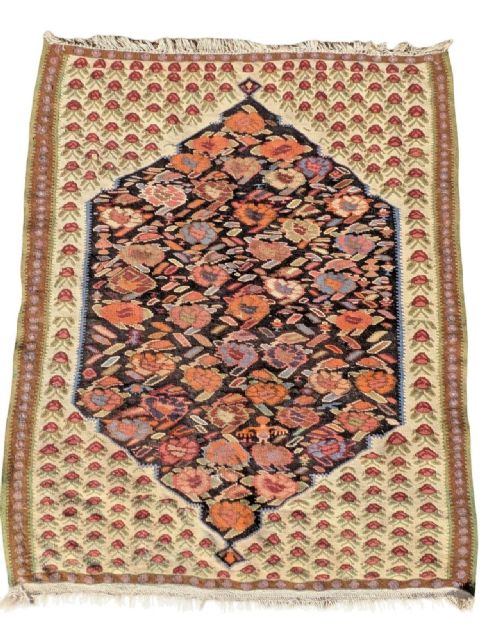
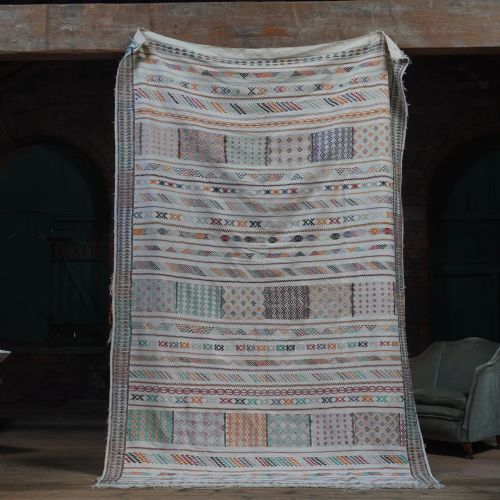
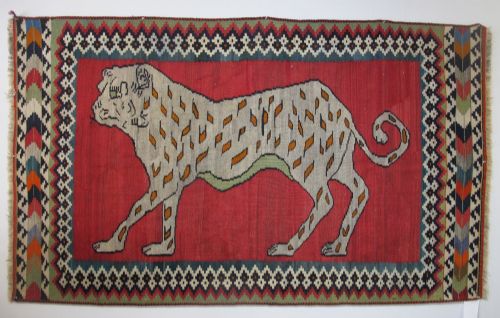
A handwoven flatweave carpet covers a wide geographical span, from the nomadic workshops of Central Asia and Persia to the Caucasus and Eastern Europe. These floor coverings and wall panels rely on a pileless textile structure, meaning the design emerges entirely from the interworking of warp and weft threads.
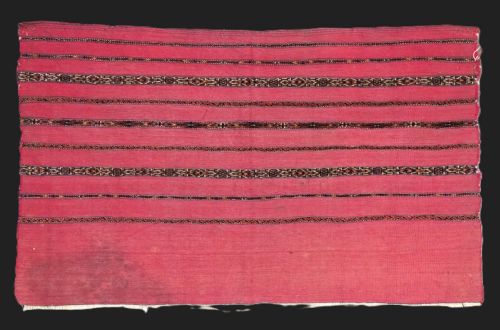
The selection ranges from room-sized carpets and long runners to small hearth rugs, storage bag faces, and dining cloths. Pieces from the nineteenth and early twentieth centuries dominate, bringing muted palettes and authentic tribal motifs into domestic spaces.
How they were made
Weavers constructed these flatweaves predominantly using local wool and cotton, occasionally incorporating camel wool, hair, or botanical fibres like sabra cactus silk. Natural dyes provided the rich tones, while specialised techniques such as slit-weaving created crisp geometric boundaries between colour blocks.
Some regional variations employ mixed techniques or soumak wrapping alongside standard flatweaving to build raised textures and robust structures. Panels were frequently woven in narrow strips and joined together to form larger carpets or domestic covers.
Several nomadic flatweaves began life as camel bags or eating cloths before finding a second career on nineteenth-century floors.
What varies in quality
Quality rests in the precision of the weave and the integrity of the natural materials used by the maker. Tighter tension and finer yarn spinning produce durable textiles that hold their geometric clarity over decades of use.
The depth and stability of the natural dye palette also dictate the distinction of a piece. Subtle fading from age adds character, whereas poorly executed restorations or chemical dyes diminish the historical merit of the textile.
The Handwoven Flatweave Carpet Glossary
- Kilim
- A pileless flatwoven textile produced by tightly interweaving warp and weft strands to create geometric patterns.
- Warp
- The stationary vertical threads stretched across a loom that form the structural foundation of the carpet.
- Weft
- The horizontal threads passed through the warps to carry the colour and form the visible design.
- Soumak
- A brocading technique where weft threads are wrapped around warp threads to produce a textured, durable surface.
- Mafrash
- A traditional tribal storage container or chest panel, often repurposed into smaller flatweave rugs.
Handwoven Flatweave Carpet: Frequently Asked Questions
How do I clean a flatweave carpet?
Gentle regular vacuuming without a beater bar removes loose dirt from the flat structure. Professional textile cleaning is recommended for deep maintenance.
Avoid soaking the wool or using harsh chemical detergents that can strip the natural dyes.
Can I use these rugs in high traffic areas?
The dense flatweave construction makes these textiles remarkably durable for everyday use on floors. Placing a quality underlay beneath the carpet prevents slipping and reduces friction.
Lighter runners and delicate nineteenth-century panels are better suited to lower-traffic zones or wall display.
How can I tell regional styles apart?
Caucasian pieces tend to feature sharp, angular polygons and striking primary colours. Persian and Anatolian examples often incorporate softer floral elements alongside geometric medallions.
Central Asian and Baluch textiles display distinct banded designs and deep earthy tones characteristic of tribal weaving traditions.
Why do some carpets have visible seams?
Many historical nomadic looms had narrow widths, requiring weavers to produce textiles in long strips. These individual panels were subsequently joined side by side to create large room-sized carpets or covers.
This technique is an authentic marker of traditional production methods rather than a structural defect.