





Handmade Tribal Carpet
A handmade tribal carpet brings the vernacular artistry of nomadic and village weavers into a modern room through rich natural dyes and geometric motifs.
Handmade Tribal Carpet
A handmade tribal carpet encompasses village rugs, camel bags, tent bands and flatweaves produced across the Caucasus, Persia, Central Asia and Anatolia during the nineteenth and early twentieth centuries. When searching for a handmade tribal carpet, buyers encounter regional formats ranging from Turkmen chuval faces and Uzbek yurt rugs to Persian Heriz and Qashqai kilims.
The pieces originating from this period reflect distinct tribal traditions, utilising specific medallion structures, prayer formats and repeating guls that indicate the weaver's specific community or nomadic group.
Materials and construction
These textiles rely on hand-spun wool for the pile, combined with cotton warps or foundations of goat hair depending on the regional workshop or nomadic camp. Weavers constructed flatweaves, pile rugs and multi-strip yurt rugs using traditional vertical or horizontal looms.
The structural integrity depends on dense knotting or precise flatweave techniques, with materials selected for durability under nomadic conditions.
Handmade Tribal Carpet Retail Price Guide 2026
Typical asking prices for handmade tribal carpet among the pieces listed under this phrase on Sellingantiques today, from the lower quarter to the upper quarter. They describe what is for sale here now, not the wider market.
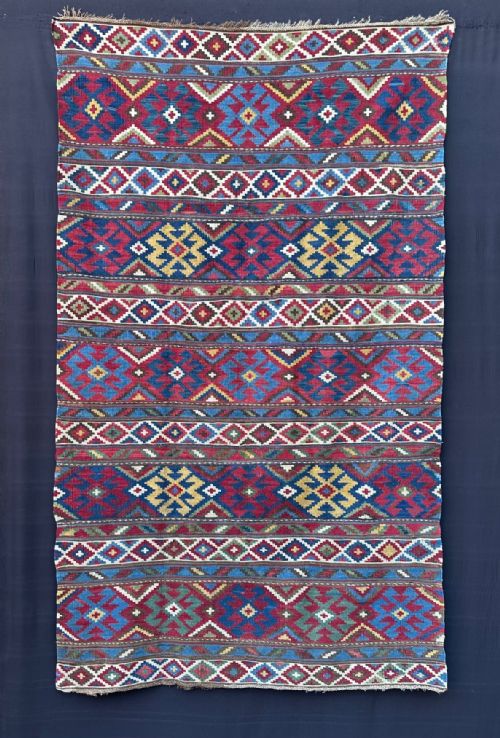
Several yurt rugs on display were woven in multiple distinct strips and later stitched together to span the wide floor of a nomadic tent.
Assessing quality and execution
Quality in these pieces is dictated by the fineness of the weave, the clarity of the drawing and the saturation and depth of the palette. Superior examples demonstrate expert handling of secondary shades and precise execution of complex geometric or ovoid gul designs.
The distinction between standard village output and top-tier collector pieces lies in the crispness of the tribal motifs and the harmonious balance of the natural dye palette.
The Handmade Tribal Carpet Glossary
- Gul
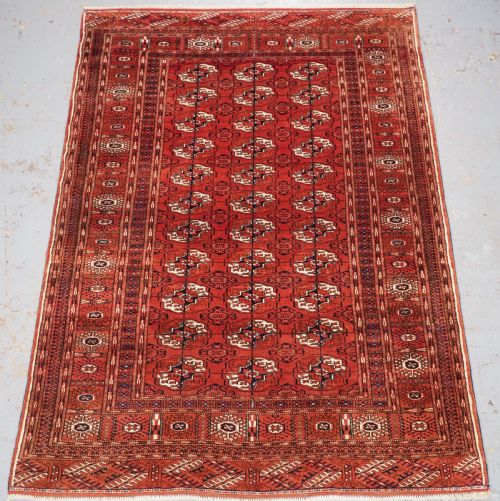
- A primary octagonal or gabled medallion motif repeated across Turkmen and Central Asian carpets. It often identifies the specific tribe or clan that produced the weaving.
- Chuval
- A large storage bag face produced by Turkmen nomads, frequently displaying multiple guls. These pieces were utilised inside the yurt for household storage.
- Kilim
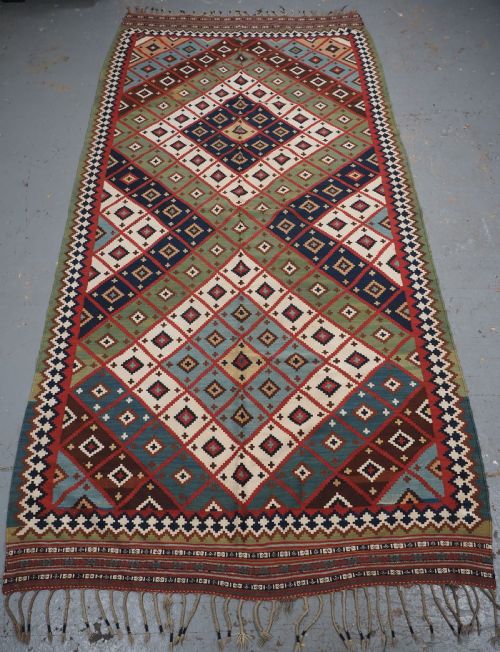
- A flatwoven textile produced without a pile, utilising slit-tapestry techniques. They are often banded or patterned with geometric village designs.
- Torba
- A smaller hanging bag used within nomadic tents, typically featuring end panels and detailed tribal iconography.
- Ensi
- A cross-panel rug traditionally hung over the entrance doorway inside a nomadic yurt. The field is usually divided into quarters by a central candelabra motif.
Handmade Tribal Carpet: Frequently Asked Questions
How do I identify a Turkmen gul?
A gul is a repeating octagonal medallion pattern characteristic of Central Asian weaving traditions. Each specific tribal group, such as the Tekke, Saryk or Yomut, developed its own distinct version of these primary motifs.
Studying the internal geometry and turreted edges of these medallions allows collectors to attribute pieces to particular nomadic lineages.
What is the difference between a rug and a chuval face?
A rug is woven as a complete floor covering or hanging for general domestic use. A chuval face represents the front panel of a large nomadic storage sack that has been cut and preserved.
These bag faces often exhibit finer knotting and denser design work than standard floor rugs due to their original utilitarian function.
Where were these tribal rugs made?
The production spans across the Caucasus, Persia, Anatolia and Central Asian regions like Uzbekistan and Afghanistan. Nomadic groups and village communities in areas such as Shirvan, Karadja, Heriz and Hamadan each developed distinct weaving styles.
Materials and structural traits, such as goat hair edges or cotton warps, help confirm the geographic origin of each piece.
How should I care for a historic wool rug?
Historic wool and cotton textiles require gentle vacuuming without a rotating power brush to protect the pile and foundation. Keeping the rug out of direct sunlight prevents natural dyes from fading over time.
Professional specialist cleaning is recommended for antique pile rugs and flatweaves to preserve the integrity of the hand-spun wool.