
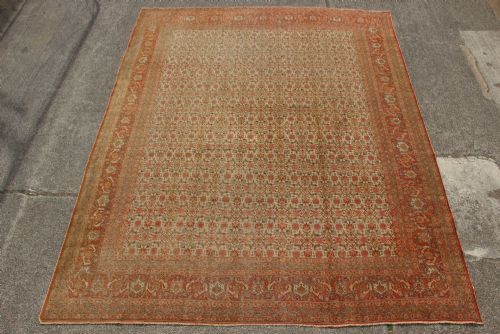
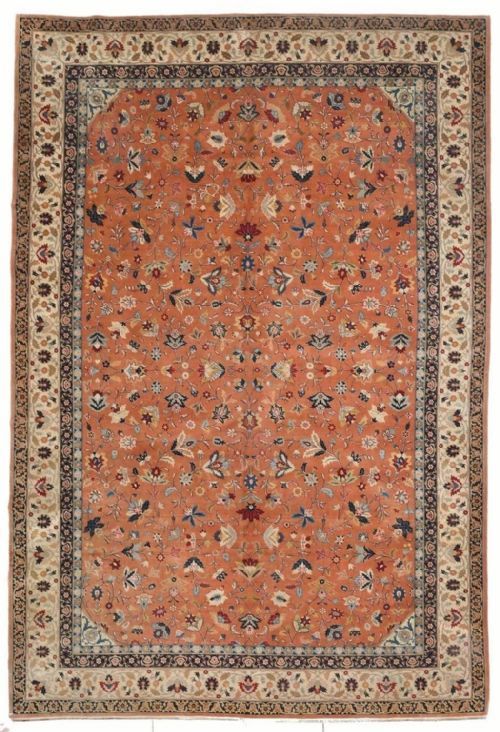


Hand Woven Tabriz Rug
These hand woven tabriz rug pieces bring the intricate artistry of North-West Persia into a room.
Hand Woven Tabriz Rug
A hand woven tabriz rug represents the rich carpet-weaving tradition originating from the historic city of Tabriz in North-West Persia. These floor coverings range from smaller area rugs to large room-size carpets suitable for anchoring major living spaces.
The pieces available span several eras, reaching back to the eighteenth century with Safavid Zand examples alongside nineteenth- and twentieth-century productions from around 1890 up to 1930. Buyers will frequently encounter antique room-size carpets featuring classic floral designs and traditional Persian styling.
Most entries belong to the broader categories of rugs and carpets, often denoted simply as Persian Tabriz work. They serve both as functional floor coverings and as notable historical textiles for traditional and eclectic interiors alike.
Materials and construction
The construction of a hand woven tabriz rug relies on traditional textile materials such as wool, cotton, and silk. Wool provides the durable pile for everyday floor use, while cotton often forms the stable foundation of warp and weft threads.
Certain finer examples incorporate silk to achieve intricate detail and a soft sheen across the surface pattern. Artisans in North-West Persia utilised these natural fibres within meticulous hand-weaving techniques passed down through generations.
Listings include wool, cotton, and silk materials spanning from the eighteenth century to nineteen thirty.
Assessing quality in weaving
Quality in a hand woven tabriz rug depends on the density of the weave and the precision of the classic floral design. Finer examples, such as those associated with specific master workshops or silk construction, demonstrate greater intricacy in their execution.
The choice of materials also alters the character of the piece, where fine silk and densely packed wool distinguish standard room-size carpets from exceptional historical works. Age plays a part too, separating twentieth-century examples from eighteenth-century counterparts.
Benlian·Hajji Jalili
The Hand Woven Tabriz Rug Glossary
- Tabriz
- A style of carpet originating from the historic city in North-West Persia known for intricate floral and medallion designs. These pieces represent a central pillar of Persian textile heritage.
- Pile
- The upright yarn that forms the textured surface of a rug, woven into the foundation. It is typically made from wool or silk.
- Warp
- The vertical threads stretched tightly on the loom that form the structural backbone of the rug. Cotton is commonly utilised for this purpose.
- Weft
- The horizontal threads passed across the warp to hold the knots in place. Together, warp and weft create the stable foundation of the textile.
- Safavid
- A historical Persian era associated with classical design traditions. Pieces from this period reflect centuries-old weaving artistry.
Hand Woven Tabriz Rug: Frequently Asked Questions
How do I clean a silk rug?
Silk rugs require specialist professional care rather than domestic washing. The delicate fibres can easily be damaged by standard cleaning methods.
Keep them away from excessive moisture and heavy foot traffic to preserve the fine material.
Where were these rugs made?
These pieces originate from Tabriz in North-West Persia. The region has a long-standing reputation for master carpet production.
Local workshops developed distinctive floral and room-size formats that defined Persian weaving.
How do I date an old carpet?
Dating relies on stylistic markers, materials, and historical records linked to specific weaving periods. Eighteenth-century examples differ visibly from nineteenth- and twentieth-century production.
Examining the construction materials helps narrow down the era of manufacture.
Can I place these in a hallway?
Room-size carpets and area rugs suit living spaces and reception rooms where their designs can be fully appreciated. Smaller formats fit well in sitting areas or studies.
Consider the traffic level and choose wool over silk for areas prone to heavy movement.