



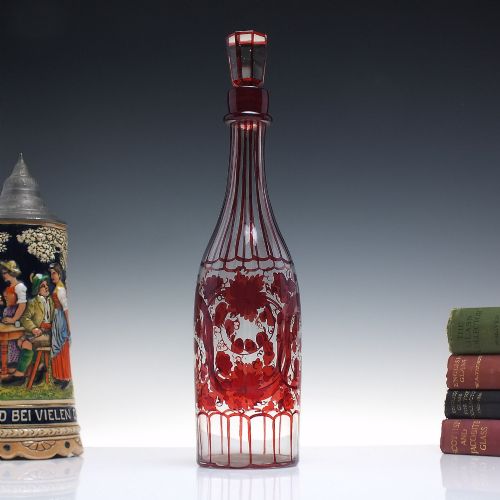


Hand Painted Wine Glasses
Hand painted wine glasses bring colour and character to the table through vibrant enamel decoration on clear or tinted glass.
Hand Painted Wine Glasses
Hand painted wine glasses combine functional glassware with detailed enamel work across several historical periods. Buyers seeking hand painted wine glasses encounter Victorian pieces alongside examples from the early twentieth century.
The selection includes specific forms such as roemers and hock glasses alongside standard wine glasses and goblets. Many pieces arrive from European centres including Germany, Bohemia and Venice.
Makers working in the Victorian and Edwardian eras utilised traditional glassblowing methods before applying multi-coloured enamel designs. These vessels range from single display goblets to matched sets suitable for dining.
How they were made
Glassmakers formed the foundational vessels using blown glass or crystal, often shaping tinted green glass into traditional roemer profiles. Artisans then applied polychrome enamel and gold leaf directly to the exterior surfaces.
Enamel pigments were carefully brushed onto the glass before firing to bond the decoration permanently to the material. Some workshops incorporated heraldic motifs, floral patterns and armorial designs into the painted layers.
Hand Painted Wine Glasses Retail Price Guide 2026
Typical asking prices for hand painted wine glasses among the pieces listed under this phrase on Sellingantiques today, from the lower quarter to the upper quarter. They describe what is for sale here now, not the wider market.
Listings feature glassware from the nineteenth century alongside pieces dated to nineteen hundred and nineteen-ten, spanning Victorian and Edwardian periods.
What varies in quality
The precision and complexity of the enamel work separate standard glassware from superior examples. Skilled painting exhibits sharp outlines and dense pigment coverage across floral and heraldic details.
The clarity and weight of the underlying blown glass or crystal influence the overall standard of the vessel. Greater skill in the initial glassblowing and subsequent gilding elevates the piece.
Thereisenthal·Lobmeyer·Frits Hechert
The Hand Painted Wine Glasses Glossary
- Roemer
- A traditional Germanic drinking vessel featuring a wide bowl and a patterned stem, frequently rendered in green glass.
- Hock glass
- A tall wine glass traditionally used for white wine, often decorated with elaborate enamel work and coloured bowls.
- Polychrome enamel
- Glass paint utilising multiple distinct colours to create detailed pictorial or decorative scenes.
- Historismus
- A nineteenth-century stylistic movement that revived historical Renaissance and medieval forms in glassware and other decorative arts.
- Armorial
- A design incorporating heraldic coats of arms or family crests painted onto the surface of the glass.
Hand Painted Wine Glasses: Frequently Asked Questions
How do I clean antique hand painted wine glasses?
Wash these delicate vessels by hand in lukewarm water using mild soap, avoiding abrasive sponges or harsh detergents that might damage the enamel.
Dry them immediately with a soft lint-free cloth to preserve the clarity of the crystal and the integrity of the painted decoration.
Can I use these glasses for daily dining?
While these pieces were originally created for functional use, their age and delicate enamel decoration mean many owners prefer them for special occasions.
Gentle handling during use and careful storage in a display cabinet will protect the historic glass from accidental chips or surface wear.
How do I identify Victorian pieces from later ones?
Victorian examples often feature deep green glass paired with heavy white enamel painting, sometimes depicting children or pastoral scenes in the manner associated with Mary Gregory.
Pieces from around nineteen-ten frequently display lighter hock glass forms with precise floral enamelling or German heraldic motifs characteristic of Historismus styles.