


Hand Painted Vienna Porcelain
Hand painted Vienna porcelain brings together classical subject matter, rich gilding and meticulous brushwork.
Hand Painted Vienna Porcelain
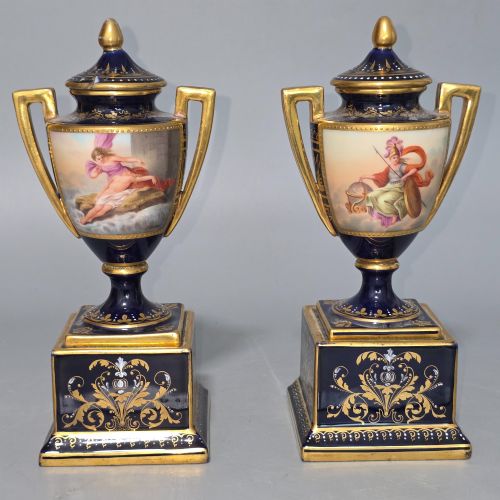
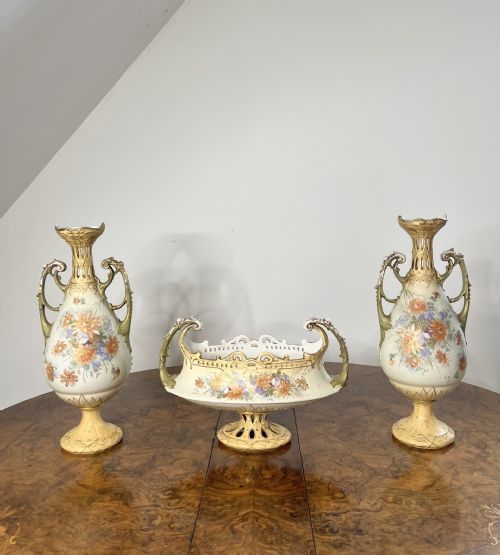
Hand painted Vienna porcelain comprises a diverse range of decorative items, most frequently large chargers, cabinet plates, lidded urns and vases. These objects span the nineteenth century, including specific dates from the eighteen-fifties through to the nineteen-twenties.
The forms on this page reflect distinct revivals, predominantly Neoclassical, Rococo and Empire styles. Collectors encounter pictorial plates depicting mythological or literary scenes alongside amphora vases and garniture sets.
How they were made
Potters shaped the clay bodies into elaborate vessels and plates, applying cobalt glaze for deep blue grounds. Artisans then utilised enamel colours to render intricate figural scenes.
Gold leaf and extensive gilding frame the painted panels, often accompanied by raised gold details or pierced porcelain borders.
Listings feature numerous large chargers and lidded urns executed in Neoclassical and Empire styles during the nineteenth century.
What varies in quality
Quality rests primarily on the finesse of the hand painting and the complexity of the narrative scene. Detailed mythological figures or historical portraits executed by signed artists elevate a piece above standard floral or decorative patterns.
The richness of the gilding and the crispness of any pierced or moulded elements also distinguish finer cabinet plates and urns from simpler production.
F. Koller·Ernst Wahliss·R. Dittrich
The Hand Painted Vienna Porcelain Glossary
- Cabinet plate
- A decorative plate intended for display on a wall or in a cabinet rather than for dining. These items frequently feature detailed mythological or portrait scenes.
- Charger
- A large ornamental plate or shallow dish. They provide a wide surface area suited to elaborate history paintings.
- Garniture set
- A matched group of three or more vases or urns designed to sit together on a mantelpiece or sideboard. They often share a unified decorative theme.
- Amphora
- A two-handled jar with a narrow neck, modelled on ancient Greek pottery forms. Makers adapted this shape during the nineteenth-century classical revivals.
- Gilt
- A thin layer of gold applied to the porcelain surface. This finish accentuates borders and structural details.
Hand Painted Vienna Porcelain: Frequently Asked Questions
What subjects appear on hand painted Vienna porcelain?
Painters drew heavily from classical mythology, historical events and literature. Scenes depict figures such as Venus, Bacchus and Caesar alongside allegorical subjects.
Portrait plates featuring titled women also occur frequently across the nineteenth-century items.
How do I identify a cabinet plate from a standard plate?
Cabinet plates usually feature central pictorial narratives framed by cobalt blue and heavy gilding. Their primary purpose is display rather than practical use.
They often include pierced borders or titled scenes on the reverse.
What styles influence these porcelain pieces?
The pieces on this page align with Neoclassical, Empire and Rococo Revival movements. Makers interpreted classical antiquity through nineteenth-century tastes.
Later items show traces of Art Nouveau alongside Victorian interpretations.
How should I display a garniture set?
Garniture sets of three lidded vases work best arranged across a mantelpiece or large cabinet top. The central urn usually stands taller than the flanking pair.
Keeping them together preserves the visual balance intended by the maker.
Are all pieces signed by the artist?
Signature marks appear on specific high-quality cabinet plates and vases, naming painters such as Wagner or Sibl. Many other pieces carry factory marks or shield stamps without individual artist signatures.