





Hand Painted Tray Table
A hand painted tray table combines a detachable serving surface with a sturdy base, offering both decorative charm and versatile use in a room.
Hand Painted Tray Table
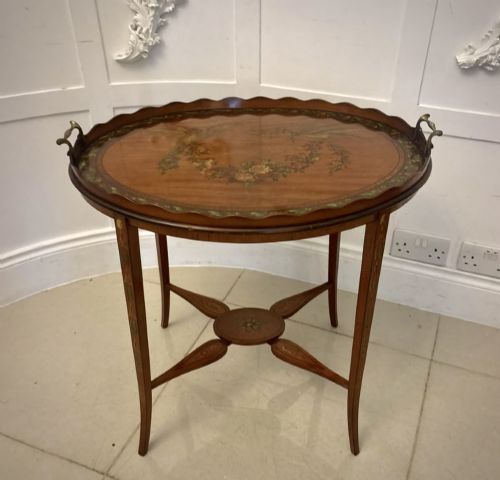
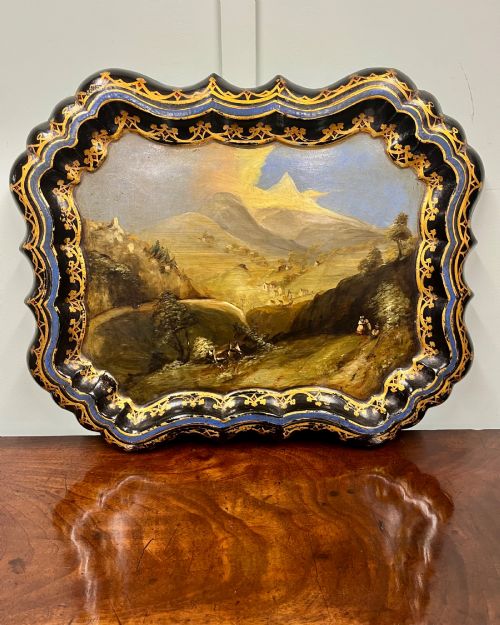
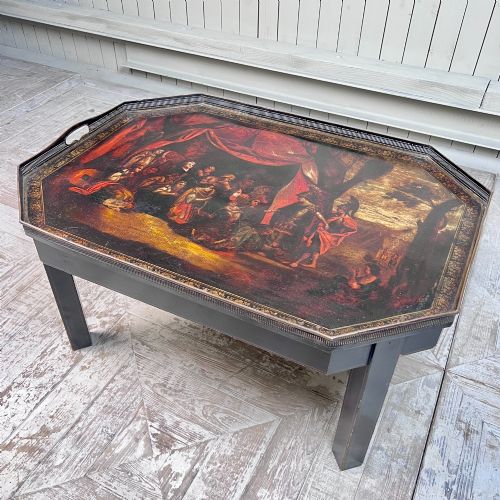
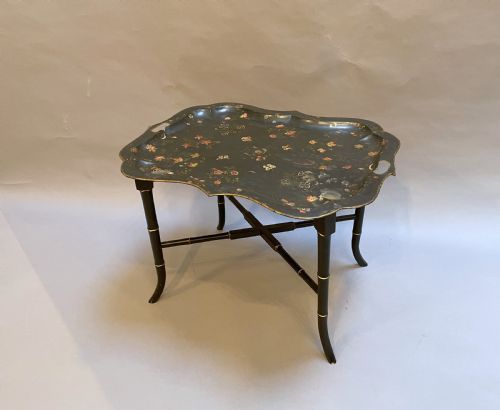
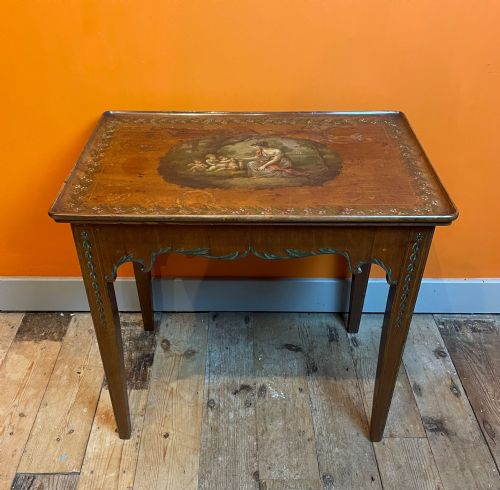
A hand painted tray table brings together functional furniture and detailed artwork, serving as an occasional, coffee, or side table in various living spaces. When you search for a hand painted tray table, you encounter diverse forms ranging from circular coffee tables to octagonal surfaces and traditional serving trays mounted on later stands.
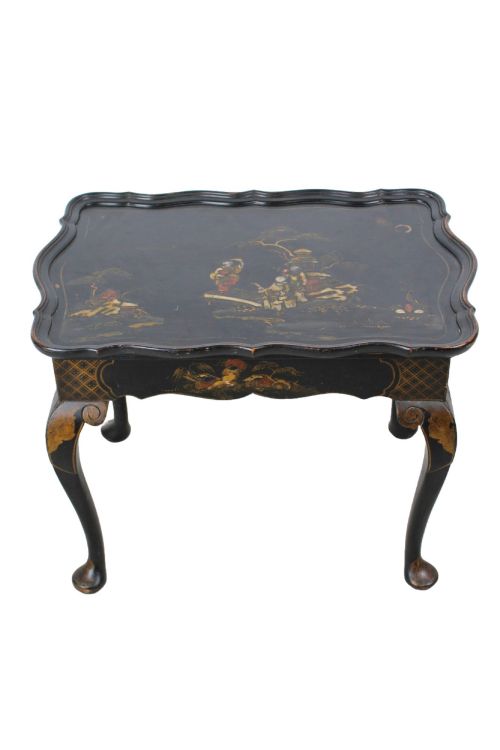
The pieces on this page span several distinct periods, including Georgian, Regency, Victorian, and Edwardian eras, alongside later twentieth-century examples. Styles lean heavily towards Chinoiserie, Venetian Rococo, and Neo-Classical designs, reflecting the aesthetic preferences of their respective centuries.
Origins vary across English craftsmanship and continental workshops, incorporating materials such as wood, lacquer, papier-mâché, and toleware. Many items pair an older painted tray with a later supporting stand, a common practice that preserves delicate historical surfaces while adapting them for modern height and stability.
Materials and construction
Makers utilised rigid substrates like papier-mâché, sheet metal for toleware, and seasoned woods to form the base plates for intricate artwork. Papier-mâché layers were compressed and dried to create a light yet tough surface capable of holding weighted vessels.
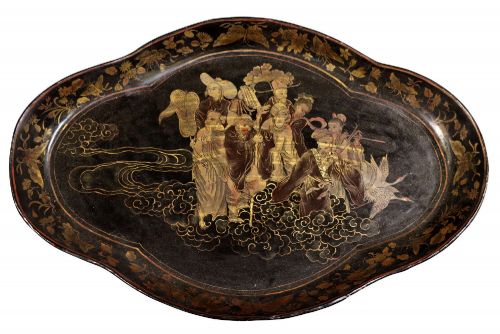
Surfaces received multiple coats of lacquer or paint, providing a smooth background for detailed hand-painted scenes, gilt accents, and gold leaf highlights. Chinoiserie motifs and figurative subjects were applied by hand, often building up layers of pigment to achieve depth.
Supporting structures take the form of wooden or iron stands designed either to fold or to hold the tray securely in a fixed position. These stands range from simple cross-frames to elaborately turned legs matching the period of the top.
Hand Painted Tray Table Retail Price Guide 2026
Typical asking prices for hand painted tray table among the pieces listed under this phrase on Sellingantiques today, from the lower quarter to the upper quarter. They describe what is for sale here now, not the wider market.
Some trays depict serious historical moments like the family of Darius, while others simply show people wandering near impossible pavilions.
Evaluating quality and execution
Quality rests primarily in the precision and preservation of the hand-painted artwork, where finer examples display confident brushwork, subtle shading, and well-rendered figures or landscapes. Lesser pieces feature hurried execution, flat application of colour, or excessive later retouches that obscure the original hand.
The material integrity of the tray base dictates its durability, with papier-mâché and lacquered wood requiring careful previous handling to avoid warping or deep surface cracking. Toleware items depend on the stability of the metal underneath and the adherence of the paint layers.
The relationship between the tray and its stand influences desirability, as harmoniously proportioned stands or period-appropriate frames sit better than mismatched or crudely joined modern substitutes.
The Hand Painted Tray Table Glossary
- Chinoiserie
- European decorative style inspired by Chinese artistic traditions, featuring imaginary landscapes, figures, and pavilions rendered in paint and lacquer. This aesthetic appears frequently on eighteenth and nineteenth-century furniture.
- Papier-mâché
- Composite material made from paper pulp or layers of paper reinforced with glue, moulded and dried to form a hard, smooth surface. It provides a lightweight foundation for detailed lacquer work.
- Toleware
- Enamelled or lacquered metalware, typically iron or tin, painted with decorative scenes or floral motifs. These items were often used for domestic trays and vessels.
- Gilt
- Application of gold leaf or gold paint to highlight carved details, borders, or specific elements within a painted scene. It adds reflective contrast to darker lacquer backgrounds.
Hand Painted Tray Table: Frequently Asked Questions
Can I use a tray table for daily serving?
Many of these pieces were originally designed for serving food or drink, though fragile surfaces require caution.
Using a protective glass top or limiting use to display items helps preserve delicate hand-painted artwork and older lacquer.
How do I clean a lacquered surface?
Dusting gently with a soft, dry cloth is the safest method for maintaining painted and lacquered trays.
Avoid chemical cleaners, abrasive cloths, or excessive moisture, which can damage old paint and lift gold leaf.
Are the trays removable from their stands?
Most tray tables feature a removable tray resting on a folding or fixed base rather than being permanently attached.
This construction allowed traditional servants to carry the tray separately before placing it onto the supporting frame.
What does a later stand mean?
A later stand indicates that the wooden or metal base was made at a different time than the antique tray top.
This is common practice for papier-mâché and tole trays, which often survived longer than their original wooden supports.
How do I identify a Chinoiserie design?
Chinoiserie designs typically display stylised Asian-inspired landscapes, exotic birds, pagodas, and figures engaged in leisurely pursuits.
Artists used gold and bright pigments against black, red, or green lacquered backgrounds to create these decorative scenes.