



Hand Painted Toy Horse
A hand painted toy horse carries the rustic charm of bygone playrooms, offering tactile history and enduring folk art appeal.
Hand Painted Toy Horse
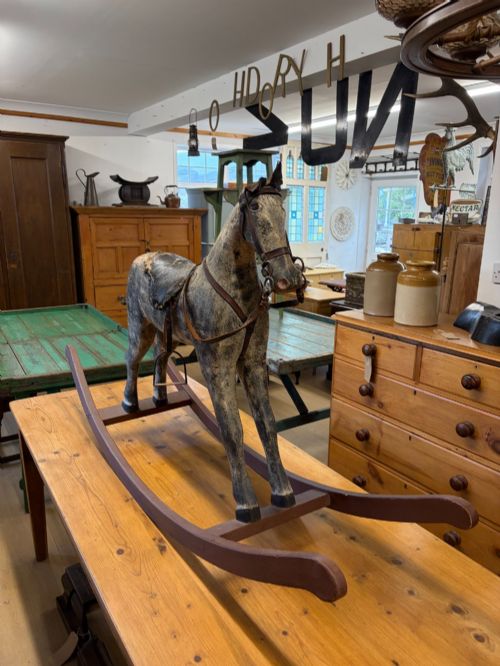
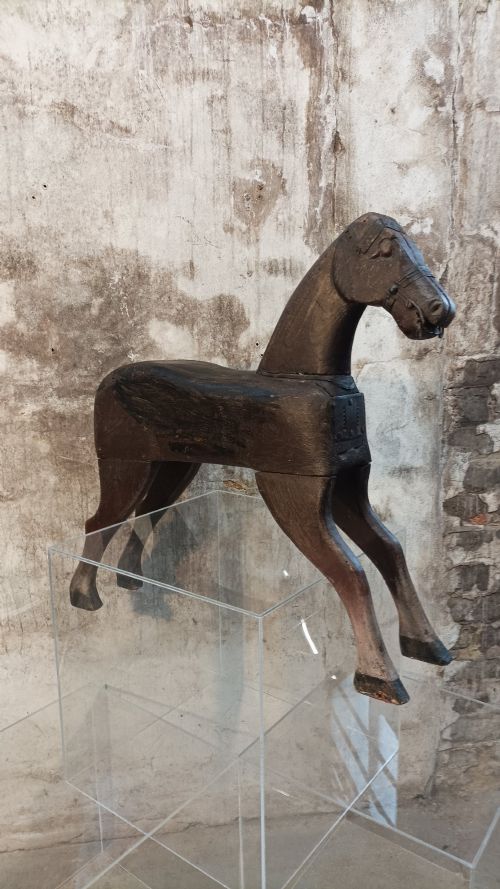
Buyers will most frequently encounter nineteenth-century primitive rocking horses and naive carved wooden sculptures fashioned in folk art styles. These pieces showcase straightforward construction methods intended for active play or simple household ornamentation.
Origins span British, Spanish, and Anglo-Indian traditions, each bringing distinct regional character to the painted surfaces and wooden frames. The surviving examples demonstrate how everyday playthings transformed into collectable folk art objects over generations.
How they were made
Makers fashioned these figures primarily from carved wood and pine, building sturdy inner structures designed to withstand daily use. Artisans then applied layers of paint directly onto the timber, often preserving original pigments that reveal decades of handling and patination.
Details such as leather tack, horsehair manes, and iron hardware completed the construction of rocking horses and sculptural figures. These mixed media elements were secured by hand, ensuring each toy possessed a unique physical composition.
Hand Painted Toy Horse Retail Price Guide 2026
Typical asking prices for hand painted toy horse among the pieces listed under this phrase on Sellingantiques today, from the lower quarter to the upper quarter. They describe what is for sale here now, not the wider market.
Many a nineteenth-century rocking horse still bears the faint, cheerful ghost of a child's name scuffed into the pine.
What varies in quality
The degree of original pigment preservation largely separates everyday examples from superior specimens. Pieces retaining their initial surface layers offer a more authentic historical record than those subjected to later overpainting.
Carving execution and anatomical expression vary considerably between pieces, ranging from simple naive interpretations to more detailed forms. The integrity of structural elements like wood and iron components also influences the overall character of the piece.
The Hand Painted Toy Horse Glossary
- Folk art
- Artistic work produced from an indigenous culture or peasant society, characterised by a naive style where traditional rules of proportion and perspective are not employed. These objects reflect the traditions and resourcefulness of local makers.
- Primitive
- Descriptive of early or crude manufacture, lacking sophisticated workshop techniques. Such items display straightforward construction methods typical of regional or domestic craftsmanship.
- Naïve
- An art style marked by a childlike simplicity in execution and perspective. Makers working in this manner focused on direct representation rather than academic accuracy.
- Original paint
- The initial decorative surface applied to an object by the maker, unaltered by later restoration. Collectors prize this attribute for its historical honesty and patination.
- Patina
- The surface appearance developed through age, use, and exposure to light. This physical record indicates the passage of time and how an object was handled.
Hand Painted Toy Horse: Frequently Asked Questions
How were these wooden horses used?
Rocking horses provided physical amusement for children in nurseries and playrooms, designed for mounting and gentle motion. Static wooden sculptures served primarily as decorative ornaments within domestic spaces.
Over time, many working toys transitioned from active playthings into decorative objects collected for their aesthetic and historical qualities. Their usage evolved as households recognised their value as folk art.
How do I live with a toy horse?
Positioning these wooden figures in a living space requires stable placement away from direct heat sources and extreme humidity fluctuations. Their painted surfaces and organic components appreciate gentle environmental conditions.
They pair well with traditional and contemporary interiors alike, functioning as sculptural focal points on tabletops or floors. Their neutral wood tones and weathered pigments complement diverse decorative schemes.
How can I tell the periods apart?
Distinguishing between periods involves observing the woodworking techniques, paint composition, and overall structural design. Nineteenth-century examples often display simpler hand-carved forms and primitive construction.