


Hand Painted Spill Vase
A hand painted spill vase holds the matches of the parlour, bringing hand-painted scenes and gilded porcelain to the mantelpiece.
Hand Painted Spill Vase
When you search for a hand painted spill vase, you encounter decorative vessels designed to hold thin tapers for lighting fires and candles. The examples found here span the Georgian, Regency, Victorian, and Edwardian periods, stretching into the early twentieth century.
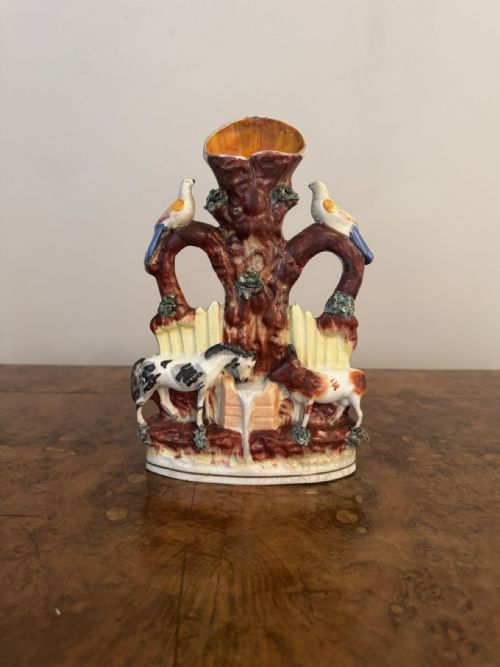
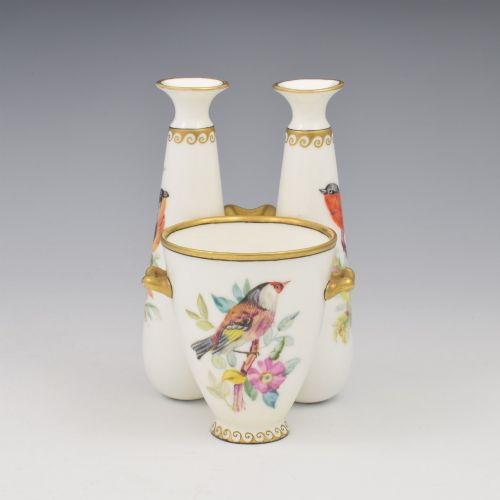
The forms vary from simple porcelain cylinders and miniature vases to Staffordshire pottery figure groups and cornucopia. Many pieces emerge from English factories like Flight Barr and Barr Worcester and Royal Worcester, decorated with birds, cattle, fruit, and floral patterns.
The Staffordshire tradition supplies pottery figures alongside dedicated spill vases, while manufacturers like Royal Worcester contribute delicate porcelain painted by noted artists. Buyers select these items for their cabinet presence and their direct link to nineteenth-century domestic life.
How they were made
Makers shaped these objects from porcelain, earthenware, and glazed ceramic, often finishing surfaces with enamel colours, gilding, and gold leaf. Bisque porcelain also appears, offering an unglazed matte surface favoured for detailed figural work.
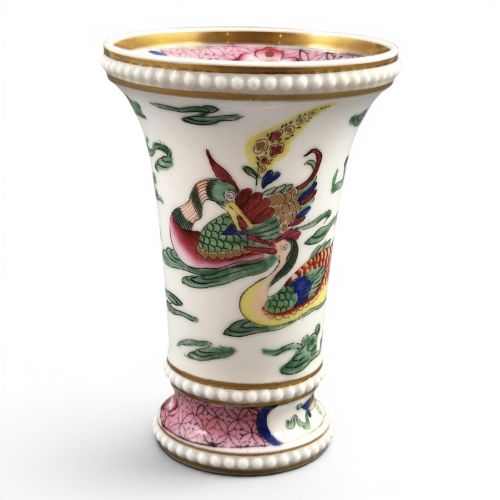
Painters applied brushwork by hand directly onto the ceramic body, depicting subjects such as highland cattle, ornithological studies, and fruit still lifes. Gilding and gold leaf accents highlight rims, handles, and bases, completing the decorative scheme.
Cattle painted by Stinton and ducks by Spode stand ready on ceramic grass to watch over your mantelpiece.
What varies in quality
The fineness of the hand-painted detail distinguishes standard production from superior output, particularly on Royal Worcester pieces bearing artist signatures. Delicate brushwork depicting animals or botanical studies elevates a vessel above simple factory output.
The crispness of the porcelain or earthenware moulding and the preservation of the gilding determine visual impact. Early Regency and Georgian specimens display refined potting, whereas later Victorian Staffordshire pieces rely on robust folk character and hand-applied enamel.
Flight Barr and Barr·Royal Worcester·Vion et Baury
The Hand Painted Spill Vase Glossary
- Spill vase
- A small vertical vessel designed to hold taper spills for lighting fires. They sit on mantelpieces in pairs or singles.
- Bisque porcelain
- Unglaved ceramic fired once to create a matte, biscuit-like surface suited to fine figures. It captures subtle modelling without glaze interference.
- Cornucopia
- A horn-shaped container symbolising abundance, often utilised in Regency and nineteenth-century mantel ornaments. These pieces double as spill holders.
- Staffordshire flatback
- Earthenware pottery figures modelled in the round with unpainted flat backs intended to face a wall. They record domestic scenes and popular themes.
- Imari
- A Japanese decorative style featuring iron red, cobalt blue, and gold, widely adopted by English potteries. It provides rich contrast on ceramic bodies.
Hand Painted Spill Vase: Frequently Asked Questions
How do I date a spill vase?
Dating relies on factory marks, ceramic bodies, and painting styles. Georgian and Regency pieces show refined porcelain and classical forms, while Victorian examples often feature robust Staffordshire earthenware.
Twentieth-century pieces, such as those from Royal Worcester, frequently carry specific artist signatures and printed pottery ciphers.
Where were these vases made?
The pieces originate primarily from English potteries and porcelain works. Prominent centres include Worcester and Staffordshire.
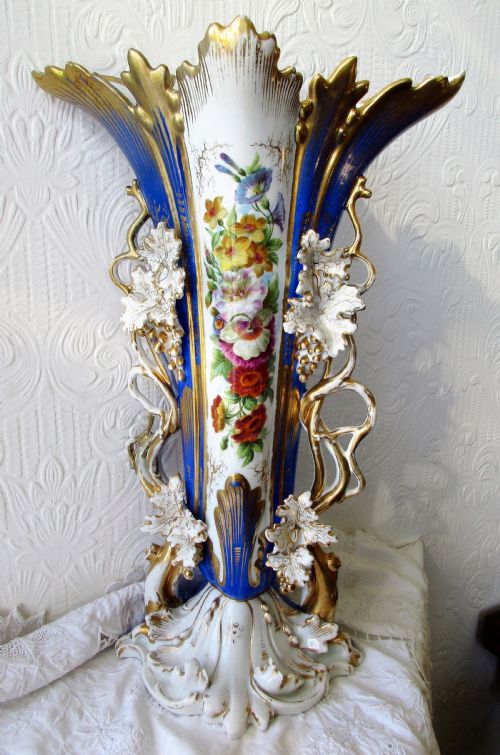
Continental influences also appear through styles emulating French makers.
How should I display them?
Display these vases on mantelpieces, side tables, or within glass cabinets where their hand-painted details remain visible. Pairs look balanced when flanking a clock or larger ornament.
Keep them away from direct heat sources to protect the historic enamel and gilding.