




Hand Painted Sevres Urns
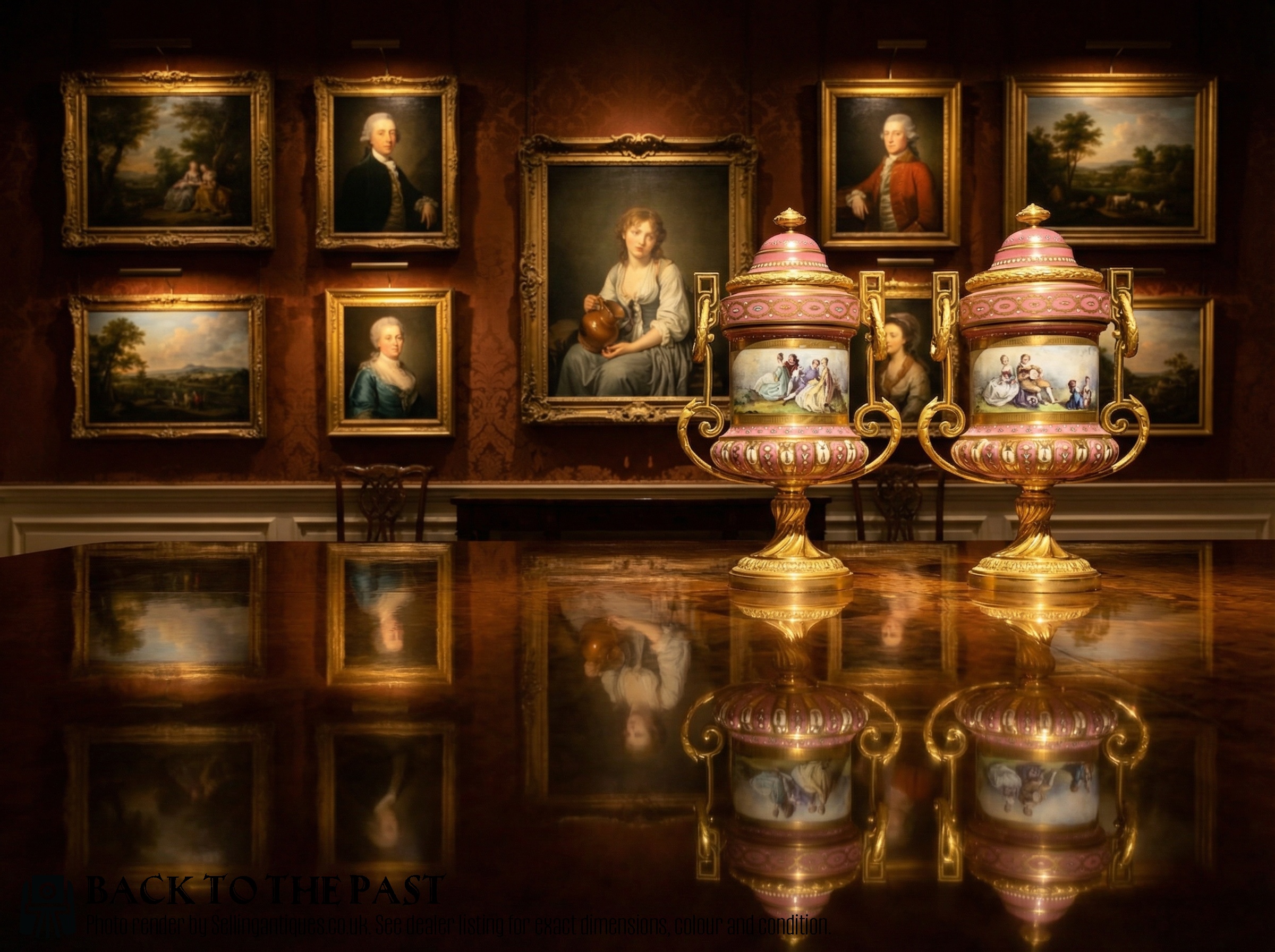
Hand painted sevres urns bring nineteenth-century French porcelain and gilt metal mounts together into formal decorative objects.
Hand Painted Sevres Urns
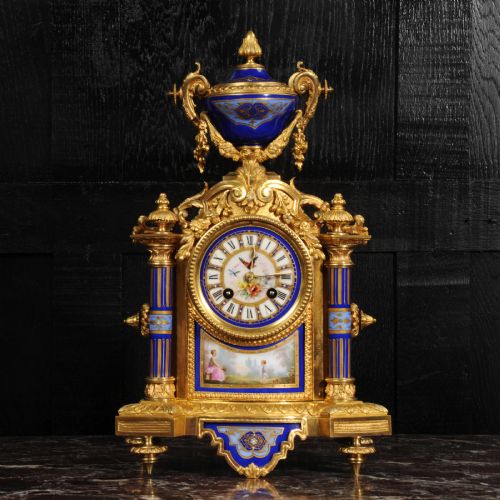
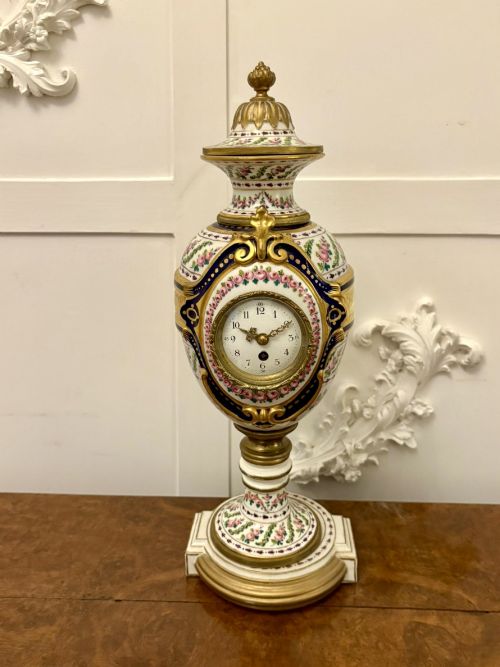
When you search for hand painted sevres urns, you encounter nineteenth-century decorative works shaped as lidded vases, standard vases, and mantel clocks. These items originate predominantly from the nineteenth century, spanning decades such as 1860, 1880, 1890, 1900, and 1920.
The objects appearing on this page take the form of French Rococo Revival, Louis XVI Style, and Napoleon III designs. Many examples present themselves in pairs, utilised historically to balance grand interior mantelpieces and drawing room tables.
The forms incorporate porcelain bodies enriched with hand-painted scenes, framed by cast metal mounts. These pieces reflect broader nineteenth-century European revivals of earlier French court aesthetics.

Materials and construction methods
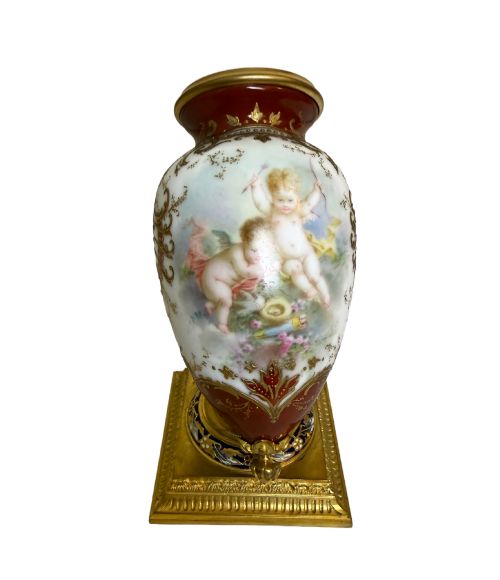
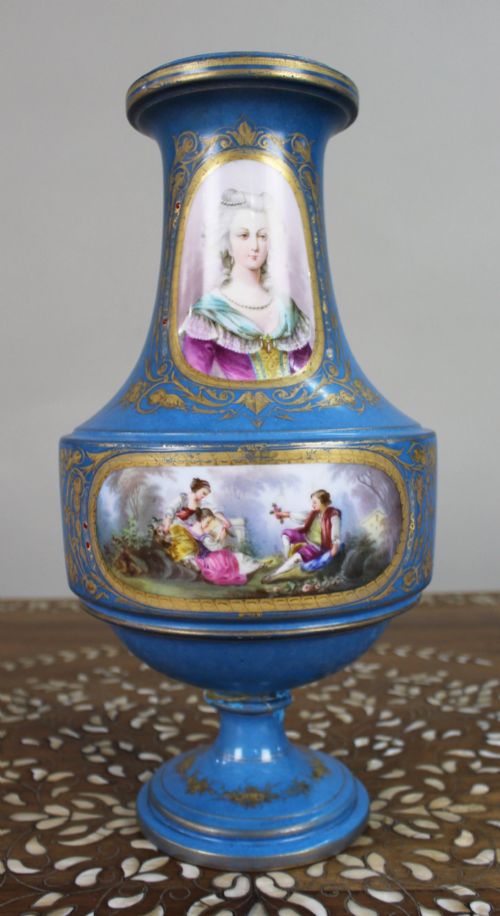
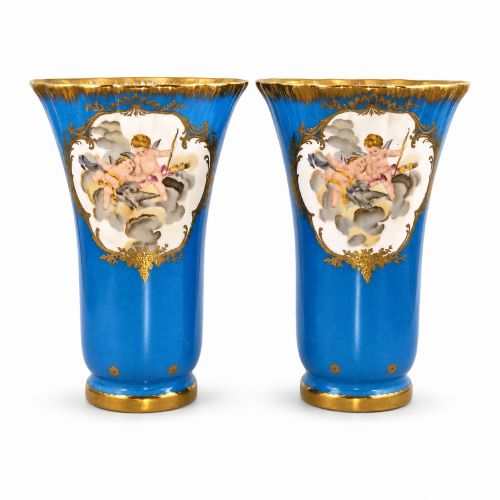
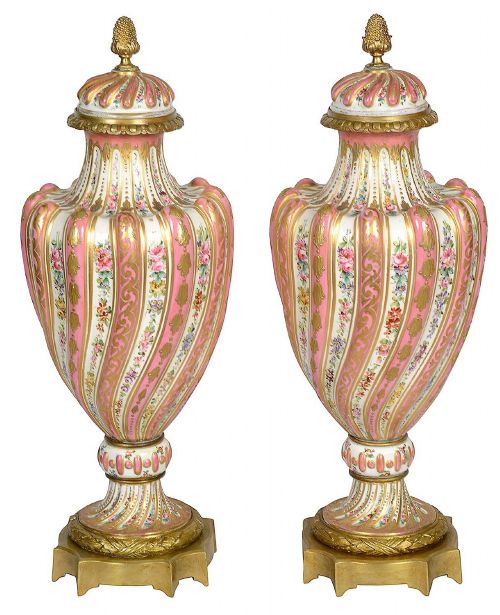
Makers shaped these items from fired porcelain bodies, applying coloured glazes including bleu celeste, pink, and cobalt blue. Hand-painted pictorial panels and floral motifs sit directly upon the glazed porcelain surface.
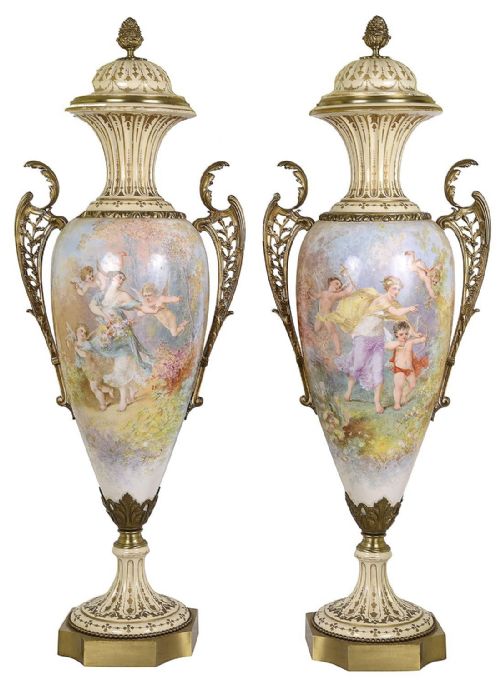
Craftsmen mounted the ceramic bodies in ormolu, gilt bronze, gilt metal, and brass. These metal mounts are chased and secured to the porcelain to form handles, bases, and rims.
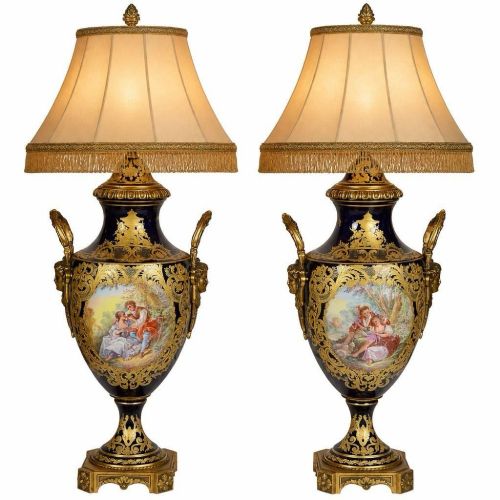
Object forms include lidded vases, mantel clocks, comports, table lamps, and traditional urn shapes.
Judging the quality of the objects
The refinement of the hand-painted detailing distinguishes superior examples from standard production. Precision in the brushwork and the complexity of the polychrome scenes indicate the skill of the artist.
The weight and crispness of the ormolu and gilt bronze mounts determine the grade of the piece. Finely chased metalwork secured tightly to the porcelain body denotes higher manufacture standards.
Japy Freres·Samson Paris
The Hand Painted Sevres Urns Glossary
- Ormolu
- Gilded bronze utilised for decorative mounts on furniture and porcelain. This technique involves applying a gold amalgam to a bronze base and heating it.
- Garnish set
- A matching group of three decorative objects, usually comprising a central clock flanked by matching vases or urns. These sets coordinate on a mantelpiece.
- Chasing
- The manual method of refining cast metal details with hammers and punches. Artisans utilise this technique to sharpen the decorative patterns on bronze mounts.
Hand Painted Sevres Urns: Frequently Asked Questions
What periods do these urns date from?
These pieces date from the nineteenth century, with particular concentrations in the decades from 1860 to 1900. A smaller number extend into the early twentieth century around 1920.
The styles draw upon earlier French periods such as Louis XVI and the Rococo, interpreted through nineteenth-century revival aesthetics.
How were these urns used originally?
In nineteenth-century interiors, these pieces functioned as ornamental focal points on mantelpieces, consoles, and tables. They were often arranged as symmetrical pairs to anchor architectural wall displays.
Some examples were adapted later into table lamps through the addition of electrical fittings.
What colours do the porcelain bodies feature?
The listings show porcelain bodies finished in distinct ground colours including bleu celeste, pink, cobalt blue, and bleu royale. These coloured grounds typically frame hand-painted pictorial reserves.
Gilding in gold leaf highlights the rims, handles, and borders of the painted panels.
How do you distinguish styles among these pieces?
Style identification relies on the shape of the metal mounts and the character of the porcelain form. Louis XVI style pieces display neoclassical symmetry, straight lines, and classical foliage.
Rococo revival examples incorporate asymmetric scrollwork, curved contours, and naturalistic floral motifs inspired by earlier eighteenth-century designs.