


Hand Painted Satsuma Ceramic
These hand painted satsuma ceramic pieces bring intricate Japanese artistry into your interior.
Hand Painted Satsuma Ceramic
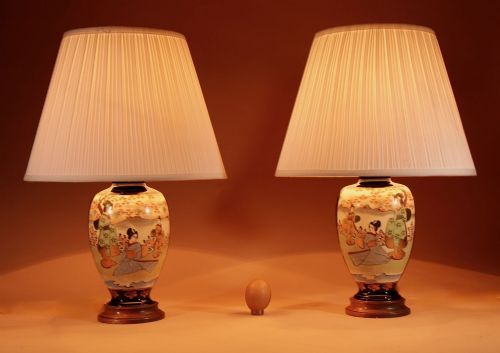
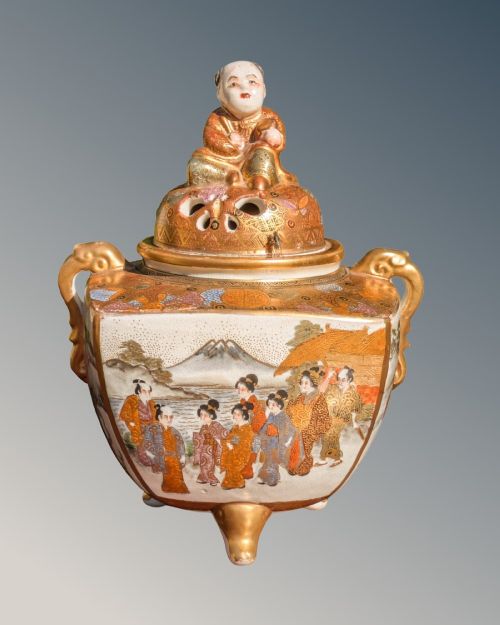
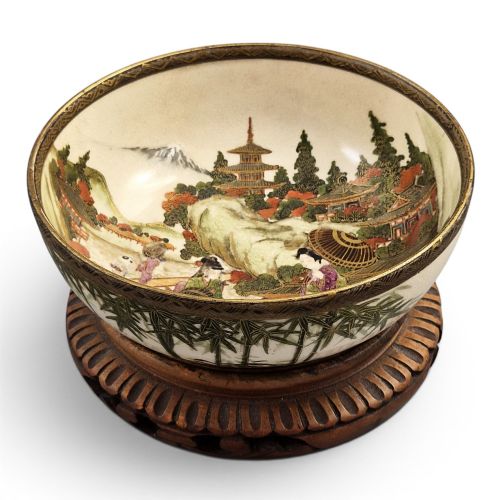
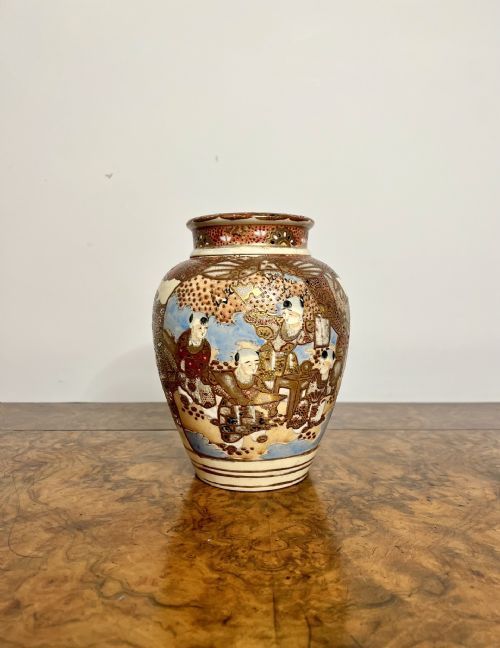
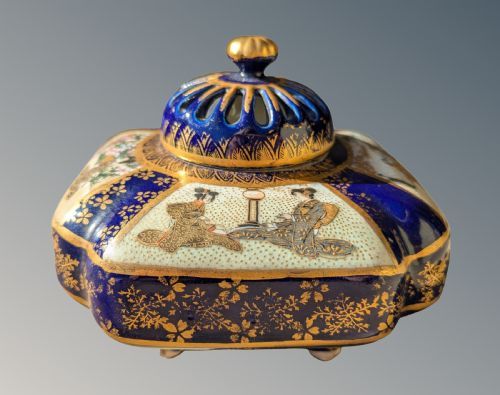
When you search for hand painted satsuma ceramic, you encounter pieces spanning the Meiji, Taisho, and Edwardian periods, stretching from the late 19th century into the 1920s. These items range from decorative bowls, vases, and ginger jars to incense burners, tea caddies, and table lamps.
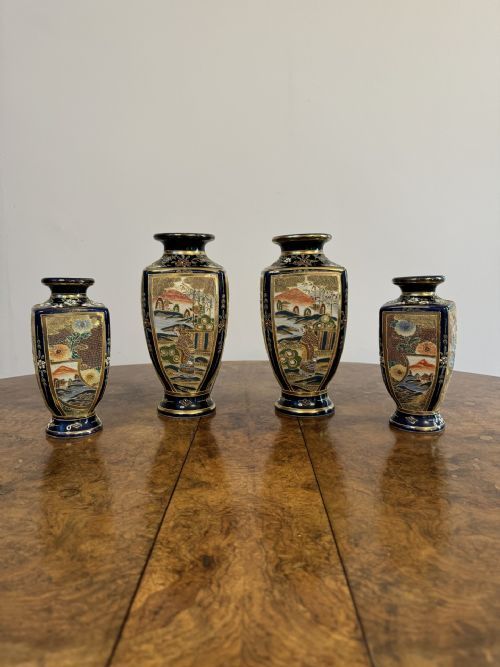
The majority of surviving examples originated in Kyoto and reflect traditional Japanese design aesthetics. Forms vary from monumental vessels and garnitures down to delicate miniature vases and shallow dishes.
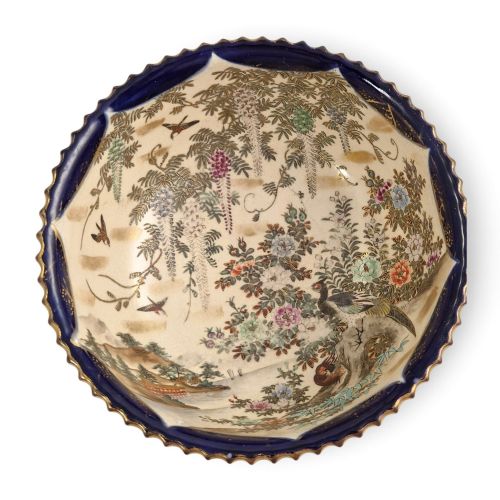
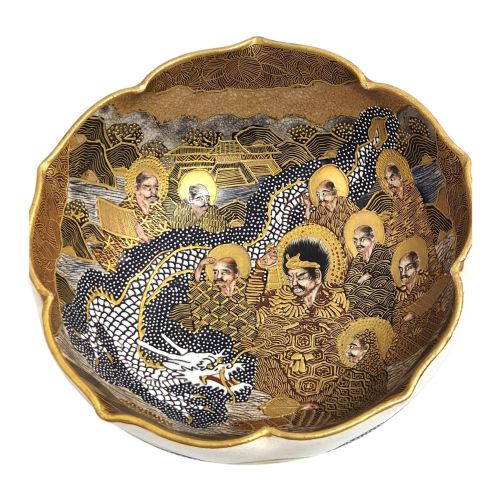
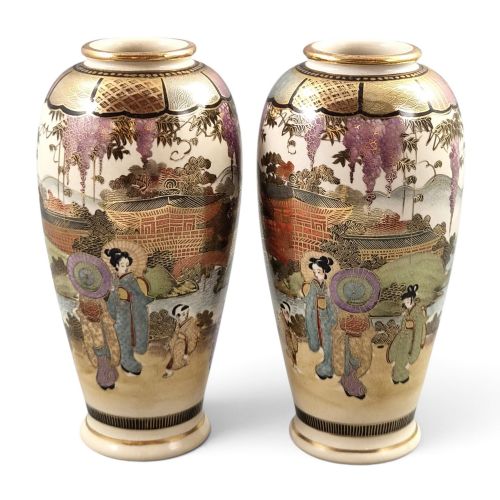
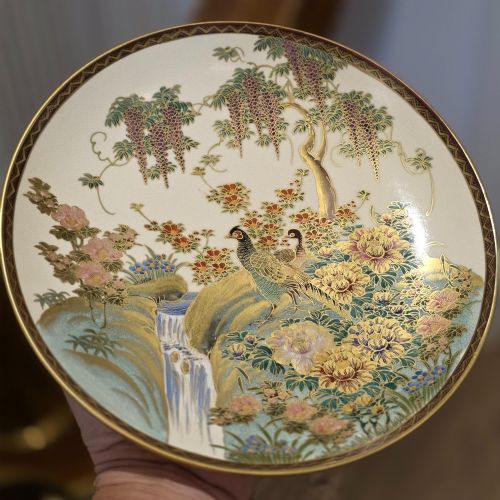
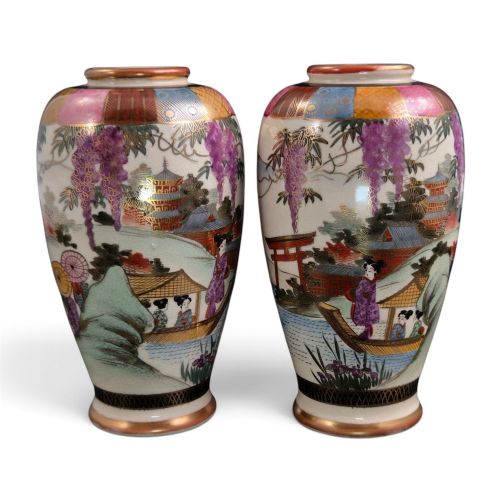
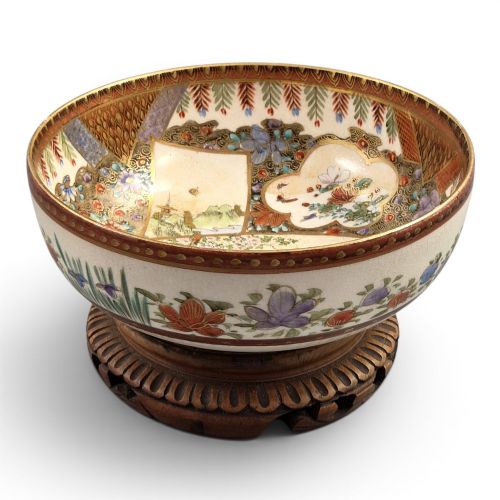
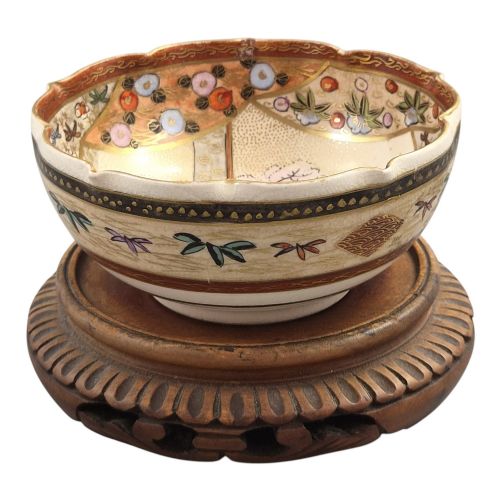
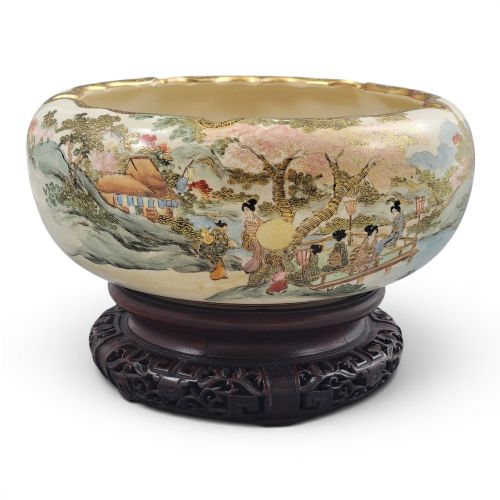
Makers from this tradition produced works decorated with figural processions, landscapes, and floral motifs. Many incorporate traditional Japanese imagery such as wisteria, samurai battles, and the gods of good fortune.
How they were made
Potters constructed these vessels using earthenware bodies, applying a fine crackle glaze across the surface. This distinctive glaze provides the characteristic network of tiny lines underlying the painted decoration.
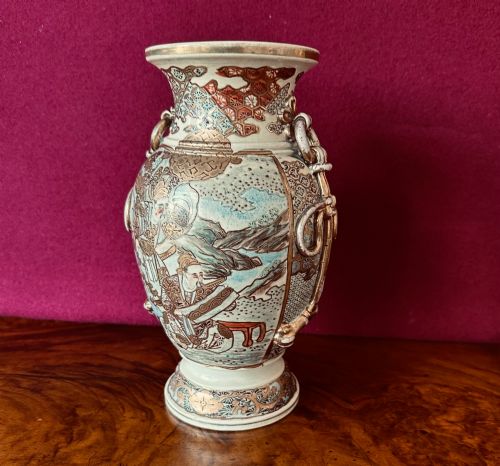
Artists then applied detailed enamel colours alongside gold leaf and gilt accents. Many works feature dense patterns executed with meticulous brushwork across bowls, vases, and lidded jars.
Hand Painted Satsuma Ceramic Retail Price Guide 2026
Typical asking prices for hand painted satsuma ceramic among the pieces listed under this phrase on Sellingantiques today, from the lower quarter to the upper quarter. They describe what is for sale here now, not the wider market.
Samurai battles painted on miniature bowls prove that grand historical warfare fits comfortably inside the palm of a hand.
What varies in quality
The distinction between standard production and top-tier items rests on the precision of the brushwork and the complexity of the composition. Master workshops employed skilled painters whose figurative scenes and dense gilding show superior clarity and depth.
Signature marks play a role in separating pieces, as recognised names command attention for their workshop standards. The density and refinement of the enamel and gold leaf application further separate ordinary items from exhibition quality works.
Koshida·Maruni Kobe·Shozan·Kizan·Kinkozan·Gyokkō·Kozan·Toshozan·Ryuzan·Chosei·Shuzan·Nikko·Hakusan·Hododa·Choshuzan·Jissei·Yoshisada·Kotobuki-do·Meizan
The Hand Painted Satsuma Ceramic Glossary
- Satsuma Ware
- A type of Japanese earthenware featuring an ivory-coloured crackle glaze. It served as the primary canvas for detailed enamel and gilt painting during the Meiji period.
- Koro
- A traditional Japanese incense burner fitted with a pierced lid. These tripod vessels often feature elaborate figural or floral surface designs.
- Natsume
- A small Japanese tea caddy used in the preparation of powdered green tea. These containers typically possess rounded bodies and snug lids.
- Mon
- A Japanese heraldic badge or crest used to identify families or clans. The Shimazu crest frequently appears on high-quality ceramic pieces from this tradition.
- Meiji Period
- The era of Japanese history lasting from 1868 to 1912. This timeframe produced the vast majority of the decorative ceramics traded by collectors today.
Hand Painted Satsuma Ceramic: Frequently Asked Questions
How do I identify satsuma ware?
Satsuma ware is recognised by its characteristic pale earthenware body covered in a fine network of crackled glaze. This surface is decorated with intricate enamel paintings and gold leaf.
Many pieces also feature artist signatures or workshop marks on the base, alongside traditional family crests such as the Shimazu mon.
What are incense burners used for?
Incense burners, or koro, were utilised for burning aromatic incense during traditional gatherings or quiet contemplation. Their pierced lids allowed the scented smoke to diffuse into the room.
Beyond their practical function, these tripod vessels served as highly decorative ornaments within Japanese interiors.
How should I clean these ceramics?
These delicate earthenware pieces require gentle dusting with a soft, dry cloth. You must avoid using water, abrasive cleaners, or chemical solutions on the fragile enamel and gilt surfaces.
Keep them away from direct sunlight and areas prone to extreme humidity to protect the crackle glaze.
Are all pieces from the Meiji period?
While the majority of these ceramics date from the Meiji period of the late 19th and early 20th centuries, production continued into the Taisho period and the Edwardian era.
Items from slightly later decades retain similar decorative techniques while reflecting the evolving tastes of early 20th-century export markets.