



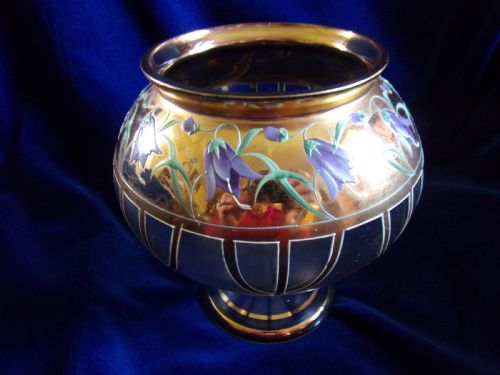


Hand Painted Glass Urn
These hand painted glass urn pieces bring vibrant colour and intricate Victorian character into a room.
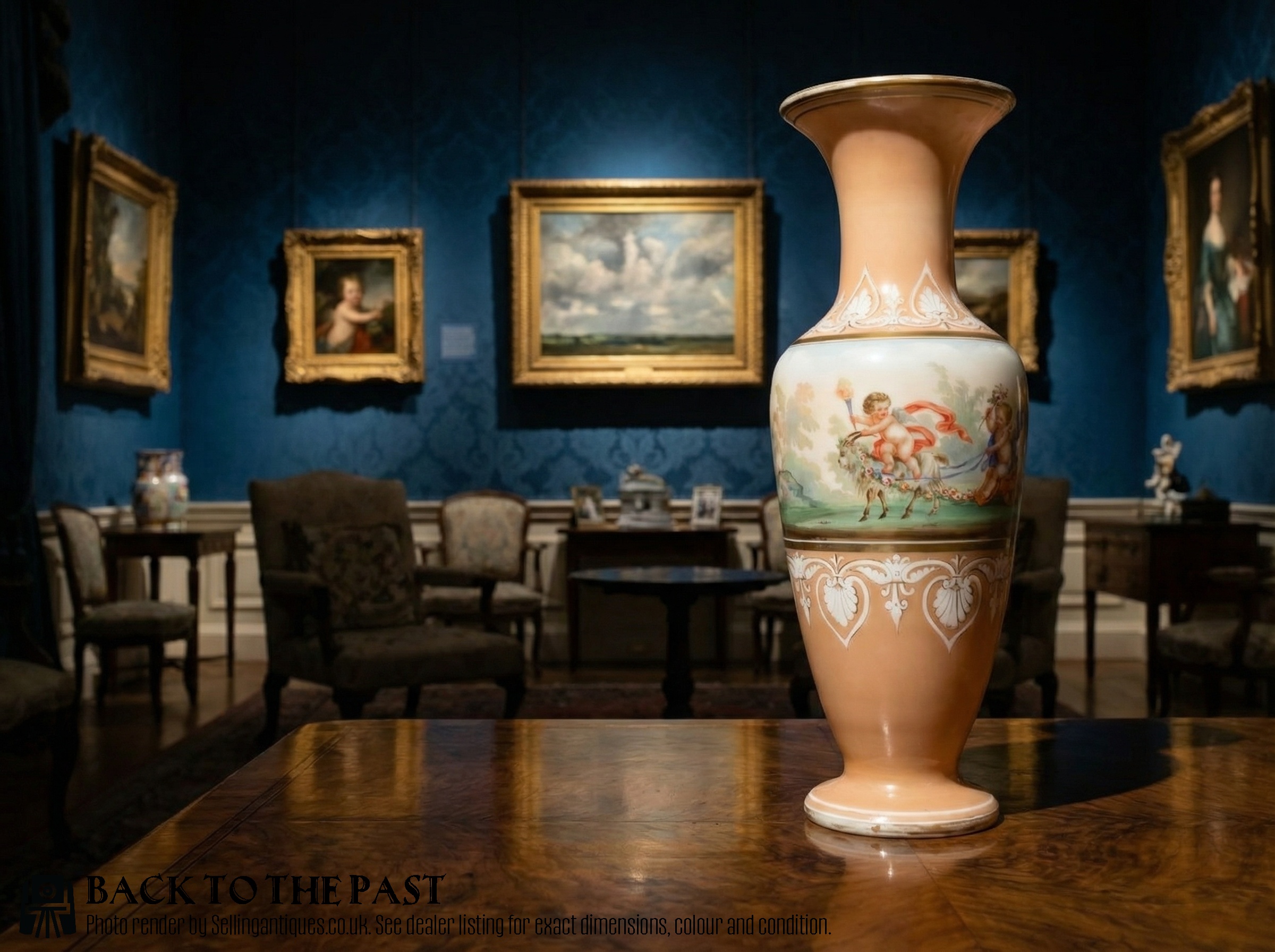
Hand Painted Glass Urn
When searching for a hand painted glass urn, a buyer is looking at decorative vessels shaped for display rather than functional use. The forms range from tall vases and ewers to garniture sets and even mirrors, originating mostly from the Victorian era up to the early twentieth century.
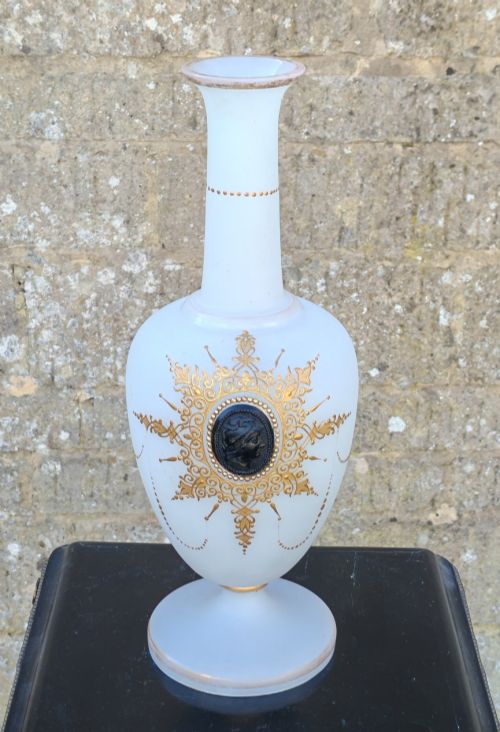
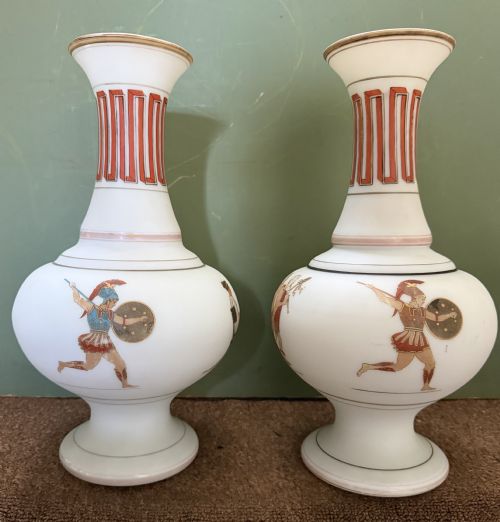
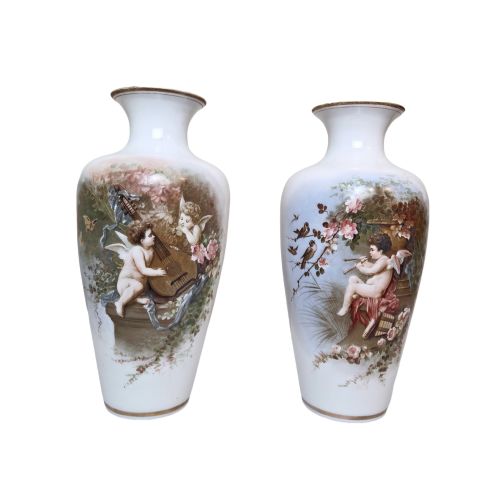
The pieces meeting a buyer on this page span several distinct aesthetics, including Victorian Rococo Revival, Art Nouveau, and the Aesthetic Movement. Many examples feature delicate enamel paint or gold leaf applied over coloured glass bases such as cranberry, green, blue, and amber.
Makers and origins vary across English, Bohemian, and continental workshops, with notable work by firms like Moser and Harrach. A buyer will find both single display items and matched pairs designed to sit symmetrically on a mantelpiece or sideboard.
How they were made
The foundation of each piece is blown or moulded glass, often utilising striking body colours like cranberry, amber, blue, and green, alongside opaque glass. Artisans then applied detailed surface decoration using enamel paint and gold leaf to build up figurative, floral, or aquatic scenes.
Techniques such as crystal overlay involve fusing layers of different coloured glass before cutting back the top layer to reveal the contrasting hue underneath. Guilds and makers employed skilled painters to hand decorate each vessel, ensuring that no two pieces share identical brushstrokes.
Hand Painted Glass Urn Retail Price Guide 2026
Typical asking prices for hand painted glass urn among the pieces listed under this phrase on Sellingantiques today, from the lower quarter to the upper quarter. They describe what is for sale here now, not the wider market.
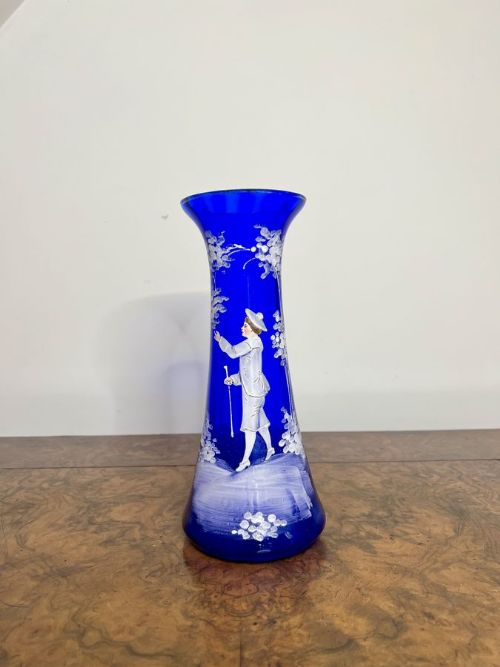
Several Victorian pieces proudly feature white enamelled children frogging about in silhouette, proving that even solemn drawing rooms needed a child or two.
What varies in quality
Quality in these pieces rests on the precision of the hand painting and the depth of the glass medium. Superior examples display crisp enamel work, controlled gilding, and well-balanced forms that reflect the best standards of Victorian and Art Nouveau craftsmanship.
The distinction between standard decorative items and exceptional works often lies in the attribution to known makers such as Moser or Harrach, or the complexity of techniques like overlay and polychromatic enamelling. Condition and the preservation of delicate surface gilding also determine the standing of a piece within the range.
Moser·Harrach·Mary Gregory
The Hand Painted Glass Urn Glossary
- Mary Gregory
- A style of glass decoration featuring white or tinted enamel figures, typically children playing in woodland settings. This silhouette technique became popular during the late nineteenth century.
- Enamel
- A glass-like substance melted onto the surface of a glass vessel for decoration. It provides durable colour and a slightly raised texture.
- Bohemian
- Pertaining to glass production centres in the Bohemia region of Central Europe. This glass is known for vibrant colours and skilled cutting or overlay techniques.
- Gilt
- A thin layer of gold applied to the surface of the glass for ornamentation. It catches the light and highlights moulded or painted details.
- Ewer
- A large jug with a wide spout and a shaped handle. In decorative glass, ewers serve as ornamental showpieces rather than serving vessels.
Hand Painted Glass Urn: Frequently Asked Questions
What are hand painted glass urn pieces?
These pieces are decorative glass vessels, vases, and ewers created during the nineteenth and early twentieth centuries. They were designed primarily for interior display on mantelpieces and tables.
Craftsmen decorated the glass bodies with hand-applied enamel paint, gold leaf, and pictorial scenes reflecting Victorian and Art Nouveau tastes.
How should I display them?
Place them in spaces with good natural light to highlight the coloured glass and metallic gilding. Paired items work well for symmetrical arrangements on sideboards or mantelpieces.
Keep them away from direct sunlight and high-traffic areas to protect the delicate hand-painted enamel surfaces from accidental damage.
How do I tell periods apart?
Victorian pieces often feature rich body colours, heavy gilding, and figurative enamel work like the Mary Gregory style. Later items from around nineteen hundred lean towards Art Nouveau curves and stylized natural motifs.
Examining the weight of the glass, the style of the hand painting, and any maker attribution helps narrow down the decade of production.
Were they used for flowers?
Most of these vessels served a purely decorative purpose as ornamental garnitures rather than functional flower holders. Their intricate enamel work and narrow necks made them impractical for daily use with water.
Some larger forms could hold dried arrangements, but their primary role was to showcase the skill of glasshouses in Bohemia, England, and across Europe.