



Hand Painted Garniture
When you choose a hand painted garniture, you bring matching sets of ornamental vases, urns or clock services into your home to anchor a mantelpiece or sideboard.
Hand Painted Garniture
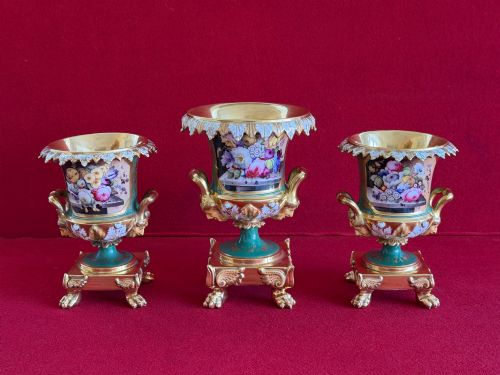
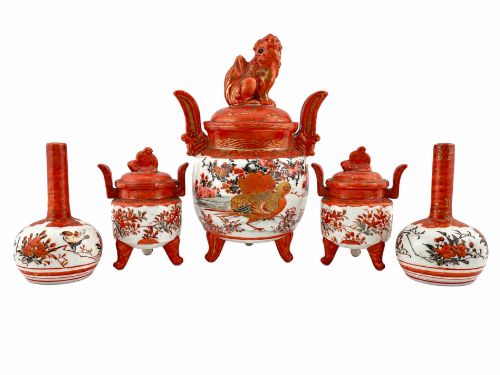
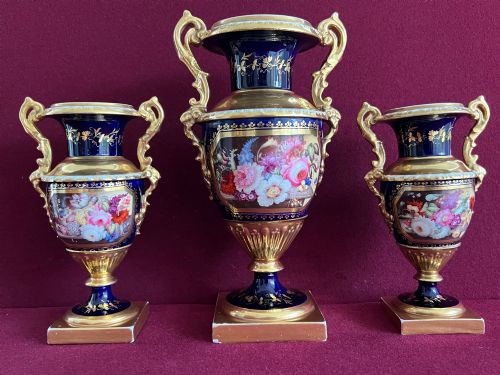
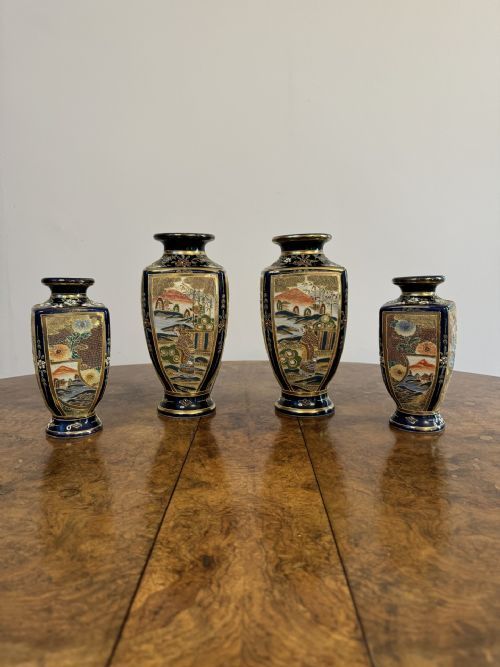
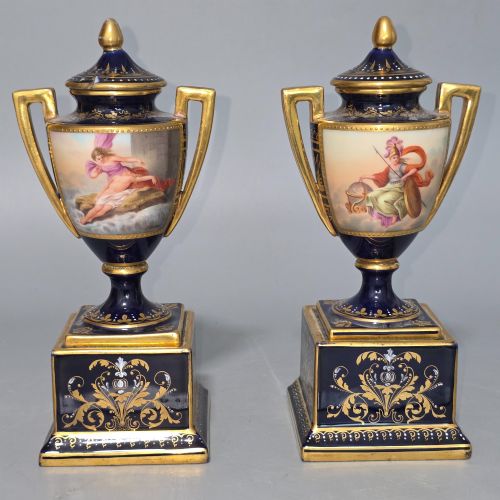
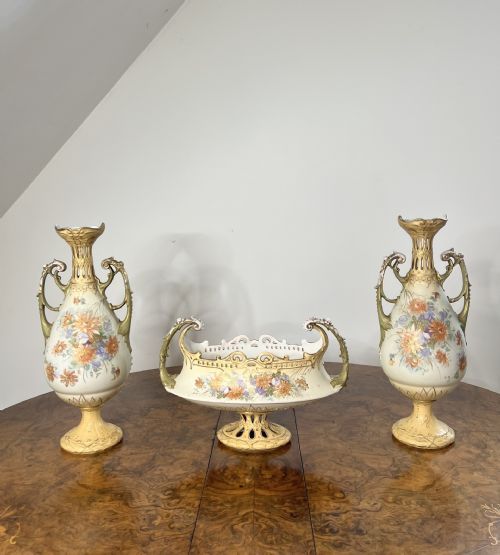
A hand painted garniture brings together matched sets of decorative vases, urns, or mantel clocks designed to be displayed together as a unified centrepiece. The phrase covers diverse forms ranging from three-piece porcelain clock sets to multi-piece Japanese porcelain arrangements and pairs of lidded vases.
Most examples found here date across the nineteenth century, taking the form of French Sevres style porcelain, English Minton porcelain, or Japanese Satsuma and Kutani pieces. These sets typically comprise a central vessel flanked by matching smaller vases or candelabra.
Makers and artists applied detailed hand painting directly onto the ceramic or glass bodies, often depicting birds, figures, or botanical scenes. Buyers select these groupings to provide formal symmetry and colourful focal points within period rooms.
Materials and construction
Makers relied primarily on porcelain, earthenware, and glass as the foundational bodies for these decorative sets. Artisans then applied detailed hand painting, enamel work, and gilding directly to the surfaces.
Many French and English pieces incorporate ormolu, gilt bronze, or gold leaf mounts that frame the ceramic bodies and provide structural bases. Glass examples utilise overlaid portraits and ruby coloration to achieve their decorative depth.
Hand Painted Garniture Retail Price Guide 2026
Typical asking prices for hand painted garniture among the pieces listed under this phrase on Sellingantiques today, from the lower quarter to the upper quarter. They describe what is for sale here now, not the wider market.
Some nineteenth-century makers decorated vases with birds holding entire insects in their beaks just to show off their brush control.
Distinctions in execution
The sophistication of the hand painting and the precision of the enamel work separate standard sets from superior examples. Skilled artists produced finer facial expressions, more complex botanical details, and richer gilding.
The integration of metal mounts, such as cast ormolu and gilt bronze, dictates the overall refinement of a garniture. Heavier, more deeply chased mounts indicate higher production standards than lighter, simpler brass fittings.
Minton Porcelain·Thomas Steel·Royal Vienna·KPM Berlin·F. Koller
The Hand Painted Garniture Glossary
- Garniture
- A matched set of ornamental vases, urns, or clock services designed for coordinated display on a mantelpiece or sideboard. These groupings typically consist of three or five matching pieces.
- Ormolu
- Gilded bronze mounts applied to furniture, clocks, and porcelain vessels for decorative and structural support. This technique involves treating finely cast bronze with a mercury and gold amalgam.
- Lustre
- A decorative glass or porcelain vase featuring hanging crystal prisms around the rim. These pieces reflect ambient light and were popular during the Victorian period.
- Koro
- A traditional Japanese tripod incense burner often included in larger ceramic garniture sets. These vessels frequently feature Satsuma or Kutani hand painted motifs.
- Amphora
- A two-handled ceramic vase with a narrow neck, modelled on classical Greek and Roman forms. Nineteenth-century makers revived this shape within Neoclassical and Empire style pieces.
Hand Painted Garniture: Frequently Asked Questions
What pieces belong in a garniture?
A garniture consists of a matched set of three or more decorative vessels, such as a central clock flanked by two urns, or three to five matching vases. These groupings were created to sit together on a mantelpiece.
The matching elements share decorative motifs, colour schemes, and materials to provide visual symmetry across a room.
How do I style a clock garniture?
Place the central mantel clock in the exact middle of your mantelpiece or sideboard to establish visual balance. Flank the clock with the matching side vases, urns, or candelabra.
Keep the surrounding mantel surface clear to allow the painted details and gilt bronze mounts to remain the primary focus of the display.
How do I identify Sevres style pieces?
Sevres style pieces usually feature rich blue ground colours like bleu celeste, combined with heavy gilding and hand painted pastoral or classical scenes. These nineteenth-century items emulate the luxury wares produced by the French royal factory.
Look for refined porcelain bodies paired with elaborate ormolu mounts and detailed figural panels.
What is the difference between lustres and standard vases?
Ruby glass lustres feature a ring of cut glass crystal prisms suspended from the rim, which catch and refract candlelight. Standard vases lack these hanging prisms and rely entirely on surface painting for their visual effect.
Lustres were designed specifically to illuminate Victorian drawing rooms when placed near candles or oil lamps.