

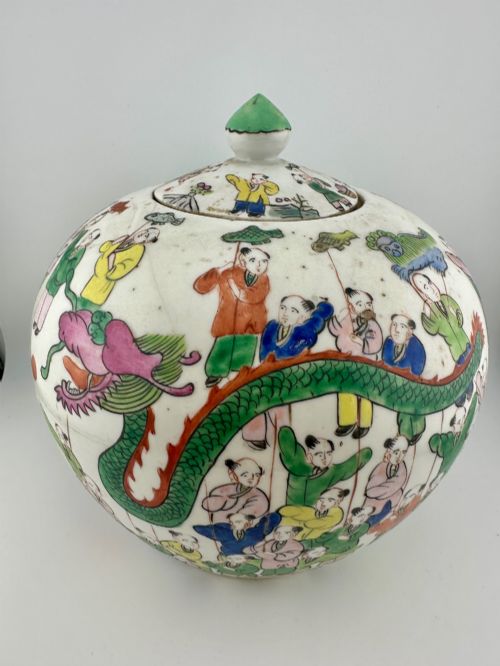

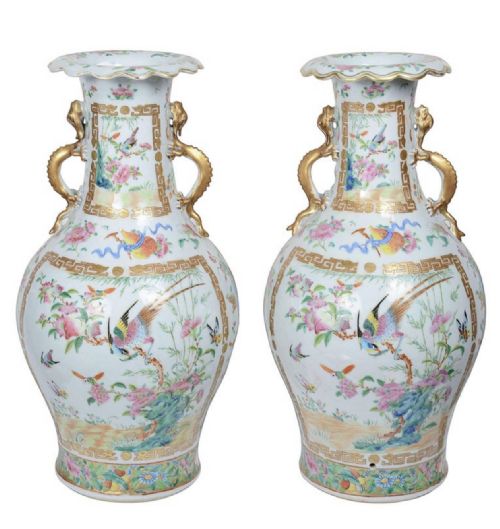


Hand Painted Dragon Urn
These hand painted dragon urn pieces bring dynamic mythological energy and striking traditional decoration to any interior.
Hand Painted Dragon Urn
A hand painted dragon urn brings together traditional ceramic forms and spirited mythological decoration across various historical periods. When searching for a hand painted dragon urn, collectors encounter pieces spanning the nineteenth century, including Chinese export wares and Japanese Satsuma productions.
The selection here encompasses forms such as vases, lidded jars, and ewers rather than strict singular urns. These objects reflect diverse cultural traditions, from Qing Dynasty designs to Victorian adaptations and Kashmiri craftsmanship.
Materials and Construction
These items rely principally on porcelain and pottery bodies shaped into vases and jars. Makers applied intricate surface decoration utilising cobalt glaze, enamel colours, and delicate gold leaf to highlight the painted motifs.
Alternative pieces incorporate papier-mache, lacquer, and wood combined with traditional paint techniques. Artisans achieved varied aesthetic effects through underglaze blue painting, cloisonne metalwork, and polychrome enamel applications.
Hand Painted Dragon Urn Retail Price Guide 2026
Typical asking prices for hand painted dragon urn among the pieces listed under this phrase on Sellingantiques today, from the lower quarter to the upper quarter. They describe what is for sale here now, not the wider market.
Several fierce five claw dragons guard these surfaces, clearly ignoring the fact that they are stuck on porcelain.
Assessing Quality and Execution
Quality in these pieces rests upon the precision of the hand painting and the fluidity of the dragon motifs. Finer examples display meticulous brushwork in the scales and claws, whereas lesser pieces show hurried execution.
The depth and brilliance of the enamel colours and the crispness of any reign or workshop marks also distinguish superior items. The harmony between the ceramic form and the applied ornament dictates the overall visual success.
Fukagawa Porcelain·Royal Worcester
The Hand Painted Dragon Urn Glossary
- Cobalt glaze
- A blue mineral pigment applied beneath the transparent glaze before firing. It produces the deep blue coloration seen in traditional oriental ceramics.
- Famille rose
- A palette of opaque enamels dominated by pink or rose colours introduced during the Qing Dynasty. This style allows for subtle tonal gradations in floral and figural scenes.
- Cloisonne
- An ancient technique for decorating metal object surfaces using enamel held in thin wire compartments. Artisans solder metal strips to a base before filling the sections with coloured paste.
- Pedestal vase
- A vessel elevated on a distinct base or foot. This form raises the display height and often incorporates decorative handles or ewers.
- Satsuma
- A type of Japanese pottery with a pale, ivory-coloured cracked glaze. It is typically decorated with elaborate polychrome enamels and gilding.
Hand Painted Dragon Urn: Frequently Asked Questions
What periods do these pieces date from?
The available selection primarily dates from the nineteenth century, encompassing various production years up to nineteen hundred. These include items marked by specific dynastic reigns or later Victorian eras.
Collectors will find that different regions maintained distinct stylistic markers during these decades, allowing for broad chronological categorisation based on decorative technique and material composition.
How were these jars and vases used?
These vessels served primarily as decorative display items within traditional interiors, often paired symmetrically on mantelpieces or tables. Some lidded jars also functioned to store dry goods or aromatics in wealthy households.
Over time, many of these ceramic forms were adapted into lamp bases while retaining their original hand painted surfaces and sculptural presence.
How do I care for antique porcelain?
Gentle dusting with a soft, dry cloth is usually sufficient for routine maintenance of glazed ceramic surfaces. Avoid using harsh chemical cleaners or abrasive materials that could damage enamel work or gold leaf.
Display these objects away from direct sunlight and areas subject to sudden temperature fluctuations to protect the integrity of the glaze and body.
How do I distinguish Chinese from Japanese styles?
Chinese pieces often feature cobalt blue underglaze painting or dense famille rose enamels with deep historical symbolism. Japanese examples, such as Satsuma wares, frequently employ distinctive crackled ivory glazes and heavy gilding.
Examining the underlying clay body and the specific stylistic conventions of the painted dragons helps clarify the geographic origin of each item.