
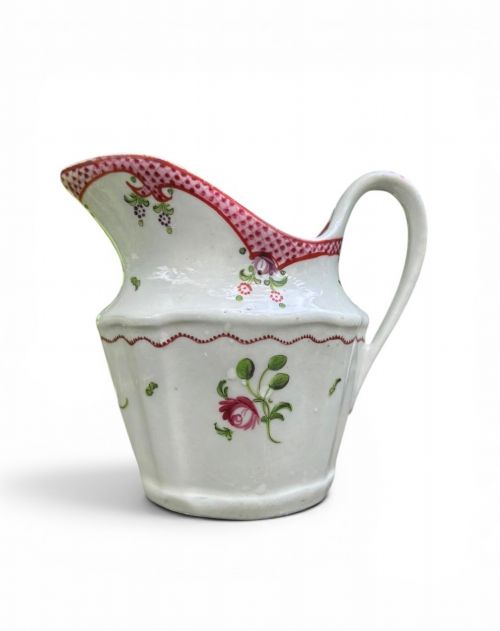
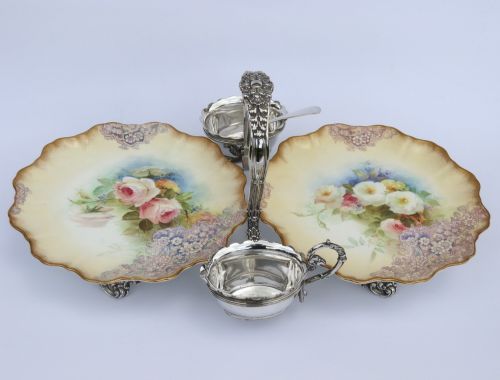


Hand Painted Cream Jug
A hand painted cream jug brings eighteenth-century porcelain finesse or Victorian ceramic colour to the table.
Hand Painted Cream Jug
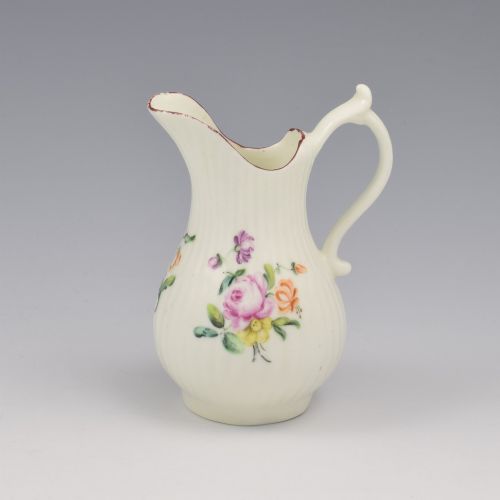
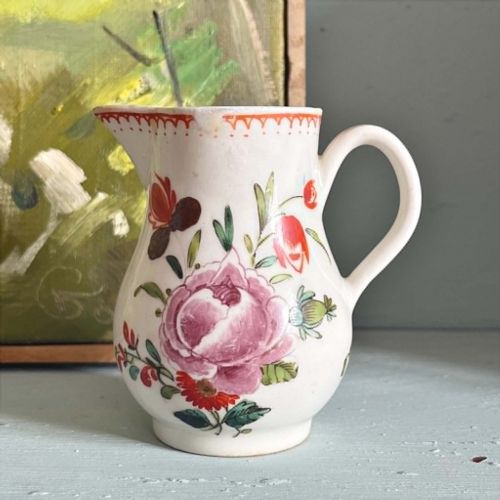
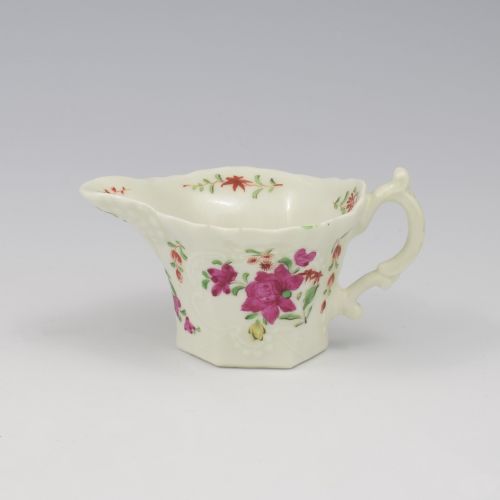
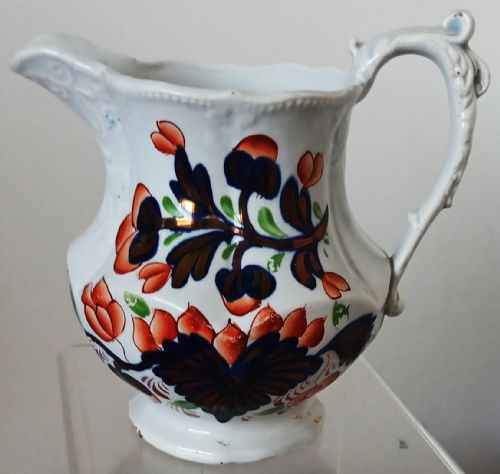
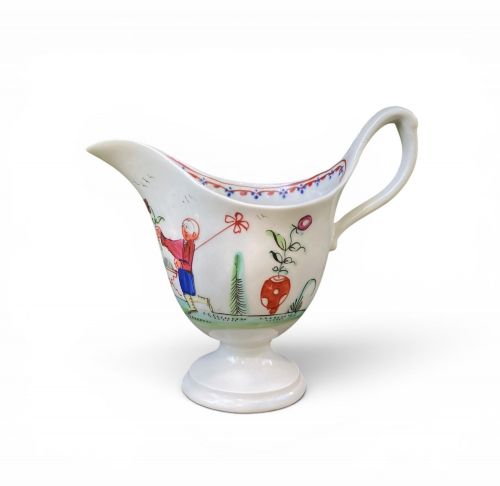
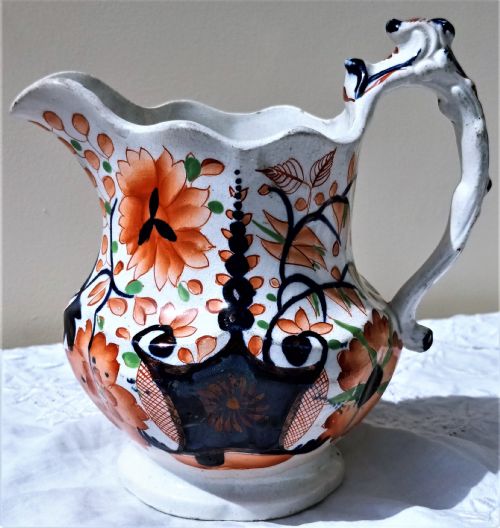
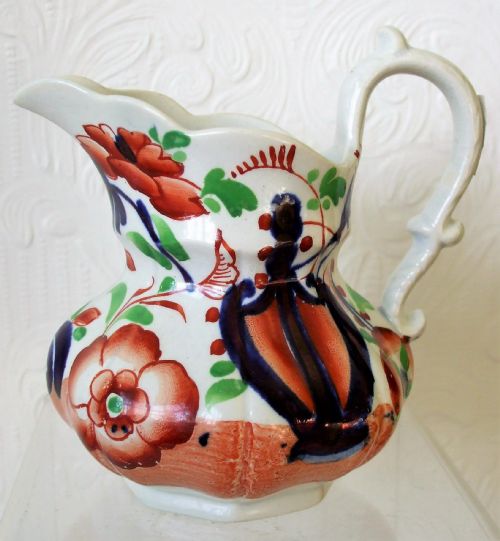
A hand painted cream jug is a small ceramic vessel designed for serving milk or cream at the table, spanning forms from classical ewers to sparrowbeak creamers. When you search for this phrase, you encounter pieces originating from eighteenth-century soft-paste porcelain manufactories as well as later nineteenth-century earthenwares. The selection ranges from early Derby and Worcester porcelain to Victorian Gaudy Welsh pottery and Royal Worcester fruit-painted wares.
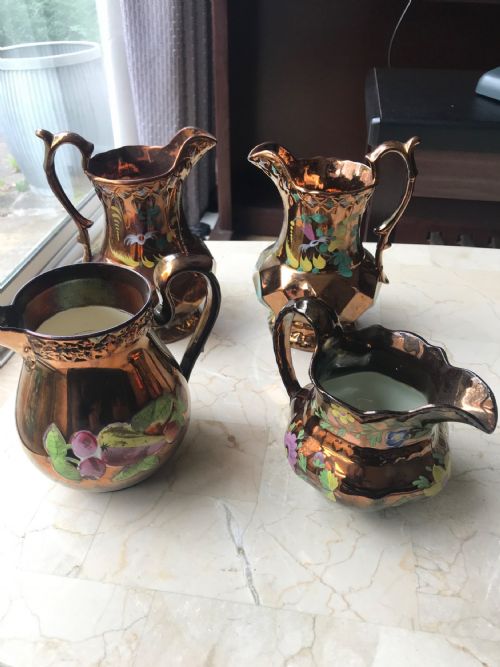
The domestic scale of these jugs reflects their primary function in tea and coffee service across the Georgian and Victorian periods. You find sparrowbeak profiles, dolphin ewers, and cabbage leaf moulded pearlware sitting alongside late nineteenth-century copper lustre and blush ivory pieces. Each example demonstrates individual brushwork rather than printed transfer decoration, marking them out as small-scale works of ceramic art.
Materials and Techniques
Makers utilised soft-paste porcelain, earthenware, and pearlware as the ceramic bodies for these vessels, shaping them by throwing on the wheel or forming in moulds. The evidence shows cabbage leaf mouldings, ribbed bodies, and dolphin handle configurations created before the application of glaze. Potters then added polychrome pigments, cobalt blue, and copper lustre directly onto the surface by hand.
Gilding and gold leaf often complete the decoration, applied over or under the glaze depending on the factory and period. Early pieces from Worcester and Derby relied on hand-painted floral, bird, and landscape motifs, while later Victorian and twentieth-century examples from Royal Worcester feature elaborate fruit studies and blush ivory grounds.
The listings encompass ceramics spanning the Georgian, Victorian, and twentieth-century eras, executed in porcelain, soft-paste porcelain, earthenware, and pearlware.
Assessing Quality
Quality in a hand painted cream jug lies in the crispness of the moulding and the confidence of the brushwork. Early porcelain examples demonstrate delicacy in the walls and precision in polychrome enamel application, whereas lesser pieces show heavier earthenware bodies and coarser pigment control.
The distinction between standard production and top-tier work is visible in the execution of the painted details, such as feathered bird plumage or naturalistic fruit studies signed by individual artists. Superior pieces maintain balance in their handles and spouts, integrating sculptural elements like lamprey tails or dolphin heads harmoniously into the vessel form.
Derby Porcelain·Royal Worcester·New Hall·Meissen·Doulton Burslem
The Hand Painted Cream Jug Glossary
- Sparrowbeak
- A small eighteenth-century cream jug form featuring a distinctive, pinched spout resembling a bird's beak. This profile appears frequently on early porcelain examples.
- Ewer
- A pitcher with a wide spout and a large loop handle, often taking an ornamental or classical form rather than a simple domestic shape. These vessels frequently feature modelled handles shaped as lampreys or dolphins.
- Pearlware
- A refined earthenware developed in the late eighteenth century with a bluish-tinted glaze that pooled in recesses to imitate Chinese export porcelain. It forms the body of several moulded jugs in the listings.
- Soft-paste porcelain
- An artificial porcelain composition fired at lower temperatures than hard-paste, common in eighteenth-century English factories like Bow, Chelsea, and early Derby. It yields a warm translucent body suited to delicate painted decoration.
- Copper lustre
- A ceramic finish created by applying a metallic glaze that fires to a reflective, coppery sheen. It is characteristic of nineteenth-century Staffordshire production.
Hand Painted Cream Jug: Frequently Asked Questions
How do I date an antique cream jug?
Dating relies on identifying the ceramic body, glaze characteristics, and factory marks where present. Early porcelain pieces from the eighteenth century often display unglazed foot rims and soft-paste bodies.
Later Victorian and twentieth-century pieces utilise factory ciphers, registration marks, or artist signatures that narrow down the decade of production.
Were these jugs used for milk or cream?
These vessels served both milk and cream during tea and coffee services from the Georgian period onward. Their capacities varied from small sparrowbeak creamers for individual use to larger jugs meant for family gatherings.
Many examples listed in ceramic records double as water jugs or sauce boats depending on their size and handle configuration.
Can I use my cream jug daily?
Antique porcelain and earthenware demand careful handling due to their age and the delicate nature of their hand-painted surfaces. Hand washing in lukewarm water without harsh detergents preserves the overglaze enamels and gilding.
While functional, many collectors prefer to display fragile eighteenth-century soft-paste pieces or signed Royal Worcester fruit jugs rather than risking daily wear.
What is the difference between porcelain and pottery jugs?
Porcelain is a vitrified, translucent ceramic fired at high temperatures, offering a fine-walled structure typical of eighteenth-century factories like Worcester and Bow. Pottery and earthenware bodies, such as Gaudy Welsh or Staffordshire lustre wares, are opaque and thicker.
Earthenware pieces often feature heavier moulded details like cabbage leaf reliefs, whereas porcelain prioritises delicate painted scenes.