






Hand Motif Urn
These hand motif urn pieces bring together sculptural form and intricate hand-painted detail from the nineteenth and twentieth centuries.
Hand Motif Urn
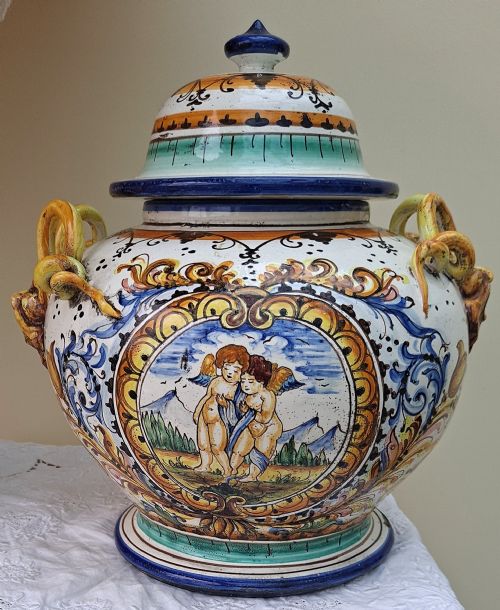
A hand motif urn takes the form of decorative vases and vessels created across the nineteenth and twentieth centuries, spanning Victorian, Art Nouveau, and Meiji Period styles. Buyers seeking a hand motif urn will find pieces shaped as lidded vases, amphorae, and table lamps originating from English, Japanese, French, and Dutch makers.
The selection on this page demonstrates the range of ceramic, porcelain, and glass vessels produced during this era. These items function primarily as decorative objects for display on tables and dressing furniture rather than utility vessels.
How they were made
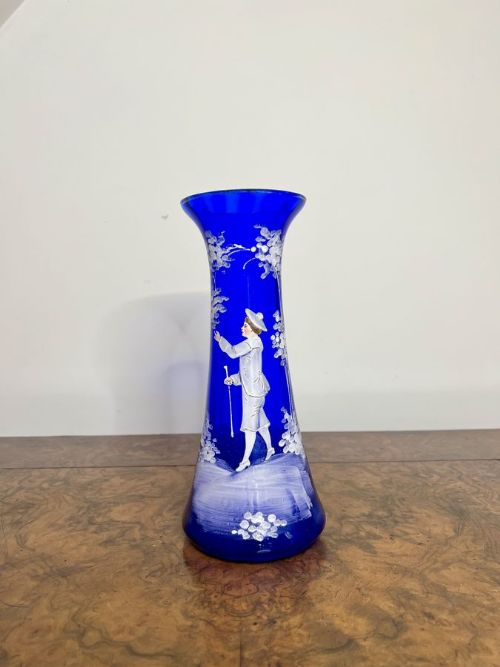
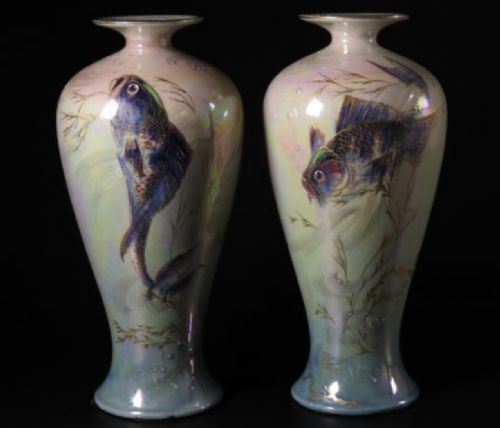
Potters and glassmakers shaped these pieces using earthenware, porcelain, ceramic, and glass, applying enamel paints, glaze, and gold leaf by hand. Many examples incorporate intricate hand-painted decoration depicting birds, fish, and traditional patterns.
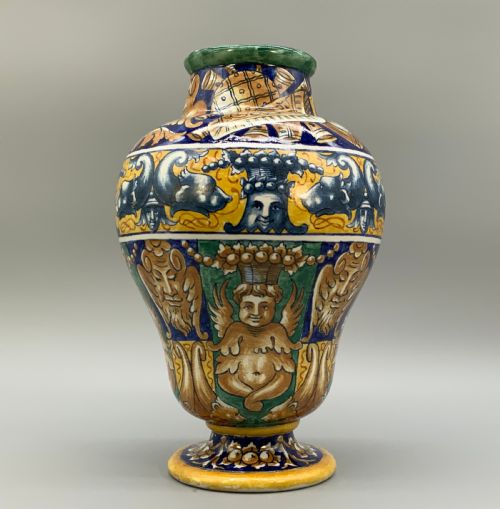
Techniques varied from the tin-glazed earthenware of Majolica and Delft Faience to specialised lustre finishes and delicate enamelling on Victorian glass. Kiln firing fixed the polychrome pigments and metallic leaf onto the body of the vessel.
Hand Motif Urn Retail Price Guide 2026
Typical asking prices for hand motif urn among the pieces listed under this phrase on Sellingantiques today, from the lower quarter to the upper quarter. They describe what is for sale here now, not the wider market.
Several Victorian glass vases feature hand-painted fish that look entirely unsurprised to find themselves swimming on a mantelpiece.
What varies in quality
The standard of a piece depends upon the precision of the hand-painted brushwork and the complexity of the glaze or enamel application. Skilled execution in the detailing of pictorial motifs distinguishes finer studio outputs from standard commercial production.
The depth of the colour palette, the richness of any gold leaf application, and the overall harmony of the form contribute to the standing of individual vessels. Intact original surfaces and well-preserved decorative schemes elevate the quality of the item.
Walter Slater·Rozenburg·Doulton Lambeth·Fukagawa·Harrach
The Hand Motif Urn Glossary
- Majolica
- A type of earthenware coated with an opaque white tin glaze and painted with metal oxides. It produces a glossy, brightly coloured surface popular in nineteenth-century revival styles.
- Lustre
- A ceramic glaze containing metallic elements that create an iridescent sheen when fired in a reducing kiln. This technique reflects light with a metallic glow.
- Enamel
- Opaque or translucent glass fused to the surface of metal, ceramic, or glass by firing. It provides vibrant, durable colour decoration.
- Amphora
- A two-handled jar with a narrow neck used in antiquity and later revived in nineteenth-century pottery forms. These vessels often stand on a fixed base or pedestal.
Hand Motif Urn: Frequently Asked Questions
How do I identify a Victorian urn?
Victorian urns typically exhibit period characteristics such as rich polychrome enamelling, gilt detailing, and heavy porcelain or glass bodies. Look for manufacturing traits and stylistic cues consistent with nineteenth-century decorative arts.
Compare the glaze type and painting style against documented examples from English and continental potteries of the era.
Where were Satsuma vases made?
Satsuma vases originated in the Satsuma province of Japan and gained significant popularity for export during the Meiji period. These earthenware pieces are known for their intricate crackle-glaze finish and elaborate hand-painted decoration.
Many examples feature detailed pictorial scenes enhanced with gilt highlights.
What is Majolica pottery?
Majolica is a form of earthenware defined by its tin-opacified glaze and vibrant coloured pigment painting. Makers during the nineteenth-century Renaissance Revival frequently utilised this technique for decorative vases and urns.
The resulting pieces display rich tones and high gloss surfaces.
How should I display an antique urn?
Antique urns and decorative vases suit placement on sturdy side tables, mantels, or dedicated display surfaces where their form and painted details can be appreciated. Ensure the placement offers stability, particularly for taller ceramic or glass vessels.
Keep them away from direct sunlight to preserve the integrity of enamelled and painted surfaces.