
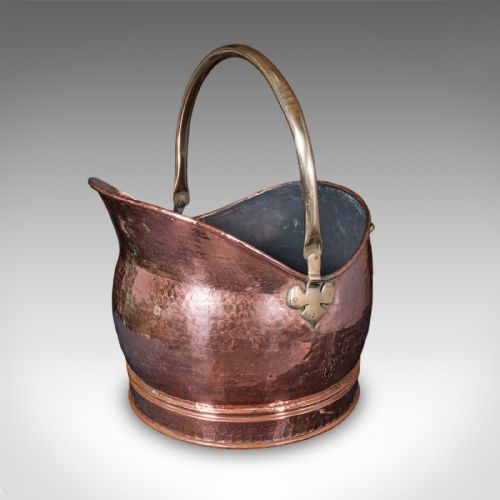
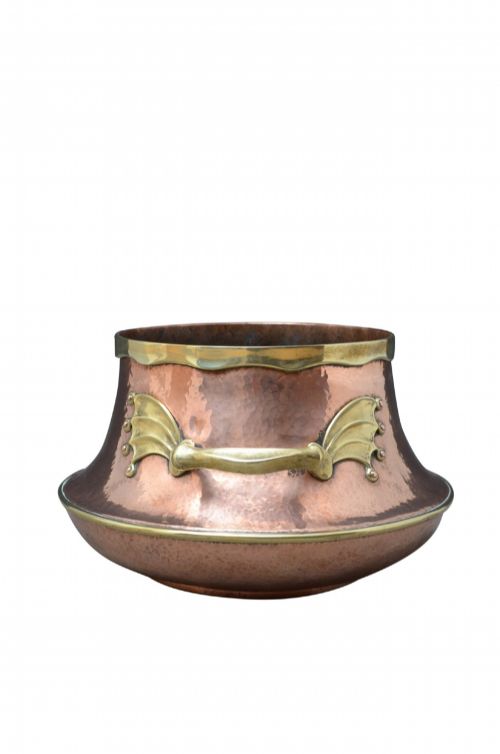


Hand Hammered Copper Bucket
A hand hammered copper bucket brings weight and a warm metallic sheen to a fireside, shaped by Victorian and Arts and Crafts hands.
Hand Hammered Copper Bucket
A hand hammered copper bucket serves primarily as a fireside accessory, designed to hold coal, logs or kindling beside the hearth. These vessels appear across several periods, including the Georgian era, the Victorian epoch and the later Arts and Crafts movement.
The forms vary from traditional helmet coal scuttles and deep cauldrons to cylindrical log bins, large bowls, planters and umbrella stands. On this page, buyers most frequently encounter Victorian and Arts and Crafts examples fashioned from heavy sheet metal.
Originating largely from British workshops, these utilitarian objects combine robust storage capability with distinct decorative presence. Their robust construction suited daily domestic service in period homes.
How they were made
Metalworkers formed these vessels by shaping sheet copper over forms, employing hand hammers to create the characteristic beaten and faceted surfaces. Rivets secure handles, seams and mounts, often accompanied by brass swing handles or wrought iron fittings.
Makers utilised brass for feet, rims and handle fixings to contrast against the rich red tone of the copper body. Iron and tin occasionally appear in internal liners and structural bands, while wooden elements provide insulation on handles.
Listings feature pieces spanning the Georgian era, the Victorian period and the Arts and Crafts movement, constructed from copper, brass, wrought iron and wood.
What varies in quality
The calibre of a hand hammered copper bucket depends upon the weight of the metal gauge and the deliberate skill evident in the hammer marks. Heavier copper resists dents and maintains structural integrity during daily hearth use.
Proportion and decorative restraint separate standard utility items from finer artisan pieces, particularly within the Arts and Crafts selection. Well-defined riveting and harmonious brass or wrought iron mounts elevate the overall design.
The Hand Hammered Copper Bucket Glossary
- Helmet scuttle
- A coal bucket featuring a high, sloping back and a jutting front spout resembling a classical helmet. This shape allowed easy pouring of fuel directly onto fires.
- Cauldron
- A deep, round vessel traditionally rounded at the base and fitted with side handles or a swing handle. These pieces often date to the Georgian and early Victorian periods.
- Ferrat
- A traditional metal container or bucket used in agricultural or domestic settings. Examples recorded here often date from the nineteenth century.
- Purdonium
- A specialised coal box or scuttle designed to store fuel neatly beside the fireplace. They frequently incorporate internal metal liners for cleanliness.
- Aesthetic Movement
- A late nineteenth-century design style emphasising visual beauty over narrative or utility. Pieces from this period display refined surface treatment and careful form.
Hand Hammered Copper Bucket: Frequently Asked Questions
How do I clean an antique copper bucket?
Remove surface dust with a dry cloth and apply a mild, non-abrasive metal cleaner only if polishing is necessary. Many collectors prefer to leave a dark, undisturbed patina that accumulates over decades of fireside use.
Avoid harsh chemical dips that strip the historic surface character entirely. Gentle care preserves the subtle hammer marks and depth of colour.
Were these buckets used only for coal?
While many served as coal scuttles or log bins beside the hearth, makers also shaped them into jardiniere planters, umbrella stands and general storage vessels. Their durable construction suited various heavy domestic tasks.
Today, buyers frequently repurpose these deep copper containers to hold house plants, kindling or magazines in modern rooms.
How do I tell Victorian from Arts and Crafts pieces?
Victorian examples often favour traditional helmet shapes, polished surfaces and applied brass mounts intended for formal domestic interiors. They reflect a continuation of classical and revived historical styles.
Arts and Crafts pieces emphasise visible hand-beaten textures, honest construction with exposed rivets and wrought iron details. They showcase the work of individual makers rather than mass production.
Are brass handles original to these copper buckets?
Makers frequently paired copper bodies with cast brass handles, feet and rims to provide robust structural support and tonal contrast. These mixed metals are typical of nineteenth-century fireside accessories.
Inspect the fixings to ensure rivets and mounts match the period and wear patterns of the main body.