





Hand Embroidered Wall Rug
A hand embroidered wall rug brings rich Central Asian textile traditions into a modern room through bold silk threadwork and tribal motifs.
Hand Embroidered Wall Rug
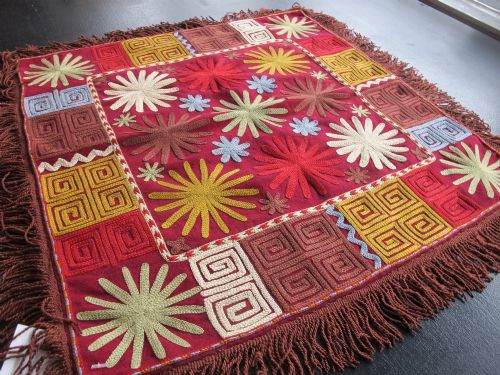
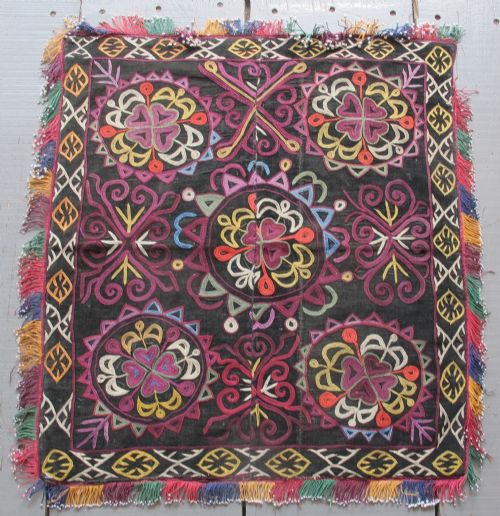
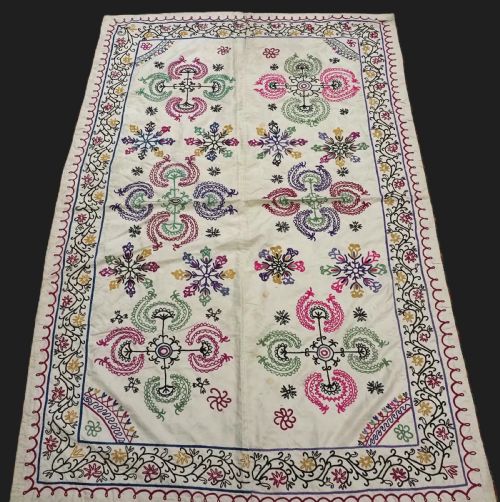
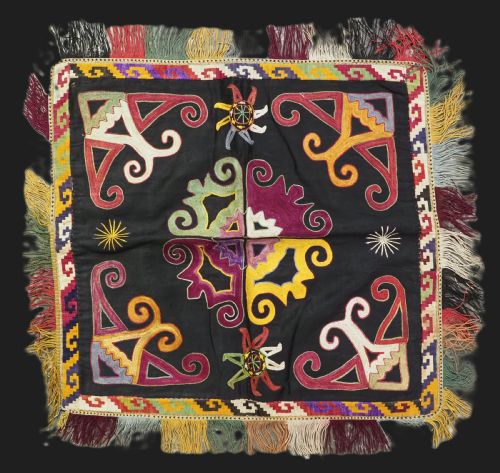
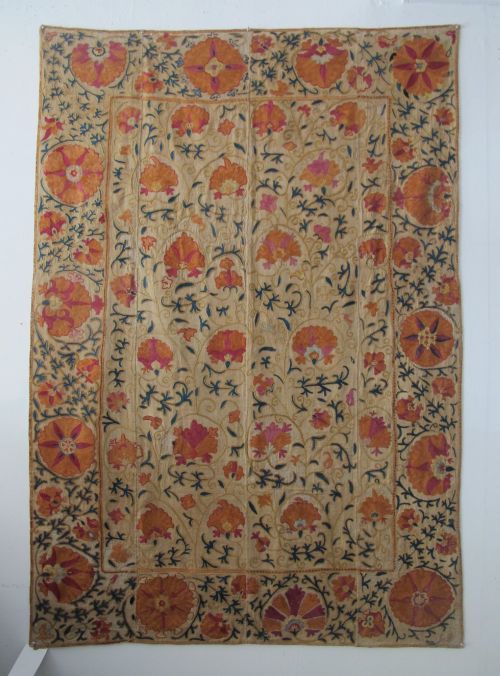
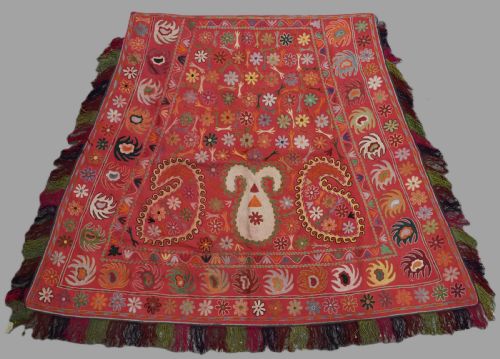
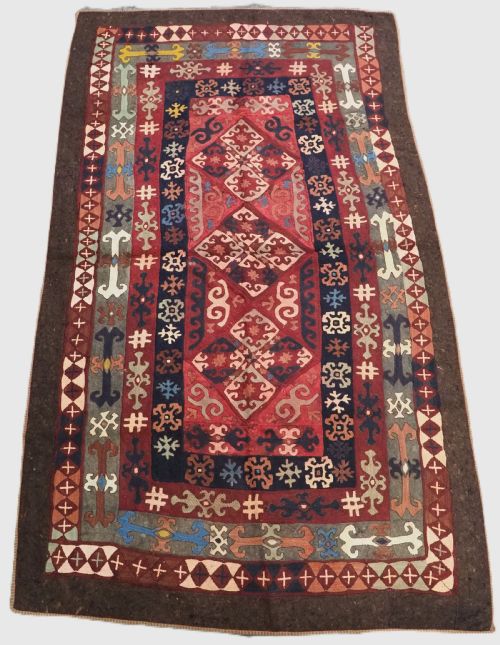
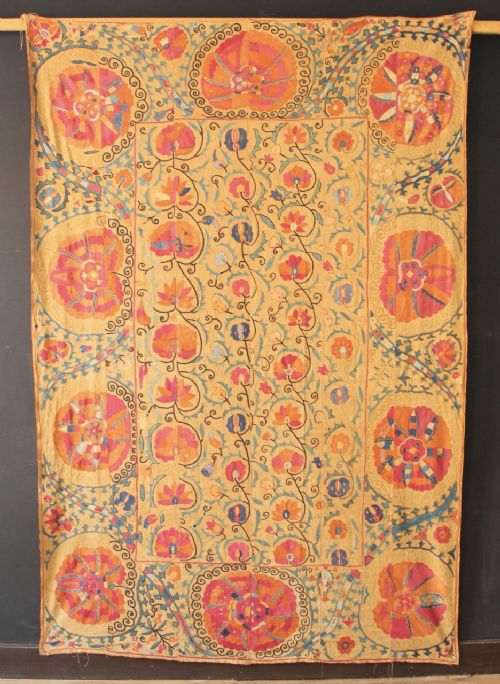
A search for a hand embroidered wall rug reveals an array of Central Asian tribal textiles, including Suzanis, felt panels, and ceremonial horse covers originating from Uzbekistan and Kyrgyzstan. These pieces range from full-scale wall hangings and bed covers to smaller domestic panels created during the nineteenth and early twentieth centuries.
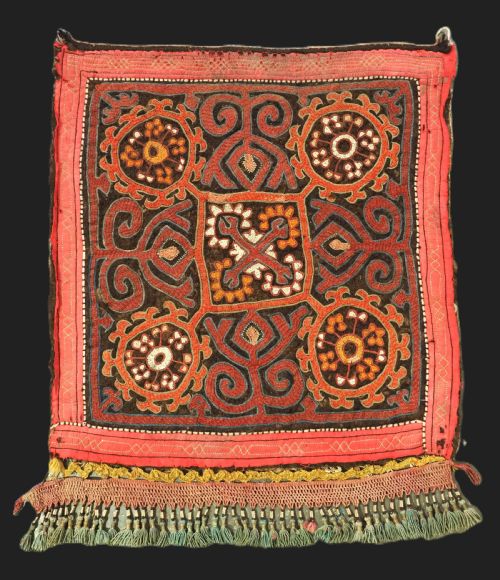
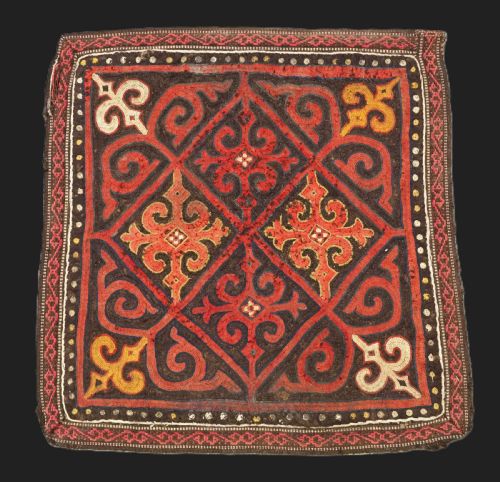
The most common examples on this page are Uzbek Suzanis and Lakai tribal embroideries, which often display vibrant floral medallions or geometric patterns. These textiles served various traditional functions, from dowry items to yurt decorations, before finding a place as decorative wall art.
Makers utilised diverse formats such as the smaller nim suzani, prayer designs, and full-work palak panels densely covered in silk stitching. Each object reflects regional aesthetics spanning from Tashkent to Shakrisabz, executed in formats designed for vertical display.
Materials and Construction Techniques
Artisans stitched brightly coloured silk thread onto woven grounds of cotton, wool, or adras, a traditional silk and cotton blend. Some heavier tribal panels incorporate thick felt bases with applied fringes or glass bead details.
Needlework techniques varied from delicate tambour work and chain stitch to dense surface embroidery that completely obscured the foundation fabric. Natural dyes provided deep red, yellow, green, and black grounds which throw the vibrant silk motifs into sharp relief.
Hand Embroidered Wall Rug Retail Price Guide 2026
Typical asking prices for hand embroidered wall rug among the pieces listed under this phrase on Sellingantiques today, from the lower quarter to the upper quarter. They describe what is for sale here now, not the wider market.
Several horse covers in the collection preserve the spirited aesthetics designed to impress onlookers during nomadic tribal ceremonies.
Evaluating Quality and Execution
Quality rests primarily on the density of the needlework and the complexity of the design, where fully embroidered palak panels represent a higher tier of effort than sparsely patterned grounds. The visual impact depends heavily on the saturation and preservation of the dyed silk threads against the backing fabric.
The finesse of the drawing and the regularity of the individual stitches distinguish master workshops from simpler domestic work. Compositional balance within traditional formats like medallion variants or architectural layouts also determines the overall distinction of the textile.
The Hand Embroidered Wall Rug Glossary
- Suzani
- A large embroidered tribal hanging from Central Asia, usually worked in silk on a cotton or linen foundation. These were traditionally made by brides as part of their dowry.
- Lakai
- A nomadic Uzbek tribe known for small, dynamic embroideries using bold geometric shapes and vibrant colours. Their work often appears on saddle covers and small panels.
- Nim Suzani
- A half-size version of the standard Suzani wall hanging. These smaller formats suit domestic spaces while maintaining traditional embroidery techniques.
- Palak
- A fully embroidered Suzani style dominated by large central star or medallion motifs. The dense stitching covers nearly the entire ground fabric.
- Adras
- A traditional Central Asian fabric woven from a mixture of silk and cotton yarns. It serves as a textured ground for needlework.
Hand Embroidered Wall Rug: Frequently Asked Questions
How were these textiles originally used?
Many of these pieces served practical and ceremonial roles within nomadic and village households in Central Asia. They functioned as dowry items, bed covers, ceremonial horse blankets, and wall decorations inside yurts.
Over time, these domestic textiles transitioned into decorative wall hangings as collectors recognised their artistic merit and visual warmth.
How do I care for a textile wall hanging?
Protect antique embroidery from direct sunlight to prevent the natural silk dyes from fading over time. Gentle vacuuming through a mesh screen can remove surface dust.
Mount the textile professionally using a supportive backing or a sleeve rather than hanging it by direct stitches. This distributes the weight evenly across the fabric.
What is the difference between a Suzani and a Lakai piece?
Suzanis are typically larger, room-scale embroideries featuring expansive floral vines and central medallions originating from settled Uzbek urban centres. They display flowing botanical patterns worked in fine silk thread.
Lakai embroideries come from nomadic tribes and tend to be smaller, featuring energetic geometric motifs, hooked polygons, and heavy felt or wool foundations.
How can I tell the age of an embroidered panel?
Dating relies on examining the materials, such as identifying hand-spun cotton grounds, early synthetic or natural dye palettes, and traditional regional designs. Nineteenth-century examples often show organic irregularities in the weave and subtle variations in the silk shades.
Later twentieth-century pieces tend to use more uniform commercial cottons and brighter, chemically consistent dye formulas.