

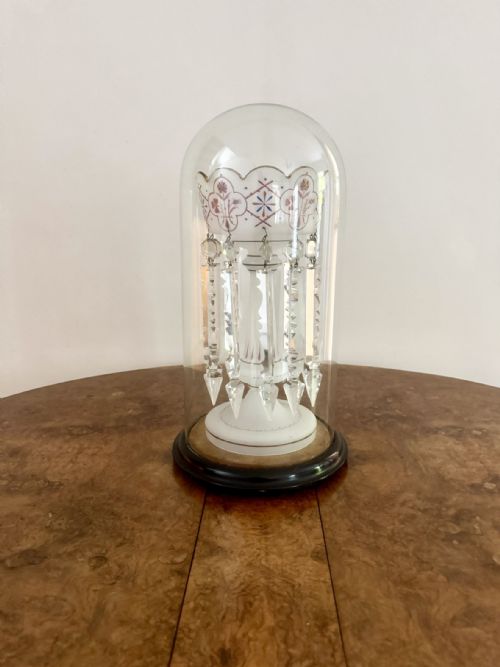


Hand Cut Crystal Glass
Hand cut crystal glass pieces bring weight, brilliance and sharp refraction to a room, spanning drinking vessels, table lustres and chandeliers.
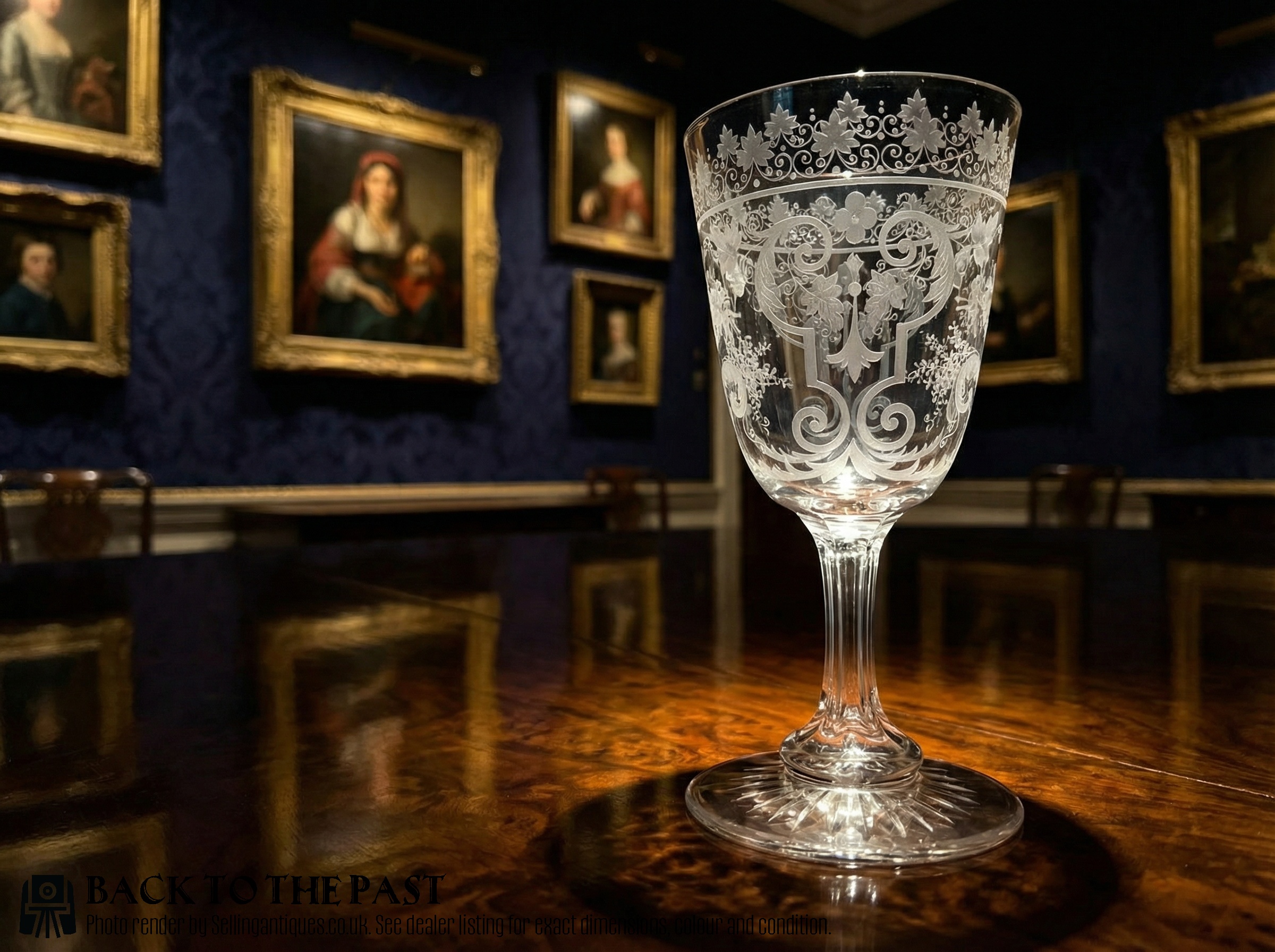
Hand Cut Crystal Glass
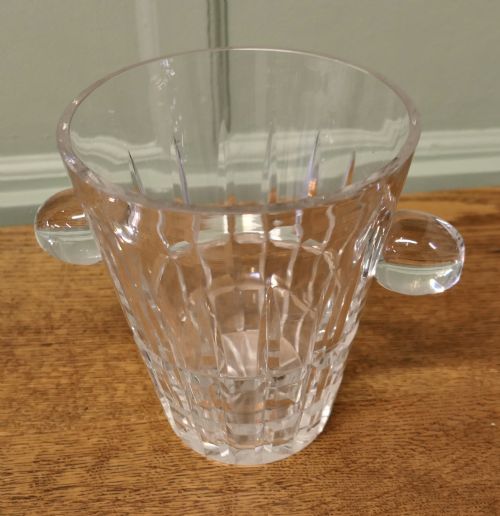
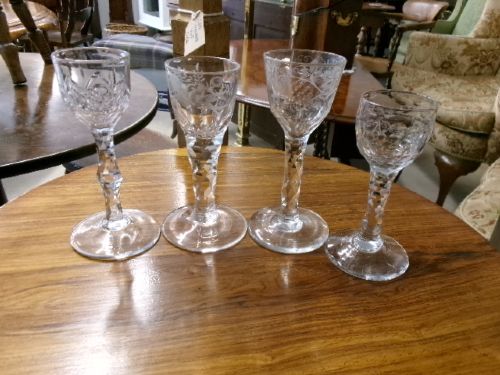
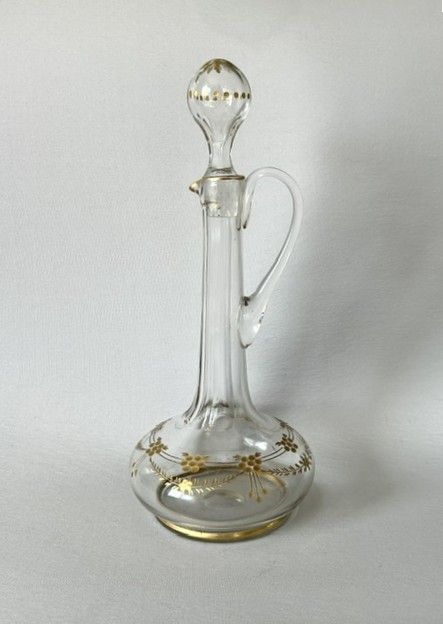
When you search for hand cut crystal glass, you encounter functional vessels and decorative centerpieces originating from the Georgian, Victorian, Edwardian and Art Deco periods. The selection encompasses table lustres, decanters, ewers, wine glasses, ice buckets and large overhead chandeliers.
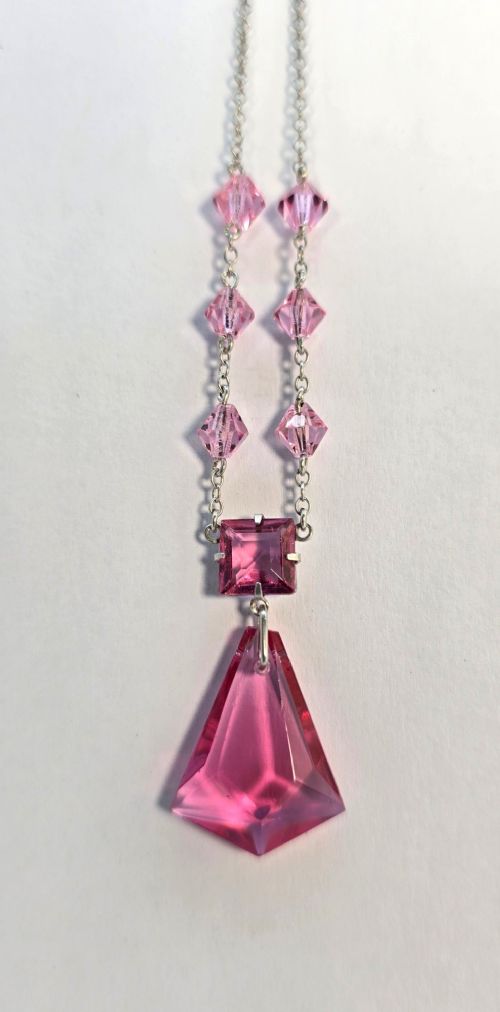
You are most likely to meet Victorian and Edwardian examples on this page, alongside 1920s Art Deco pieces and earlier Georgian or Regency drinking glasses. Forms range from heavy lead crystal cruet sets and pedestal bowls to delicate necklaces and elaborate mantel lustres.
How they were made
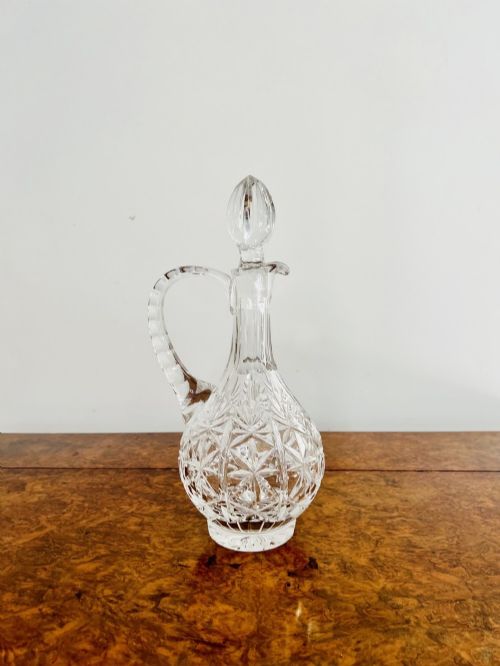
Makers utilised glass, crystal and heavy lead crystal, often incorporating ruby glass, green glass, enamel or gilt bronze mounts. Objects such as decanters, ewers and champagne buckets began as hand blown forms before artisans applied deep wheel cutting to create sharp geometric or floral facets.
Overlay techniques combined layers of coloured and clear glass, which were then partially cut away to reveal contrasting hues beneath. Chandeliers and pedestal bowls relied on precision hand cutting to maximise the light refraction through lead-rich compositions.
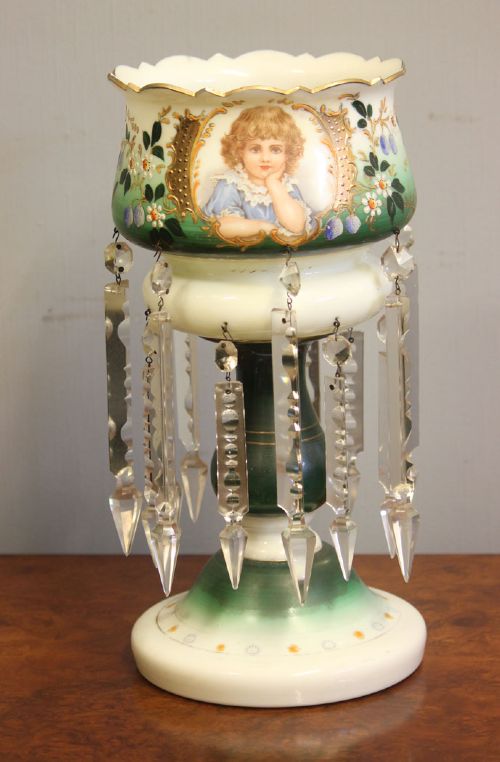
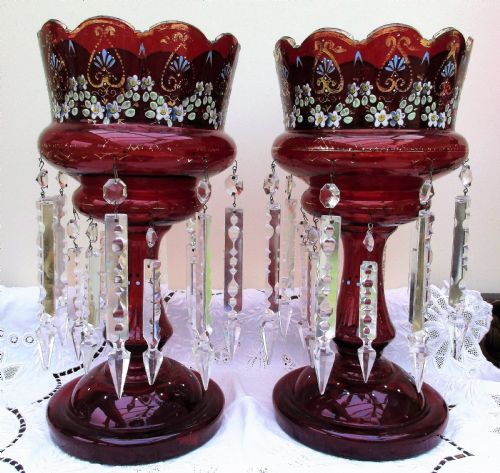
Several Victorian mantel lustres come paired with original glass domes, keeping dust away from the prisms since eighteen-eighty.
What varies in quality
The distinction between standard items and superior examples lies in the crispness of the facet edges and the depth of the wheel cutting. Heavy lead crystal provides greater clarity and a sharper ring when struck, distinguishing finer pieces from lighter standard glass.
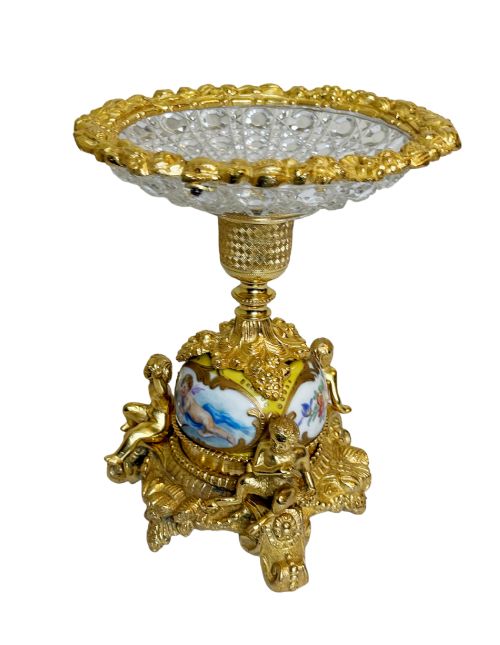
Design integration also elevates certain works, such as centrepieces featuring gilt bronze mounts with cherubs or balanced pairs of mantel lustres with intact prismatic drops. The weight of the material and the precision of the hand-executed patterns dictate the standing of each piece.
The Hand Cut Crystal Glass Glossary
- Lead crystal
- Glass containing a high proportion of lead oxide, which increases weight, brilliance and softness for easier cutting. This composition produces the signature dispersion of light characteristic of finer pieces.
- Mantel lustre
- A decorative ornamental vase hung with cut glass prisms, designed for placement on a mantelpiece. These pieces often feature painted enamel or ruby glass bodies.
- Comport
- A shallow pedestal bowl used for serving fruit or sweets on a dining table. They frequently appear in large hand blown and cut crystal formats.
- Overlay glass
- A technique involving two or more distinct layers of glass fused together before cutting. The top layer is cut away to expose the contrasting colour underneath.
- Cruet set
- A matched group of small bottles or containers for condiments, held within a frame. Art Deco examples demonstrate heavy lead crystal fabrication.
Hand Cut Crystal Glass: Frequently Asked Questions
What is lead crystal?
Lead crystal is glass manufactured with added lead oxide, which lowers the melting point and makes the material softer for cutting. This addition increases the density and refractive index.
Objects made from lead crystal feel noticeably heavier and produce a clear, sustained ring when tapped gently.
How do I date a decanter?
Examine the base for a pontil mark, where the glassblower's rod was snapped off and ground flat, which typically indicates older manufacture. Shape, neck rings and the style of the stopper also provide strong chronological clues.
Georgian and Regency decanters often feature heavy kick-up bases and prismatic cutting, while Victorian and Edwardian versions display broader stylistic variations.
Are table lustres functional?
Table lustres serve primarily as decorative ornaments rather than functional candleholders or lighting devices. The hanging glass prisms are designed to catch and refract ambient daylight or candlelight.
Pairs of lustres traditionally occupied prominent positions on mantelpieces or sideboards in Victorian interiors.