
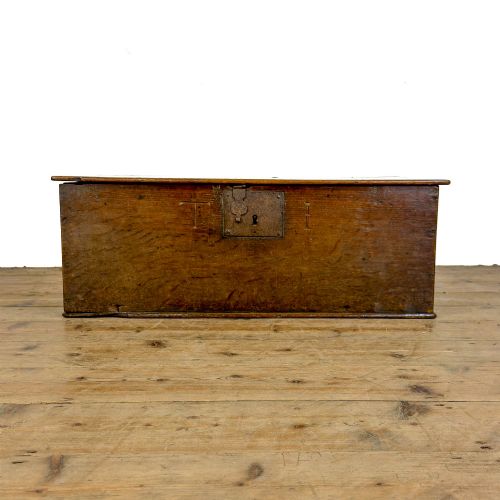


Hand Carved Oak Box
These hand carved oak box examples offer sturdy timber storage carved by hand, ranging from Georgian Bible boxes to Arts and Crafts chests.
Hand Carved Oak Box
Buyers most frequently encounter nineteenth century examples alongside pieces bearing Georgian and Edwardian styles. Vernacular treen boxes and military items also appear amongst the broader selection.
Forms include bible boxes with internal drawers, marriage chests, and lidded boxes shaped by regional workshops and period revival movements.
How they were made
Construction relies primarily on oak and pollard oak, supplemented by secondary timbers such as hardwood, teak, rosewood and general wood. Makers shaped these sturdy materials using hand chisels and gouges to produce textured surface carving.
Metal elements including iron and brass provide functional hinges, lock plates and corner reinforcements. Silver plate appears on specific biscuit barrels, whilst trench art and prisoner of war pieces incorporate utilitarian metals.
What varies in quality
Quality rests in the depth and sharpness of the hand carving, where crisp chisel work distinguishes superior pieces from softer or worn surfaces. The integration of structural joinery, such as pegged joints and fitted internal compartments, dictates the integrity of each box.
The choice of timber grain also elevates certain examples, particularly where figured pollard oak or select quartersawn boards are utilised. Original metalwork and retained internal fittings further separate standard utility items from distinguished vernacular works.
Jack Grimble
The Hand Carved Oak Box Glossary
- Bible Box
- A small lidded desk or storage container originally designed to hold household scriptures, often featuring a sloping lid and carved front frieze. These pieces sit on tables or desks.
- Coffer
- A large, heavy storage chest constructed with sturdy frame and panel techniques. They often feature elaborate front carving and iron carrying handles.
- Pollard Oak
- Timber harvested from trees that were pollarded, producing a highly figured and knotted grain pattern. Cabinet makers prize this wood for decorative panels.
- Frieze
- The horizontal decorative band running along the upper portion of a box front. Carvers typically ornament this area with foliate or geometric motifs.
Hand Carved Oak Box: Frequently Asked Questions
What is a hand carved oak box used for?
These boxes serve as practical containers for letters, documents, and small personal possessions while adding period character to a room. Their sturdy timber construction allows them to function as decorative display pieces on tables or sideboards.
Historically, specific forms held family bibles, marriage documents, or daily rations. Today, they integrate easily into modern interiors for discreet storage.
How do I identify an eighteenth century box?
Eighteenth century pieces typically display pegged frame construction, hand-sawn timber boards, and deep relief carving executed with simple chisels. Interior details often include small hand-dovetailed drawers and original wrought iron hinges.
How do I clean an antique oak box?
Maintain the surface timber by dusting gently with a dry, soft cloth to prevent dirt accumulation in the carved recesses. Avoid modern chemical polishes and water, which can damage historic wax finishes and dry out the oak.
What is Arts and Crafts oak furniture?
Arts and Crafts pieces emphasise visible hand craftsmanship, simple functional forms, and natural material textures without excessive factory ornamentation. Makers working in this tradition valued straightforward construction and traditional joinery techniques.