

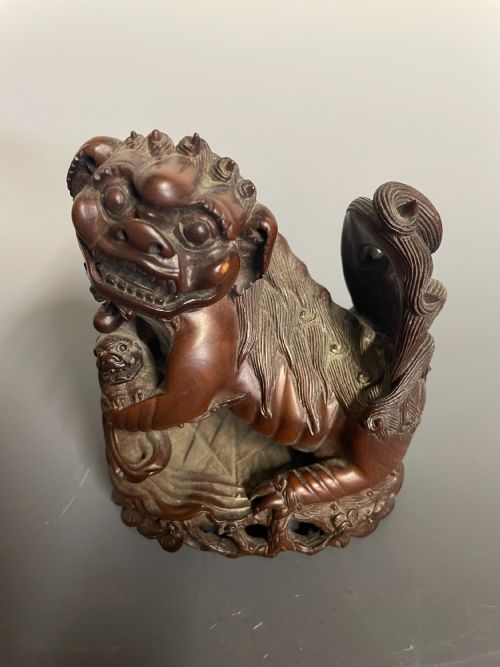


Hand Carved Lions
Hand carved lions bring fierce presence and sculptural depth to a room, ranging from grand architectural masks to domestic bookends.
Hand Carved Lions
Hand carved lions span centuries of craftsmanship, appearing as wall masks, furniture mounts, and independent figures. You will encounter diverse forms across this selection, from walnut tiger heads to soapstone desk seals.
Makers from various traditions approached the subject with distinct regional styles, creating English pine bookends, Italian Renaissance Revival walnut carvings, and Traditional Chinese Foo Dogs. These pieces serve decorative and functional roles, integrating into studies, libraries, and living spaces.
The selection includes domestic items like wooden toy lionesses alongside substantial furniture elements and architectural salvage. Each piece reflects the aesthetic priorities of its period, whether Victorian, Edwardian, or the eighteenth century.
How they were made
Carvers shaped these figures from dense hardwoods and regional timbers, utilising walnut, oak, boxwood, padauk wood, and pine. Selection of the timber dictated the depth and sharpness achievable in the final carving.
Tool marks reveal the use of gouges and chisels to define musculature, mannes, and facial expressions. Certain pieces incorporate applied gilding, polychrome paint, or leather integration, combining carving with complementary finishing techniques.
Hand Carved Lions Retail Price Guide 2026
Typical asking prices for hand carved lions among the pieces listed under this phrase on Sellingantiques today, from the lower quarter to the upper quarter. They describe what is for sale here now, not the wider market.
Even fierce temple guardians need a break, as proven by the trio of wooden toy lionesses standing ready for duty.
What varies in quality
The choice of material heavily influences the character of the piece, with choice hardwoods and refined boxwood holding crisper detail than softer timbers. Surface preservation and the crispness of surviving tool work determine the overall stature of the object.
Luigi Frullini
The Hand Carved Lions Glossary
- Foo Dog
- A traditional guardian figure often depicted in Chinese art, styled after temple lions. These figures share visual traits with carved lions and temple guard dogs.
- Giltwood
- Timber treated with a thin layer of gold leaf or powder. This finish appears on Italian furniture and decorative crests.
- Padauk Wood
- A dense tropical timber valued for its rich colour and durability. It provides a robust medium for intricate nineteenth-century furniture carvings.
- Architectural Salvage
- Building elements rescued from structures for decorative reuse. These often include wall masks and large sculptural components.
- Poly-chrome
- Painted in several colours. This decorative treatment brings surface realism to carved wooden coats of arms and figures.
Hand Carved Lions: Frequently Asked Questions
What periods do these carvings come from?
The listings encompass items spanning the eighteenth and nineteenth centuries, alongside Edwardian and later twentieth-century examples. Pieces bear the distinct stylistic hallmarks of their respective eras.
Craftsmen across these periods utilised traditional methods suited to their local timber supplies and cultural aesthetics.
How were carved lion bookends used?
Carved bookends supported heavy volumes on library shelves and desks while serving as decorative display objects. Pairs were matched in timber and design to frame collections.
Their weight and solid construction ensured they could keep large books upright without slipping.
How do I distinguish Chinese Foo Dogs from European lions?
Chinese Foo Dogs display stylised curls, broader snouts, and often feature accompanying motifs like balls or cubs. European representations tend towards naturalistic depictions of lions and tigers.
Materials also offer clues, with soapstone and boxwood pointing towards Asian traditions.
What is architectural salvage in this context?
Architectural salvage refers to decorative carved elements originally integrated into buildings, such as wall masks and furniture mounts. These pieces were removed during renovation or demolition.
They function as standalone wall sculptures in modern interiors.