






Hand Carved Elephant
A hand carved elephant brings sculptural presence into a room, formed across decades of regional tradition in dense timbers and bone.
Hand Carved Elephant
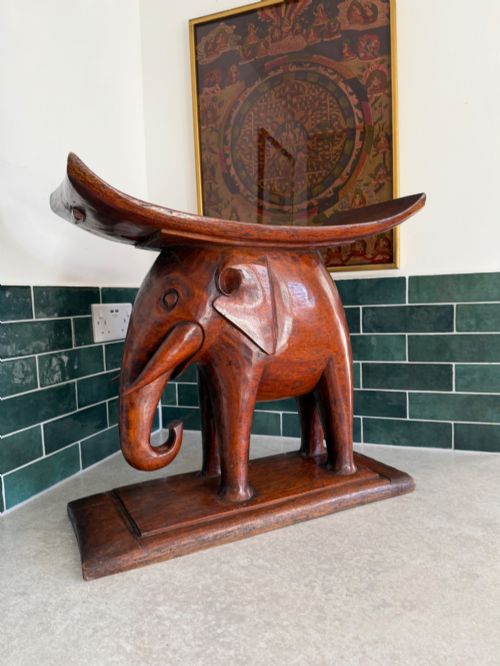
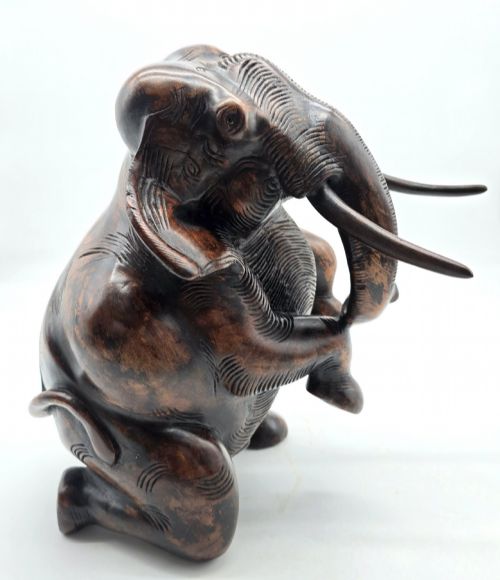
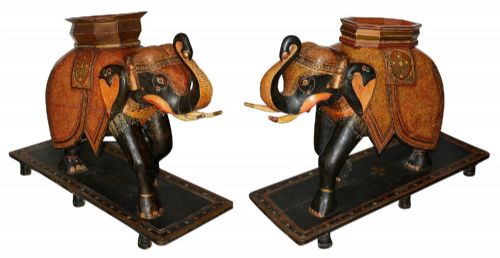
A hand carved elephant search reveals a diverse collection of sculptural figures, bookends, and occasional furniture rooted in nineteenth and early twentieth-century craftsmanship. Buyers frequently encounter side tables supported by carved figures, alongside detailed animal studies from the Victorian period up to the Art Deco era.
The objects stem predominantly from Indian Raj and Burmese workshops, encompassing Anglo-Indian and Black Forest styles. Forms range from small soapstone studies and ebony bookends to large centre tables, window seats, and substantial armchairs.
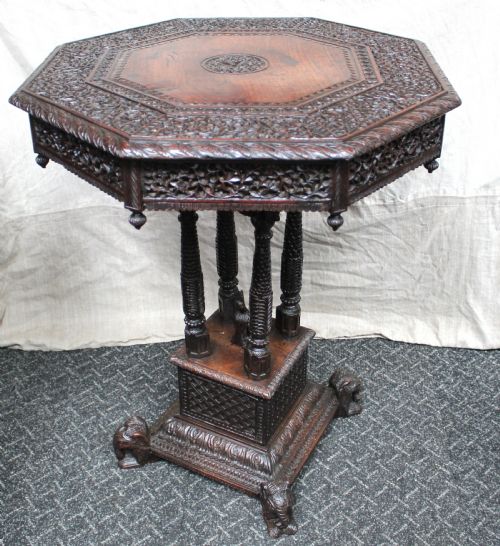
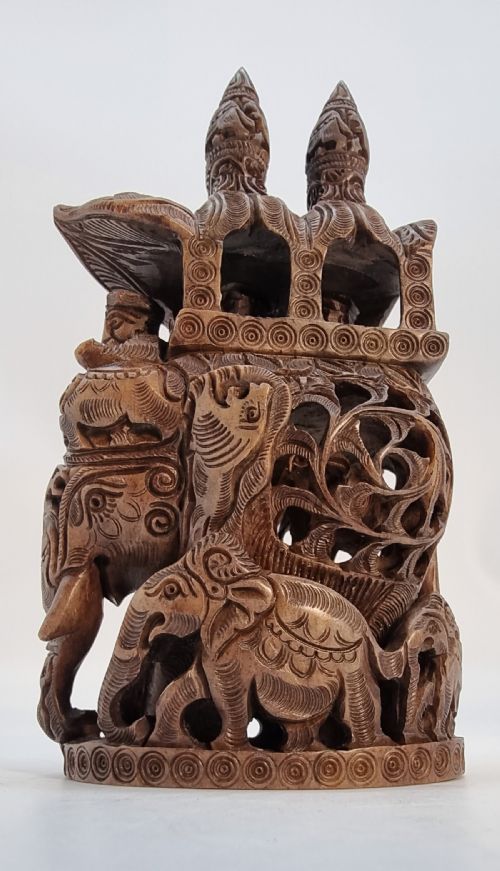
Regional variations highlight distinct decorative vocabularies, including Bombay Presidency tables and Kashmiri lacquered wood. Sculptures depict ceremonial processions, performing animals, and solitary figures mounted on bases.
How they were made
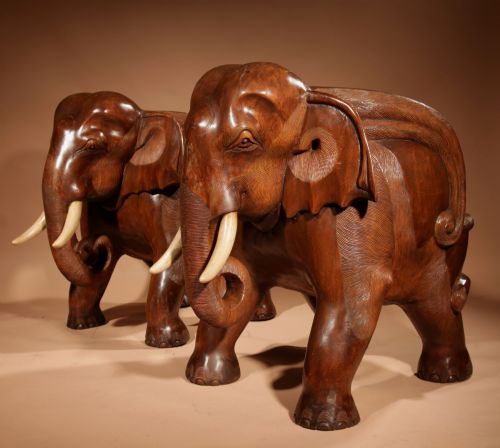
Maker workshops utilised dense regional timbers such as teak, rosewood, hardwood, and ebony, selected for their stability and capacity to hold fine detail. Bone and bone inlay provide striking textural contrast against darker woods, while soapstone and lacquer appear in specific sculptural and decorative pieces.
Carvers employed hand chisels and gouges to render deep relief work, capturing muscular forms, ceremonial trappings, and realistic tusks. Joinery techniques in tables and seating integrate structural supports directly with sculptural animal figures.
Hand Carved Elephant Retail Price Guide 2026
Typical asking prices for hand carved elephant among the pieces listed under this phrase on Sellingantiques today, from the lower quarter to the upper quarter. They describe what is for sale here now, not the wider market.
Bookends occasionally capture the animals mid-stride, as though attempting to march off the bookshelf entirely.
What varies in quality
Material selection dictates finish and longevity, with dense timbers like ebony and rosewood holding sharper chisel work than softer woods. The integration of structural elements, such as table tops and chair frames, with the carved animal figures demonstrates the maker's architectural skill.
The Hand Carved Elephant Glossary
- Anglo-Indian
- A style of furniture and decorative arts produced during the British Raj, combining British forms with traditional Indian carving. This aesthetic frequently incorporates dense tropical hardwoods and intricate floral or animal motifs.
- Black Forest
- A style of wood carving originating in Switzerland and Germany, known for realistic animal studies and woodland themes. Pieces in this tradition often feature expressive, characterful fauna.
- Bone Inlay
- A decorative technique where small pieces of bone are set into recesses within a wooden surface to create geometric or figurative patterns. It provides a bright contrast against dark woods like ebony and rosewood.
- Raj Period
- The period of British rule in the Indian subcontinent spanning from 1858 to 1947. Items from this era often reflect a fusion of local craftsmanship and colonial utility.
Hand Carved Elephant: Frequently Asked Questions
How were elephant tables used?
Elephant tables served as functional occasional, coffee, or centre tables in domestic interiors during the Victorian and Edwardian periods. The carved figures functioned structurally as legs or pedestals while providing decorative interest.
These surfaces accommodated lamps, decorative objects, or tea services in drawing rooms and parlours. Their dual role as furniture and sculpture made them popular conversation pieces in colonial homes.
Where do Black Forest elephant pieces come from?
Black Forest carvings originate from the mountainous region of Central Europe rather than Asia. These items typically take the form of bookends or small decorative objects with a distinct naturalistic finish.
Unlike Anglo-Indian works, European Black Forest carvers focused on a rustic aesthetic using local timbers. Their representations of animals often emphasise charming or humorous expressions.
How do I care for wooden elephant sculptures?
Wooden sculptures and tables require stable indoor humidity levels to prevent timber from splitting or warping. Dusting with a soft, dry cloth maintains the surface without the need for heavy chemical polishes.
Keeping items away from direct sunlight and heat sources preserves the natural oils and finish of dense woods like ebony, teak, and rosewood.