




Hand Blown Pink Glass
Hand blown pink glass brings vibrant warmth to a room, offering tactile nineteenth-century vessels that catch the light.
Hand Blown Pink Glass
Hand blown pink glass encompasses nineteenth-century decorative tableware and display pieces, most commonly found in rich cranberry tones alongside clear elements.
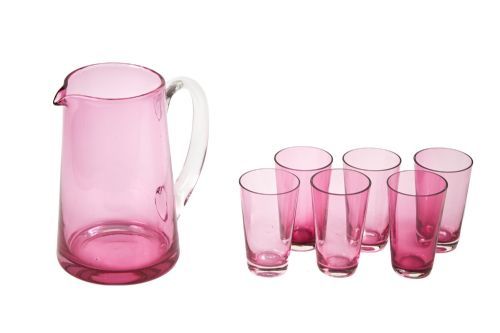
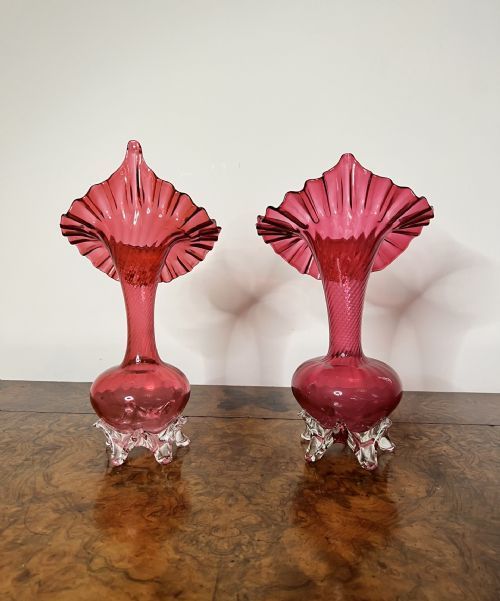
Vessels range from jack-in-the-pulpit vases and cornucopia forms to complete drinkware sets and lamp shades, showcasing diverse nineteenth-century glassmaking.
How they were made
Hot glass manipulation shaped these pieces by hand, frequently incorporating brass or silver plate mounts alongside uranium green glass bases.
Makers achieved the distinct pink and ruby hues through specialised metal oxide additions during the blowing process.
Some nineteenth-century vessels secretly contain uranium, causing them to glow with an unexpected neon green light under the right illumination.
What varies in quality
Execution of form and complexity of assembly distinguish standard domestic items from ambitious multi-piece epergnes and matched drinkware sets.
Integration of secondary materials like pierced spoons or contrasting green glass bases reveals the ambition of the original workshop.
The Hand Blown Pink Glass Glossary
- Cranberry Glass
- A type of transparent red or pink glass created by adding gold to the molten batch. It gained immense popularity during the Victorian era for tableware and decorative items.
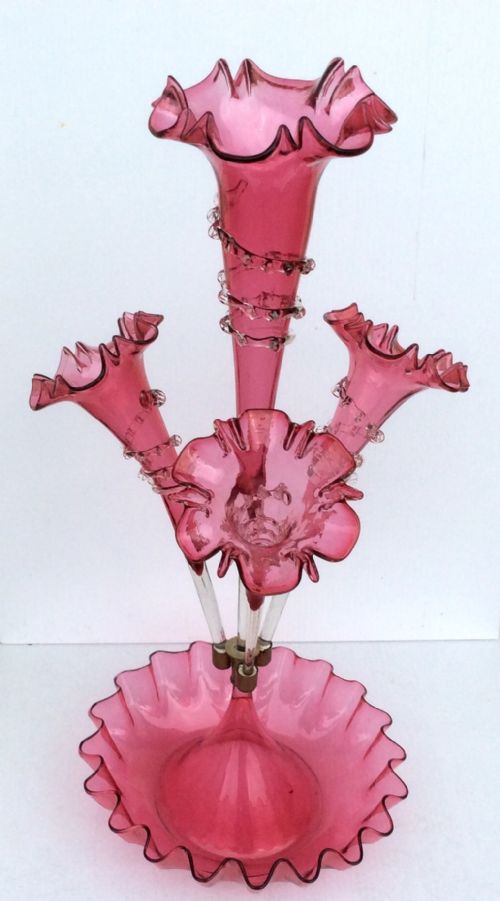
- Epergne
- A large table centrepiece featuring a central bowl with multiple branching trumpets or baskets. They were designed to hold fruit, flowers, or sweetmeats during formal dining.
- Jack-in-the-Pulpit
- A distinctive nineteenth-century vase shape with a ruffled, flared rim resembling the native woodland plant. Glassmakers achieved this dramatic silhouette while the material was still hot.
- Uranium Glass
- Glass that contains trace amounts of uranium dioxide, causing it to glow brightly under ultraviolet light. It frequently appears combined with pink glass in nineteenth-century decorative pieces.
- Salt Cellar
- A small open vessel placed on the dining table to hold salt before the invention of individual shakers. Victorian examples often featured delicate cranberry or ruby glass bowls.
Hand Blown Pink Glass: Frequently Asked Questions
What is cranberry glass?
Cranberry glass is a transparent pink or red material made by introducing gold chloride into the molten glass batch. It became a defining aesthetic of the Victorian period.
Craftsmen shaped this glass into everything from drinking vessels to elaborate table centerpieces and lighting components.
How old are these pieces?
The pieces listed date primarily from the nineteenth century, spanning the eighteen sixties through to nineteen hundred. Victorian manufacturing techniques dictate their age and character.
Stylistic cues and material combinations help collectors place specific items within this broad nineteenth-century window.
How were epergnes used?
Epergnes served as grand table centerpieces during formal Victorian dining occasions. Their multiple arms and horns held fruit, flowers, or sweetmeats.
These elaborate constructions combined blown pink glass trumpets with bowls to create striking tablescapes.
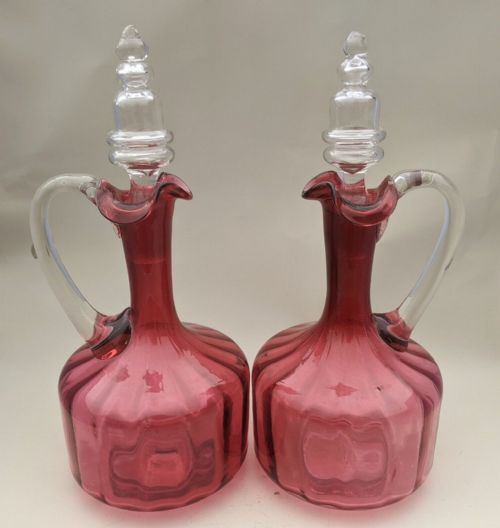
Can I use these decanters?
These antique decanters were originally intended for serving wine and spirits at the dining table. Many collectors continue to use them carefully for entertaining.
Hand washing is essential to preserve the nineteenth-century glass and any accompanying silver plate or brass mounts.