

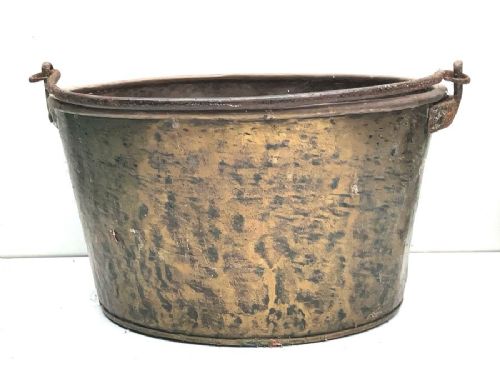


Hammered Copper Cauldron
A hammered copper cauldron is a heavy metal vessel built for utility, prized today as a robust hearthside planter or log bin.
Hammered Copper Cauldron
A hammered copper cauldron represents a sturdy utilitarian vessel originally fashioned for kitchen or laundry tasks, now repurposed as a distinctive interior accent. When you search for a hammered copper cauldron, you encounter forms ranging from Georgian kitchen pans to Victorian coal buckets and Art Deco planters.
The selections on this page span several centuries, featuring pieces from the Georgian and Victorian eras alongside early twentieth-century examples. Most items function practically as log bins, wash tubs, or heavy cooking pots, shaped by domestic demands of their respective periods.
How they were made
These vessels rely on sheet copper shaped by hand hammering, often joined with visible rivets that secure the body and handles. Makers incorporated contrasting metals such as iron and brass for swing handles, rims, and structural reinforcement.
Craftsmen utilised thermal hammering and cold working to strengthen the soft copper sheet into deep hollowware forms. Surface textures display the direct marks of the hammer, distinguishing hand-raised work from later mechanical pressing.
Hammered Copper Cauldron Retail Price Guide 2026
Typical asking prices for hammered copper cauldron among the pieces listed under this phrase on Sellingantiques today, from the lower quarter to the upper quarter. They describe what is for sale here now, not the wider market.
Some heavy copper vessels spent decades boiling laundry before retiring to a quiet life holding firewood.
What varies in quality
Quality rests in the heaviness of the metal gauge and the integrity of the hand-formed shape rather than pristine surface preservation. Finer examples display disciplined hammer regularity and substantial weight, while lesser pieces feel thin and lack structural heft.
The integration of original iron or brass mounts contributes significantly to the character of a piece. Superior vessels retain their authentic handles and fixings without awkward modern replacements that disrupt the historical form.
The Hammered Copper Cauldron Glossary
- Dinanderie
- Decorative brass and copperware produced in Europe, encompassing vessels and metal objects. The term frequently applies to Art Deco textured metal items.
- Cauldron
- A large metal pot with a wide mouth and rounded base, traditionally used over an open fire. These vessels often feature swing handles for suspension or carrying.
- Log bin
- A deep container utilised beside a fireplace to store firewood. Many old copper cauldrons and wash tubs find a second life in this role.
- Riveted
- Joined together using metal pins hammered flat at the ends. This technique secures handles and seams on older copper cookware.
- Swing handle
- A movable bail handle attached to opposite sides of a pot. It allows the vessel to hang or tilt easily.
Hammered Copper Cauldron: Frequently Asked Questions
How were copper cauldrons used originally?
These heavy vessels served practical domestic functions such as boiling water, cooking large quantities of food, and managing laundry in wash tubs. Their thick metal construction allowed them to withstand direct heat over open hearths.
Over time, many of these utilitarian pots transitioned from the scullery and kitchen to living spaces, where their durable nature suited heavy storage needs.
Can I use an antique cauldron outside?
Copper and brass withstand sheltered outdoor environments well, developing a rich natural verdigris patina over the years. Many people utilise them as planters in gardens or on patios.
Care should be taken if planting directly inside unlined metal, as constant moisture can accelerate internal corrosion. Using an inner pot preserves the integrity of the historic vessel.
How do I clean hammered copper?
Most collectors prefer to leave an aged patina intact, as dark oxidation highlights the historic character and hammer marks. Gentle washing with warm soapy water removes dust without disturbing the surface.
Harsh chemical polishes strip away the historical depth that accumulates over centuries. Light dusting and occasional waxing keep the metal stable.