
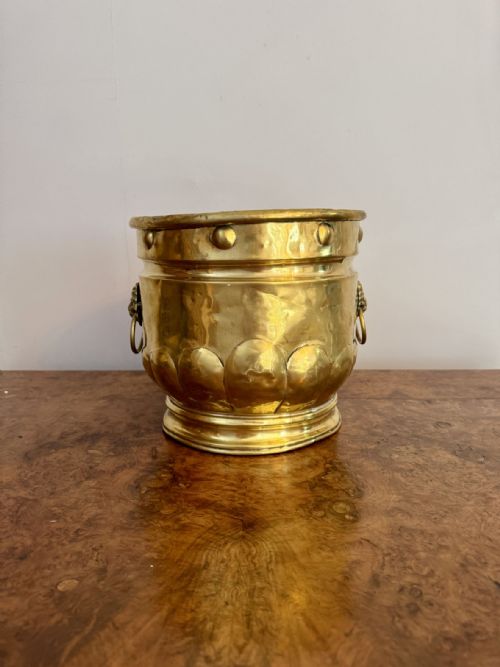
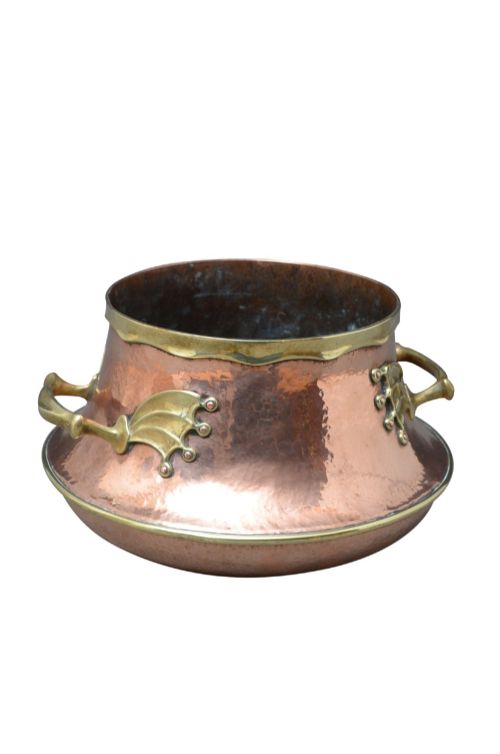
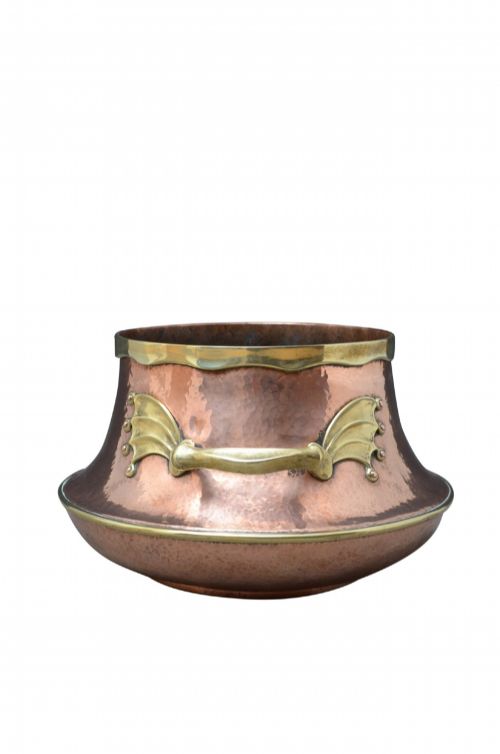
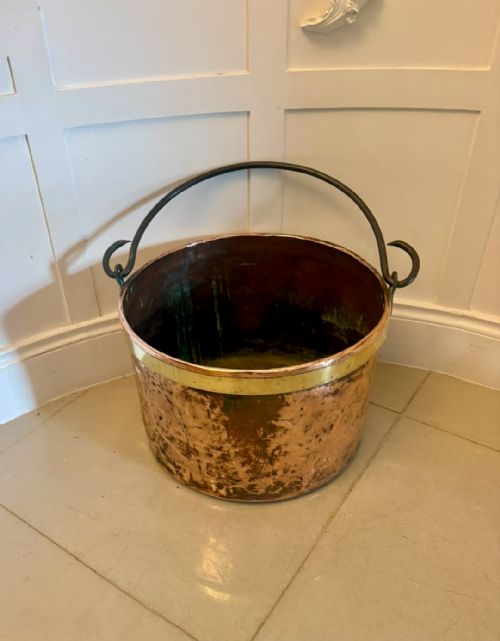


Hammered Brass Planter
These hammered brass planter vessels bring texture and warmth to a room, offering a sturdy home for houseplants.
Hammered Brass Planter
A hammered brass planter search reveals a mix of nineteenth-century vessels, jardinières, and fireside buckets repurposed for greenery. You are most likely to meet Victorian and Edwardian examples fashioned from brass and copper.
Makers adapted utilitarian coal buckets, cauldrons, and cooking pots into plant holders alongside dedicated jardinières. Styles range from Victorian and Arts and Crafts to French Rococo Revival and Art Deco.
Materials and construction methods
Metals such as brass, copper, and iron form the core of these vessels, often paired together in a single piece. Smiths used handbeating and hammering techniques to texture the metal surfaces.
Construction details include riveted seams and swing handles attached to bodies formed from solid copper or brass sheets. Embossing and patination add decorative depth to the hammered surfaces.
Listings feature Victorian, Edwardian, and Art Deco pieces spanning the nineteenth and early twentieth centuries.
Judging the standard of manufacture
The weight of the metal and the precision of the handbeating separate standard vessels from superior examples. Strong riveted construction and well-formed brass or iron handles indicate better initial manufacture.
The depth and crispness of embossing on the body distinguish finer decorative work from plain surfaces. Integrated brass stands and balanced proportions elevate certain cauldrons and jardinières above simpler bins.
The Hammered Brass Planter Glossary
- Jardiniere
- An ornamental pot or stand for holding plants or flowers. These large vessels often feature two handles or a footed base.
- Dinanderie
- Objects made of beaten brass or other non-ferrous metals. This term covers various decorative cauldrons and planters from the period.
- Embossed
- Decorated with raised designs hammered or pressed into the metal surface. This technique adds texture to the body of the vessel.
- Patina
- The surface sheen and colour acquired by metal through age and use. A rich patina shows the natural oxidation of copper and brass over decades.
- Cauldron
- A large metal pot with a wide mouth, often fitted with a swing handle. These sturdy vessels frequently double as planters or log bins.
Hammered Brass Planter: Frequently Asked Questions
Can I plant directly inside them?
Many older metal vessels lack drainage holes and may react negatively to constant moisture.
It is safer to use a plastic nursery pot inside the jardiniere to protect the original brass or copper.
How do I clean the metal?
Gentle dusting and occasional wiping with a soft cloth preserve the historic surface.
Harsh metal polishes strip away the aged patina that collectors value on nineteenth-century pieces.
Were these originally made for plants?
Several forms began as coal buckets, cooking pots, or log bins rather than dedicated garden containers.
Victorians readily adapted functional fireside copper and brass vessels for interior greenery.
How do I date these items?
Construction methods like hand-beating, riveting styles, and material combinations provide clues to the manufacturing era.
Victorian and Edwardian examples often display distinct decorative motifs associated with their specific decade.