
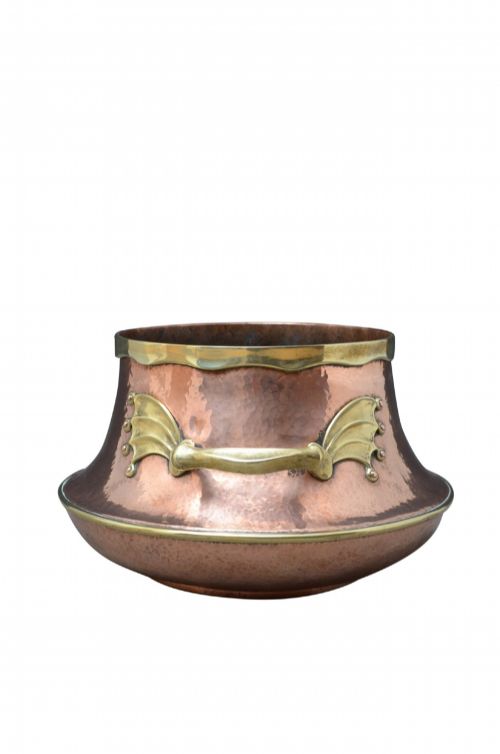


Hammered Brass Fireplace Scuttle
A hammered brass fireplace scuttle brings tactile warmth and utilitarian craft to the hearth, serving as a sturdy vessel for solid fuel.
Hammered Brass Fireplace Scuttle
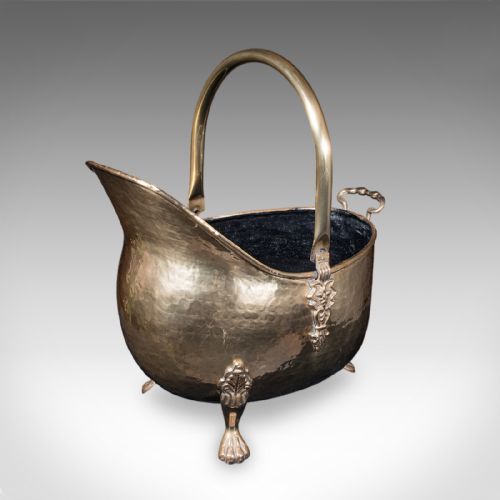
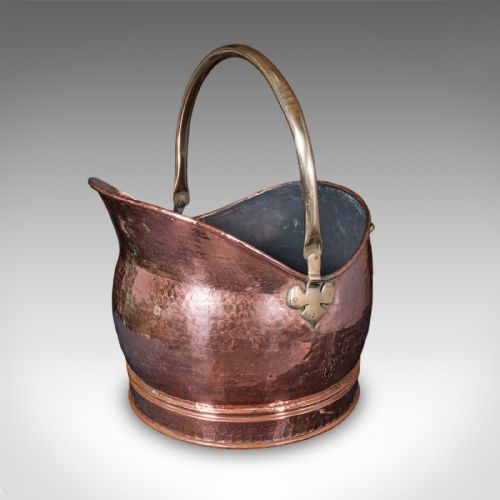
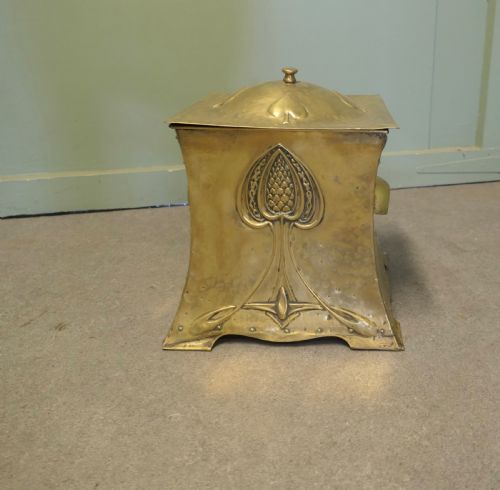
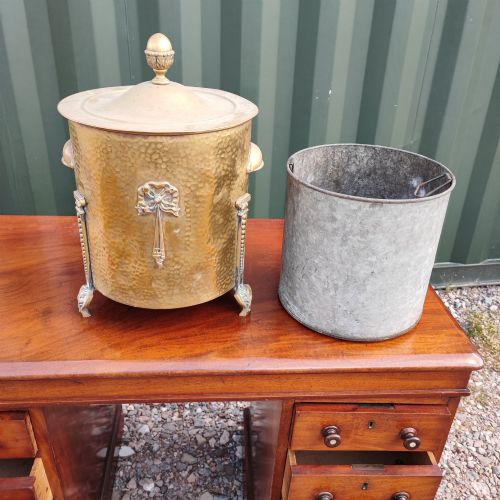
A hammered brass fireplace scuttle is a fireside accessory designed for holding and transporting coal or logs to the hearth. When you explore this selection, you encounter various configurations including helmet-shaped buckets, lidded boxes, and open cauldrons.
The pieces originating from this tradition span the nineteenth century through the Edwardian period and into the early twentieth century. Many examples reflect Victorian utility alongside distinct Arts and Crafts and Art Nouveau aesthetic movements.
Materials and construction methods
The primary construction relies on hammered brass and copper sheets, often shaped by hand to create durable metal bodies. Makers incorporated iron and wood components for structural integrity and handles.
Surface techniques involve hand-beating and planishing the metal to produce distinctive surface textures. Artisans combined these hammered finishes with riveted joints and applied decorative elements such as shovels or spade motifs.
Listings feature brass, copper, and iron materials across Victorian, Arts and Crafts, Art Nouveau, and Edwardian periods.
Assessing quality and craftsmanship
Quality reveals itself in the weight of the metal and the regularity of the hand-hammered texture across the body. Superior examples demonstrate careful construction at the seams and rivets, ensuring the vessel maintains its shape under heavy daily loads of coal or logs.
The artistic ambition of the design sets finer pieces apart from standard utilitarianware, particularly in Arts and Crafts or Art Nouveau interpretations. The presence of original matching shovels or intended decorative mounts elevates the completeness and visual harmony of the accessory.
Henry Loveridge
The Hammered Brass Fireplace Scuttle Glossary
- Helmet scuttle
- A traditional coal container featuring a flared mouth and a raised back resembling a classical helmet. This shape facilitates the controlled pouring of fuel onto the fire.
- Planiser
- A hand-hammering technique used to smooth and texture sheet metal. It leaves a subtle patterned finish across the brass or copper surface.
- Dinanderie
- A term for worked brass or copper objects produced in Europe. It often describes vessels and decorative containers created with patinated metal finishes.
- Fireside accessory
- An umbrella term for functional implements used around a fireplace. These objects combine practical utility with decorative presence in the domestic interior.
Hammered Brass Fireplace Scuttle: Frequently Asked Questions
What is a hammered brass fireplace scuttle?
A hammered brass fireplace scuttle is a functional metal container used to store and carry coal or logs beside a hearth. These vessels combine sturdy construction with decorative hand-beaten surfaces.
They emerged as practical household items that also contributed to the aesthetic of the nineteenth and early twentieth-century living room.
How were these scuttles originally used?
Households used these containers to transport solid fuel from a cellar or coal bunker directly to the fireplace grate. Their shaped spouts or open mouths allowed for easy emptying into the fire.
Many included dedicated shovels or lids to keep coal dust contained when not in use.
How do I live with a brass scuttle?
You can position a scuttle beside an active hearth or use it as a standalone container for storing kindling and logs. Some people also repurpose larger copper and brass vessels as planters or indoor bins.
Regular dry dusting preserves the metal surface without stripping the natural patina accumulated over decades.
How do I tell Victorian from Arts and Crafts pieces?
Victorian examples often favour traditional helmet shapes with polished brass or copper finishes designed for formal hearths. They focus heavily on robust utility and classic nineteenth-century proportions.
Arts and Crafts pieces emphasise hand-beaten textures, stylized plant motifs, and simpler, honest construction methods characteristic of the movement.