
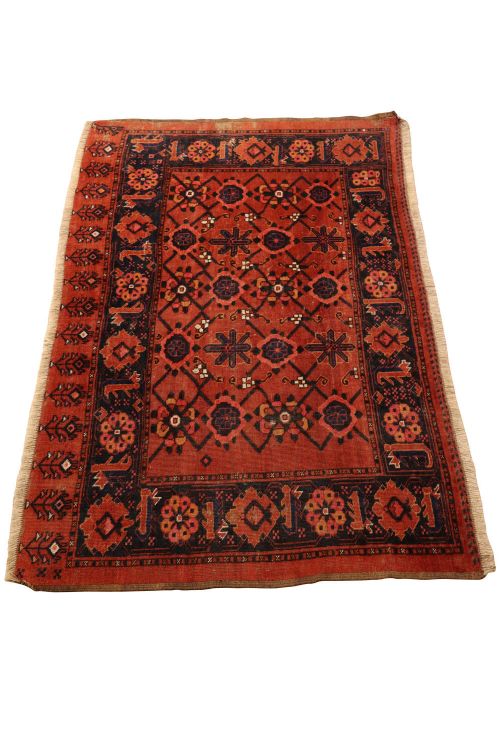


Hamadan Wool Carpet
These heavy, durable floor coverings offer the rich geometry and deep indigo tones of western Persian village weaving.
Hamadan Wool Carpet
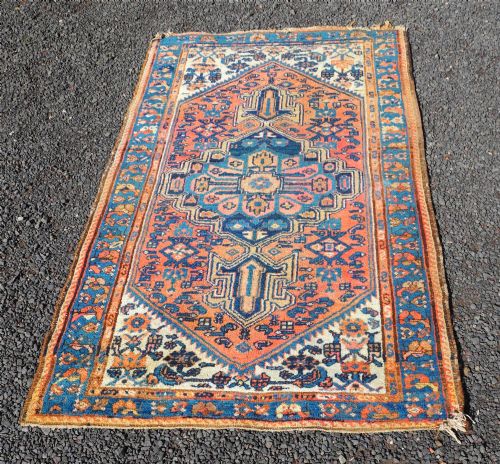
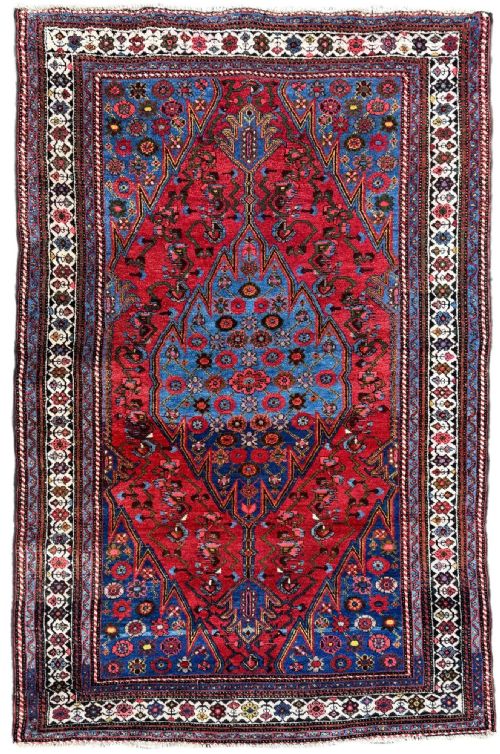
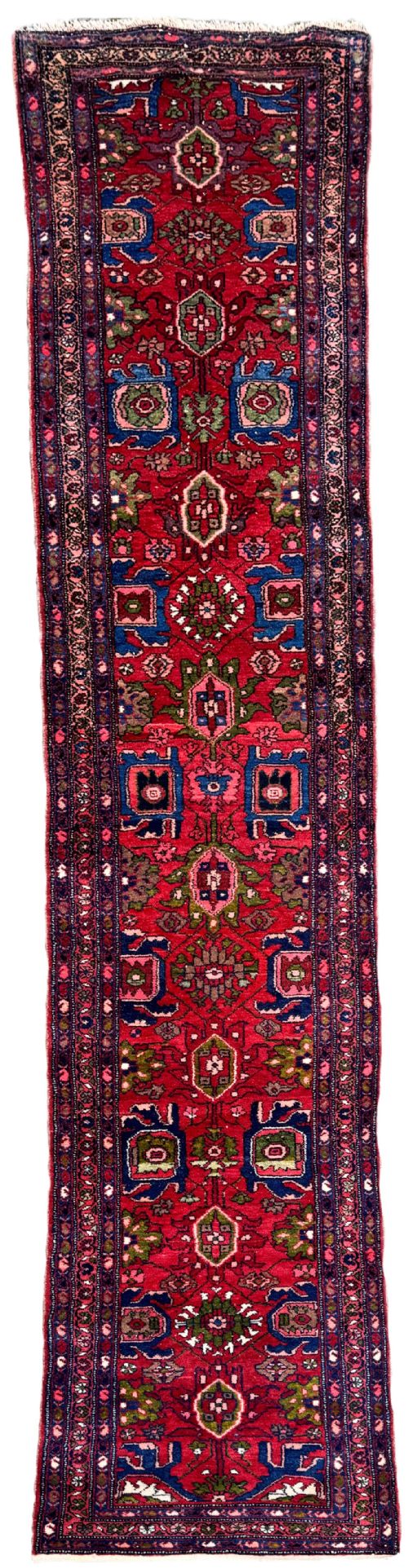
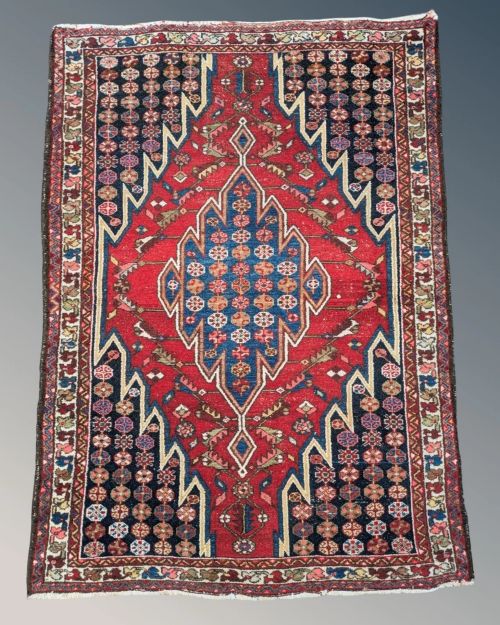
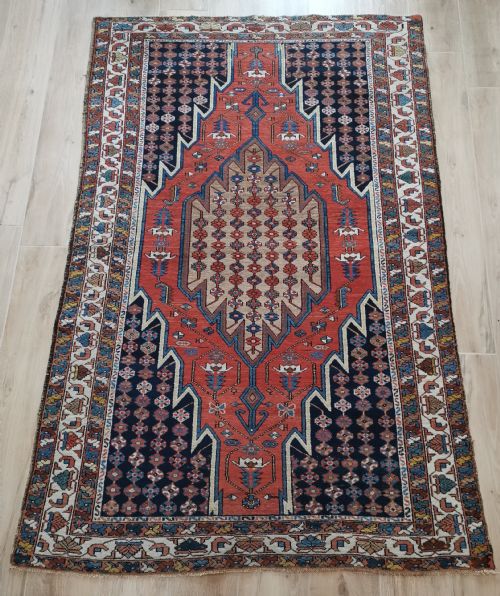
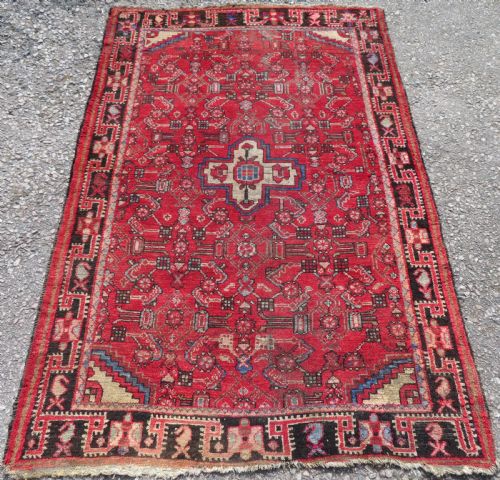
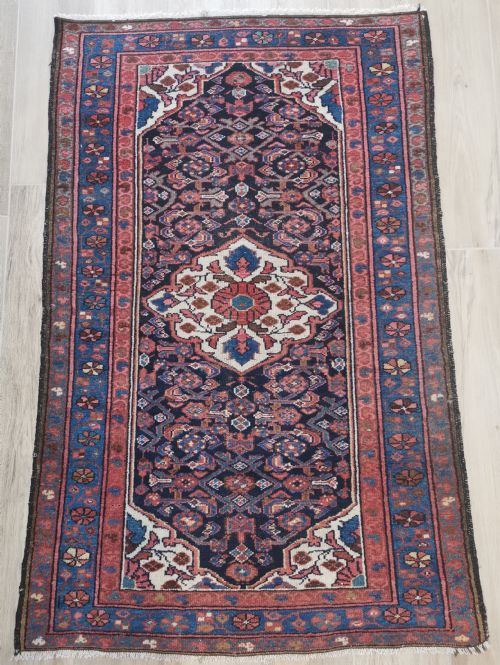
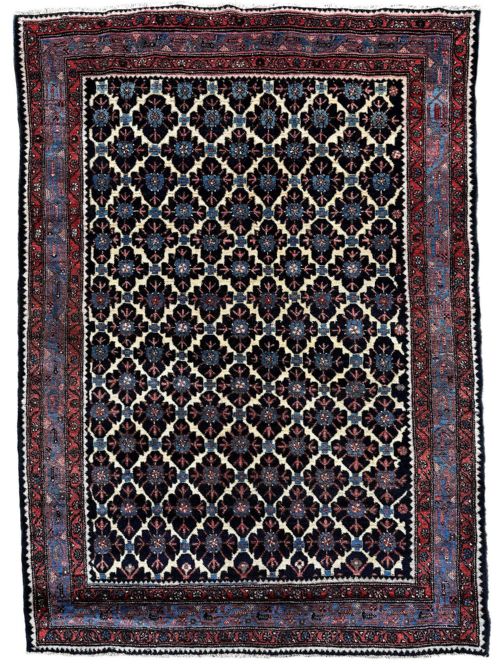
A hamadan wool carpet is a hand-knotted floor covering originating from western Persia and surrounding village workshops, often grouped under styles such as Persian tribal or traditional. Buyers seeking these items will find room-sized carpets, wide kelleh formats, and narrow hallway runners produced across the late nineteenth and early twentieth centuries.
The pieces appearing most frequently range from smaller domestic rugs to long narrow runners dated from the 1870s through to the 1940s. These floor coverings bridge the gap between structured city workshops and rural tribal output, carrying vernacular motifs tied to specific districts like Borodjert or Mazlaghan.
Materials and construction
Every piece relies on a foundation of spun cotton warp and weft threads, providing structural stability for heavy daily use. The pile itself uses dense wool, hand-knotted to create a thick, resilient surface designed to withstand generations of foot traffic.
Weavers utilised natural hand-spun wool dyed with traditional vegetable and mineral compounds, resulting in deep blues, madder reds, and rich earthy tones that mature gracefully over time.
The listings span production dates from the 1870s through to the 1940s, utilising wool pile on cotton foundations.
Distinctions in standard and execution
Quality separates along the precision of the knotting and the density of the wool pile, with finer examples showing crisper geometric lines and tighter structural foundations. The handling of the dyes also dictates the tier, as even saturation and subtle tonal variations elevate certain village pieces above standard commercial output.
The integrity of the original wool edges and the proportions of long runners or large kelleh formats further divide utilitarian floor coverings from superior collector examples.
The Hamadan Wool Carpet Glossary
- Kelleh
- A large rectangular carpet format, typically longer than it is wide, designed for specific room proportions in Persian homes.
- Runner
- A long, narrow carpet format intended for hallways, corridors, or alongside larger furniture pieces.
- Warp
- The vertical foundation threads stretched tightly on the loom before knotting begins.
- Weft
- The horizontal threads passed across the warp threads to bind the rows of knots firmly in place.
- Hand-knotted
- A traditional construction method where individual tufts of wool are tied by hand to the warp threads, ensuring durability.
Hamadan Wool Carpet: Frequently Asked Questions
Where were these carpets made?
These floor coverings originate from the city of Hamadan and the surrounding rural villages of western Persia, a region with an ancient tradition of hand-knotting.
Local weavers gathered wool from regional flocks, spun the yarn by hand, and worked on upright village looms to produce sturdy carpets for domestic use and export.
How do I care for a vintage runner?
Regular gentle vacuuming without a rotating brush roll keeps the thick wool pile free from embedded grit and dust.
Professional cleaning tailored to antique textiles ensures the natural wool oils remain protected and the vegetable dyes do not bleed.
What is a village rug?
Village rugs are produced by independent weavers working in small communities rather than large metropolitan workshop complexes.
These pieces often feature spontaneous geometric patterns, memo-driven tribal motifs, and thick wool piles characteristic of rural Persian craftsmanship.
How are different regional styles identified?
Identifiers include the specific arrangement of medallions, repeat floral lattice designs, and the characteristic palette of indigo blues and terracotta reds.
Structural traits such as wool quality, knot density, and the handling of the cotton foundation further separate districts like Mazlaghan or Borodjert.