
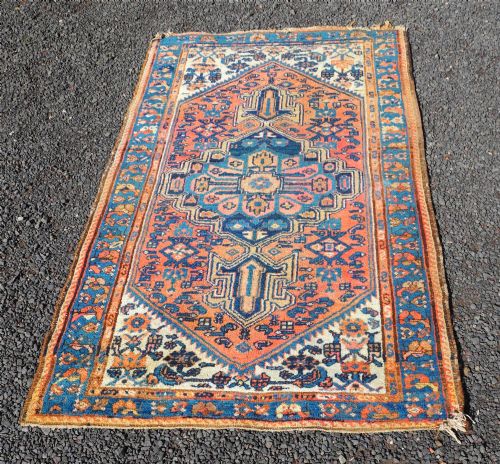
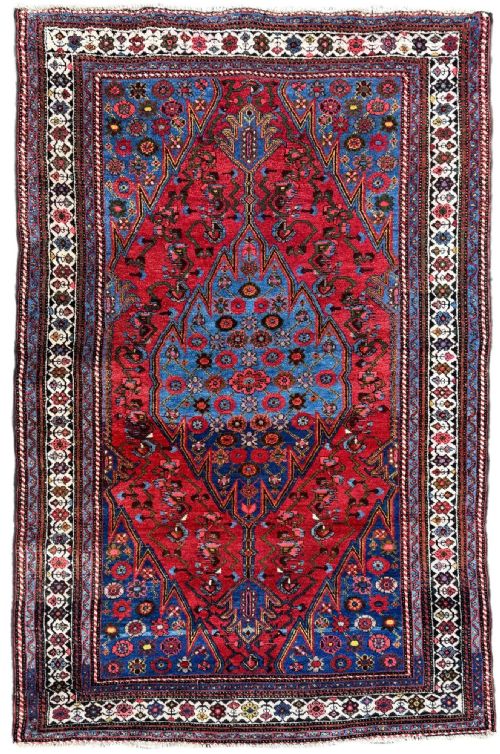
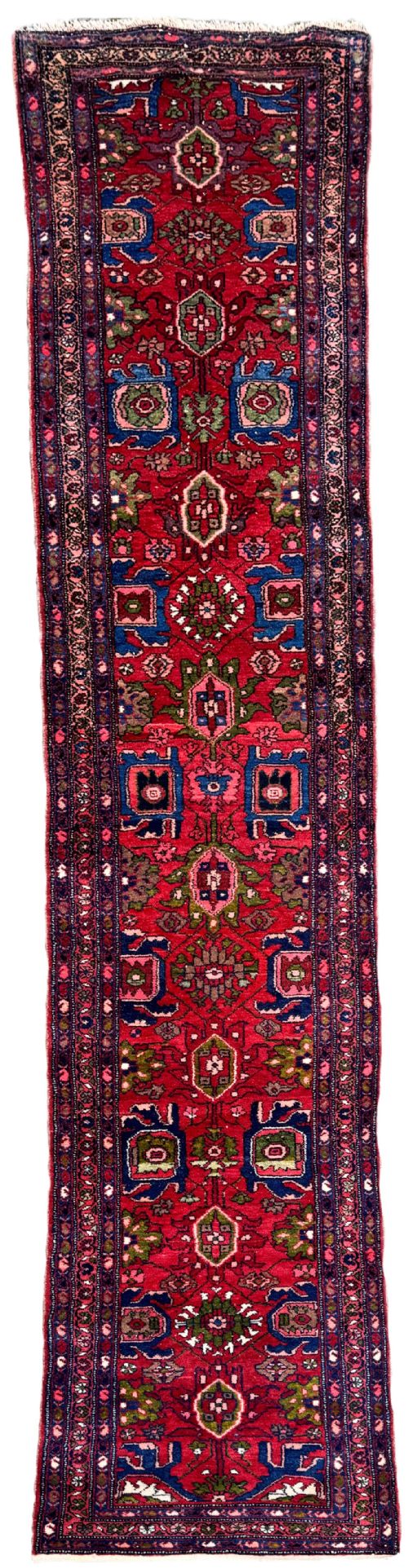
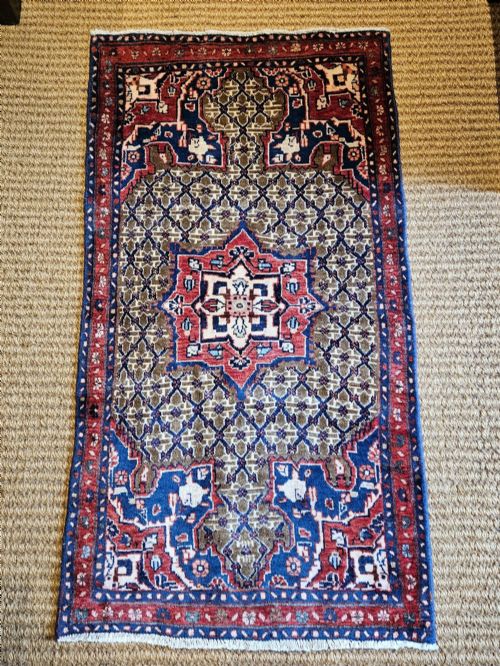
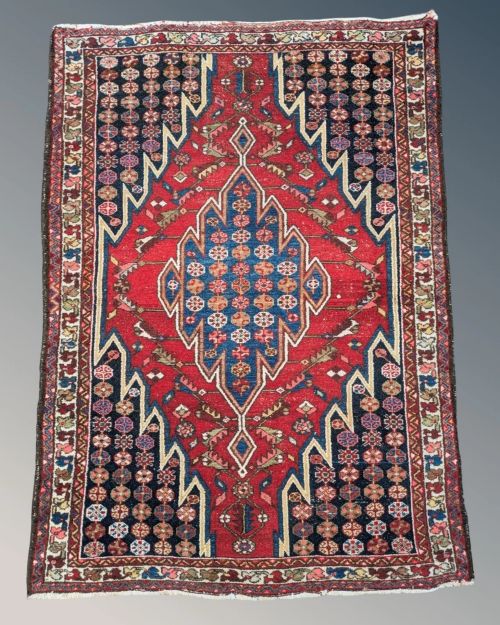
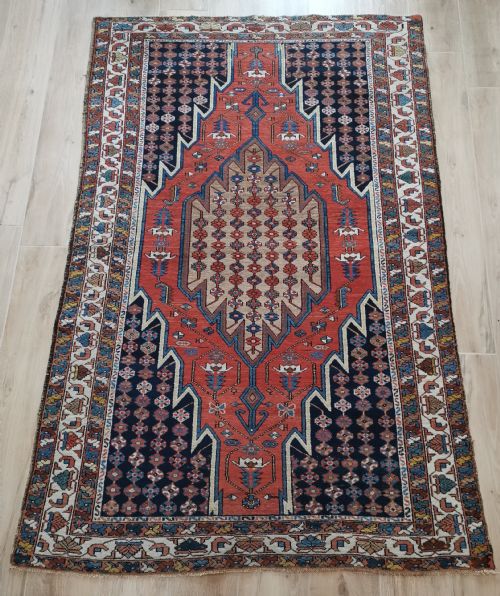
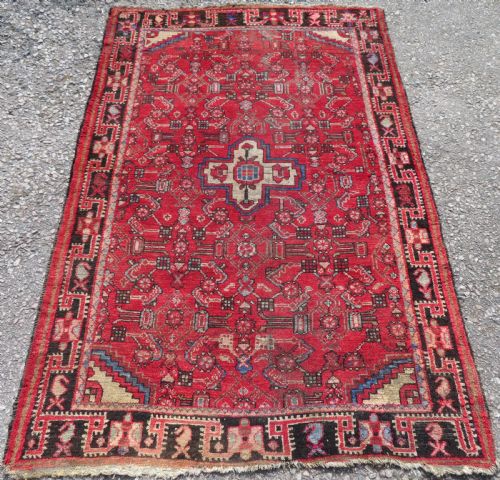
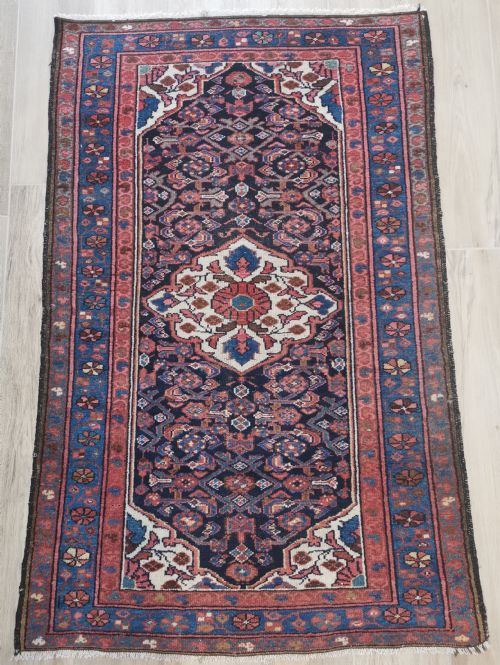


Hamadan Oriental Rug
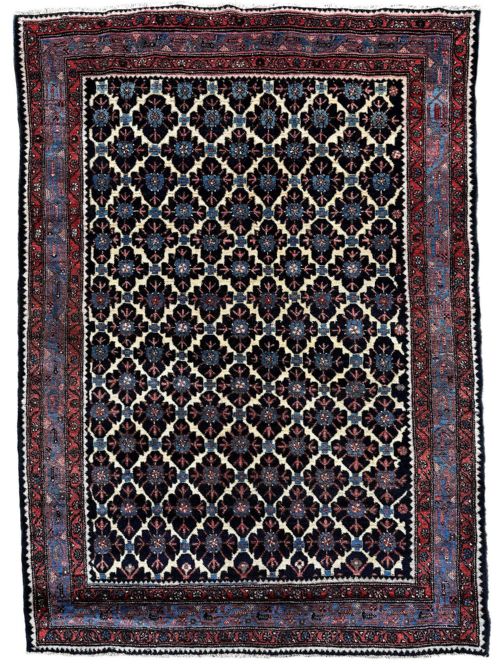
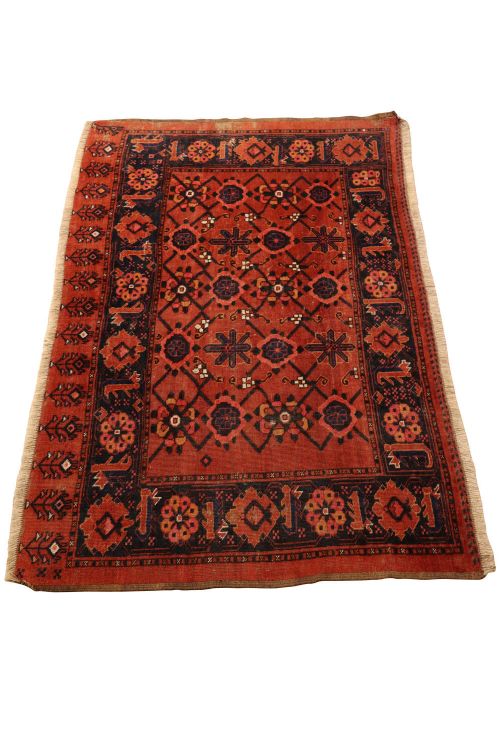
A hamadan oriental rug brings substantial West Persian village character into a room through geometric motifs and durable wool pile.
Hamadan Oriental Rug
A hamadan oriental rug originates from the vast network of weaving villages surrounding the ancient city of Hamadan in western Persia. Buyers encounter these pieces in various formats, ranging from small hearth rugs and area sizes to long hallway runners and large kelleh carpets.
The selection includes specific regional subtypes such as Mazlaghan, Malayer, and Borodjert village pieces, alongside Kurdish tribal rugs. These textiles reflect traditional Persian styles shaped by local village weavers working across the late nineteenth and early twentieth centuries.
Materials and construction methods
Makers constructed these floor coverings using sturdy wool pile hand-knotted onto durable cotton foundations. This pairing of materials provided the structural strength required for heavy domestic use in hallways and hearths.
Village workshops relied on traditional hand-weaving techniques passed down through generations, creating dense structures that allowed the pile to withstand decades of foot traffic while maintaining integrity.
Some runners measure over ten metres long, suggesting they once lined exceptionally grand Persian corridors.
Distinguishing quality variations
The standard of a piece depends on knot density and the precision of the tribal geometry executed by the weaver. Finer knotting permits sharper definition within medallions, lattices, and border motifs.
Materials and dye execution also differentiate examples, where evenly saturated wool and balanced proportions elevate an ordinary village runner into a more compelling collector specimen.
The Hamadan Oriental Rug Glossary
- Runner
- A long, narrow carpet format specifically woven for hallways, corridors, and narrow passageways. These pieces measure significantly longer than they are wide.
- Kelleh
- A large rectangular carpet format traditionally used as a primary floor covering in Persian rooms. This scale provides a commanding presence compared to standard area rugs.
- Hand-knotted
- A construction method where individual lengths of yarn are tied by hand onto the warp threads of the foundation. This technique creates a secure pile that anchors the pattern.
- Foundation
- The underlying grid of warp and weft threads that supports the knotted wool pile. Cotton serves as the standard structural base for these village weaves.
- Tribal
- A descriptive classification for designs originating from nomadic or semi-nomadic groups. These patterns often display spontaneous geometric interpretations rather than formal court aesthetics.
Hamadan Oriental Rug: Frequently Asked Questions
Where were these rugs made?
These floor coverings were produced in the city of Hamadan and the surrounding weaving villages across western Persia. Local artisans in settlements such as Borodjert contributed distinct regional variations to the regional output.
Production spanned several decades, drawing on traditional village and tribal weaving methods rooted in the local culture.
How do I use a runner in a hallway?
Narrow runners fit naturally into corridors, entryways, and transitional spaces where floor protection and visual warmth are required. Their elongated proportions guide movement through a home while anchoring narrow architectural layouts.
Proper placement leaves adequate bare flooring visible around the edges to frame the path effectively.
What is the difference between a rug and a carpet?
Carpets generally refer to larger format floor coverings designed to anchor an entire room, such as the substantial kelleh sizes found in this tradition. Rugs typically denote smaller rectangular formats intended for specific functional zones like hearths.
Both share identical materials and hand-knotted construction techniques despite their differences in scale.
How should I care for wool pile?
Regular gentle vacuuming without a rotating brush roll prevents dust accumulation within the dense wool fibres. Professional cleaning suited for antique textiles preserves the lanolin and structural integrity of the pile over time.
Positioning the textile away from prolonged direct sunlight prevents uneven fading across the natural dyes.
How do I identify a village weave?
Village weaves display spontaneous geometric arrangements, repeated floral lattices, and tribal motifs rather than strict symmetrical court designs. Artisans worked from memory or local tradition, leading to charming irregularities in the layout.
These characteristics separate independent village production from standardised city workshop output.