




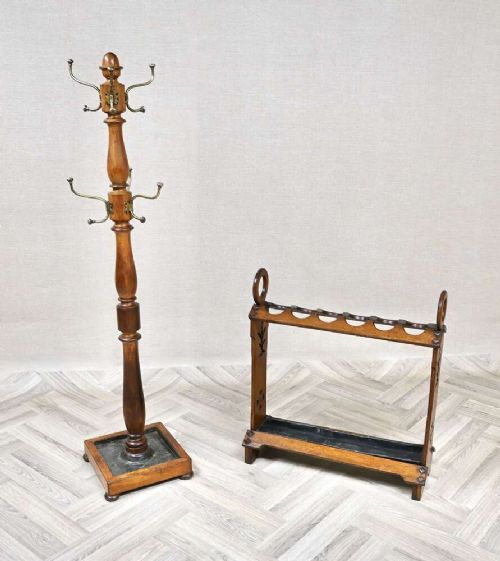
Hallway Wood Furniture
Hallway wood furniture encompasses functional entrance pieces from various historical periods designed to organise and furnish domestic entries.
Hallway Wood Furniture
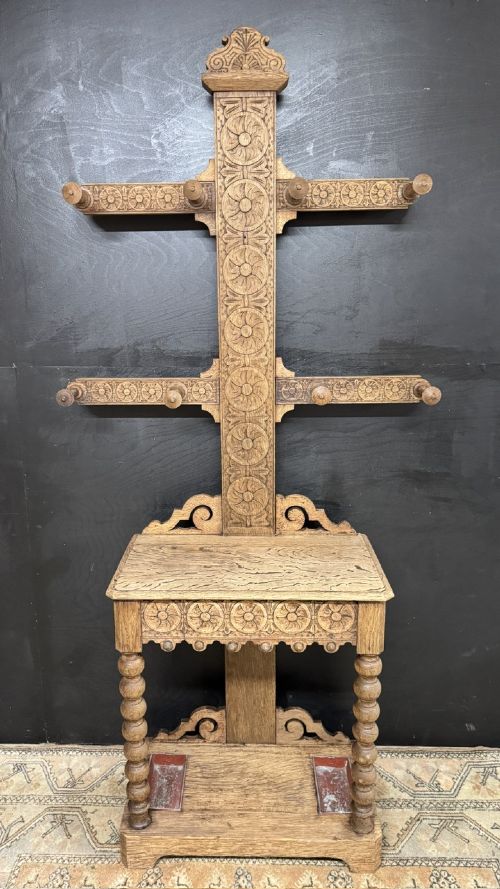
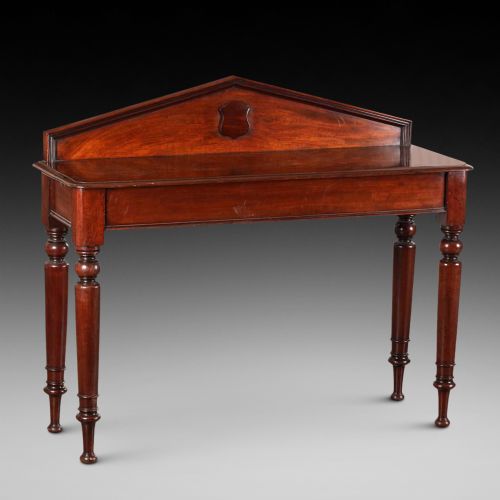
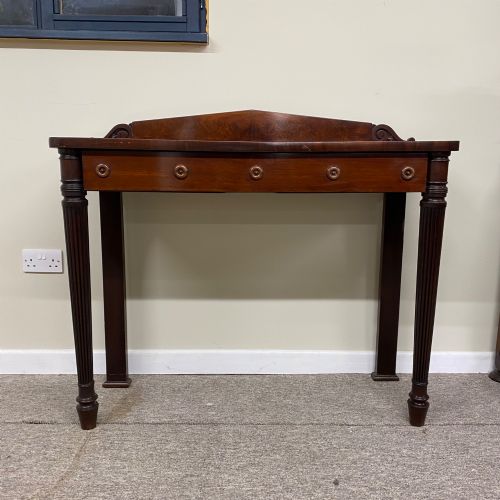
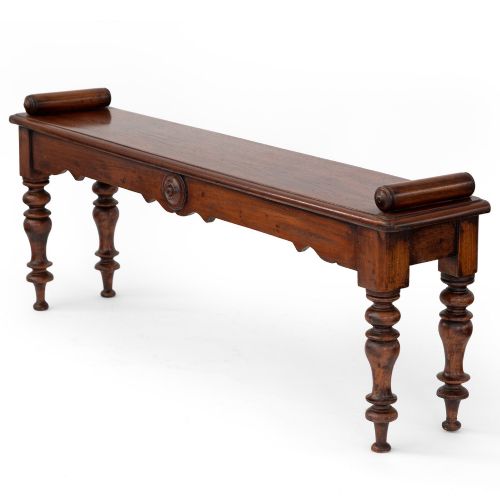
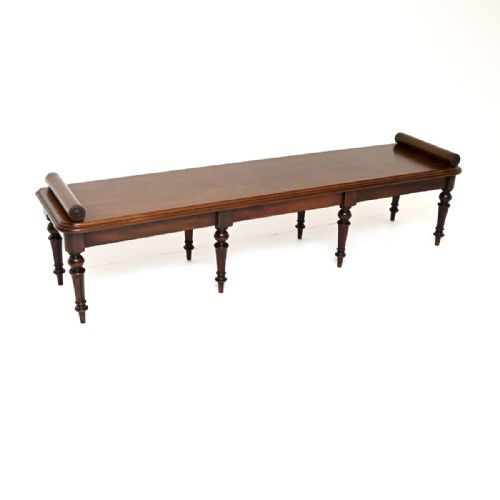
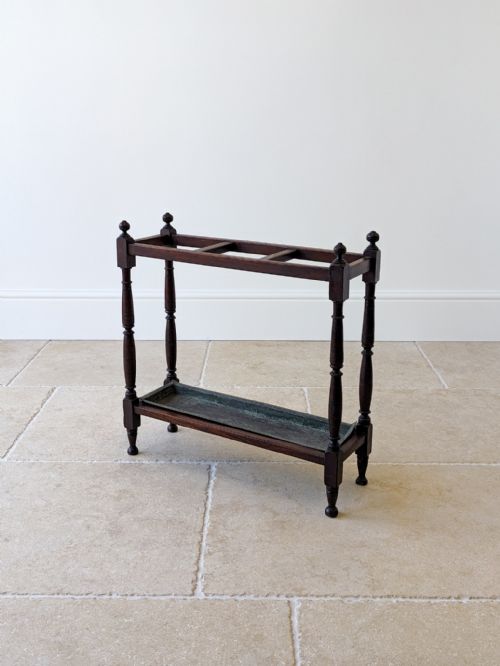
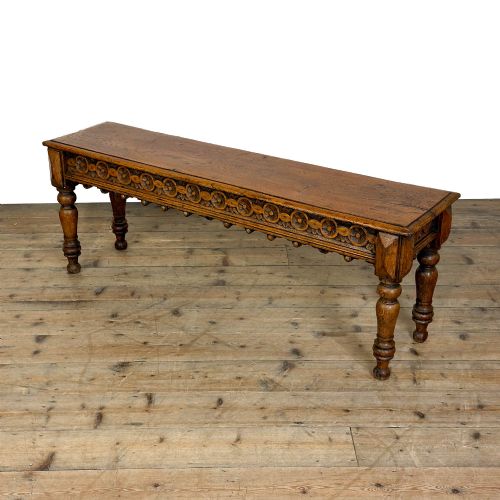
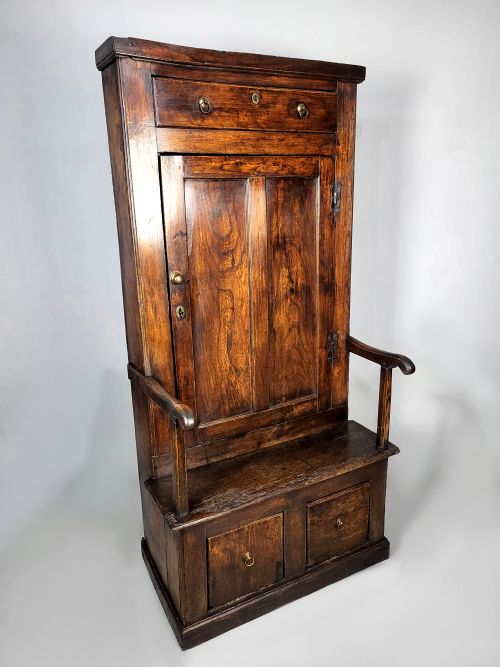
Hallway wood furniture brings together practical entrance pieces ranging from the nineteenth century through to the art deco period. Buyers encounter forms such as hall stands, benches, settle seats, console tables, and umbrella stands designed to handle coats, hats, and boots.
The selection on this page leans heavily into nineteenth-century Victorian and Edwardian examples constructed from timber, oak, and mahogany. These functional items reflect the domestic requirements of past households needing dedicated spaces near the front door.
Pieces vary from narrow console tables and compact window seats to elaborate hall stands combining mirror glass, brass hooks, and umbrella compartments. Each form addresses specific spatial and organizational needs within an entrance hall.
Materials and construction methods
Cabinet makers utilised dense hardwoods including mahogany, oak, walnut, and rosewood, often highlighting figured grain patterns on flat surfaces and console tops. Structural elements frequently incorporate secondary timbers, while decorative details rely on carving, panelling, and applied mouldings.
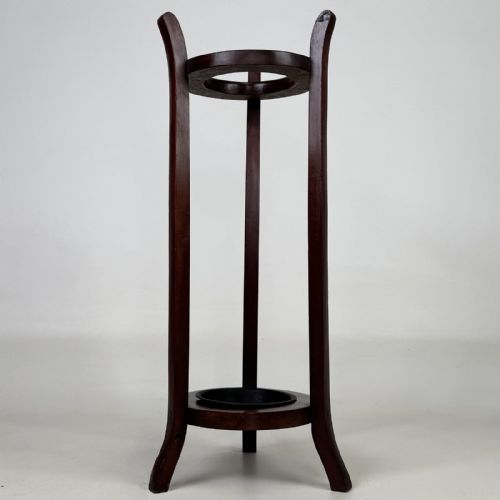
Hardware additions such as brass coat hooks, metal umbrella drip trays, and glass mirror plates complement the wooden structures. Construction techniques range from traditional joinery in seventeenth to nineteenth-century seating to bentwood shaping in later hatstands.
Hallway Wood Furniture Retail Price Guide 2026
Typical asking prices for hallway wood furniture among the pieces listed under this phrase on Sellingantiques today, from the lower quarter to the upper quarter. They describe what is for sale here now, not the wider market.
Listings span centuries from the seventeen-hundreds through the art deco period, featuring oak, mahogany, walnut, brass, marble, and glass.
Distinctions in quality
Quality in hallway wood furniture rests upon the selection of timber, such as heavily figured mahogany or solid carved oak, matched with competent joinery. The crispness of floral carving, the integration of auxiliary materials like marble or brass, and the retention of original hardware separate standard items from superior pieces.
Proportion and scale dictate the success of entrance furniture, with narrow-profile console tables and neatly proportioned hall benches commanding attention for their utility in restricted spaces. Pieces bearing maker stamps or estate labels demonstrate documented workshop origins that elevate their standing.
Druce and Co·Fortnum and Mason·Strahan and Co
The Hallway Wood Furniture Glossary
- Hall Stand
- A multi-functional entrance piece combining coat hooks, a mirror, umbrella compartments, and a small bench or glove drawer.
- Settle
- A wooden wooden bench featuring a high panelled back and enclosed storage beneath the seat, designed to block entrance draughts.
- Console Table
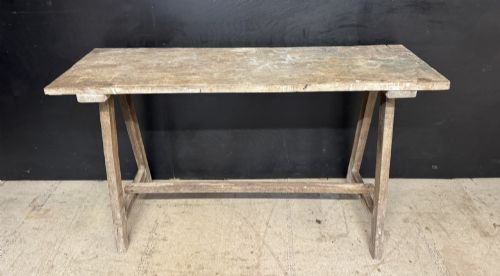
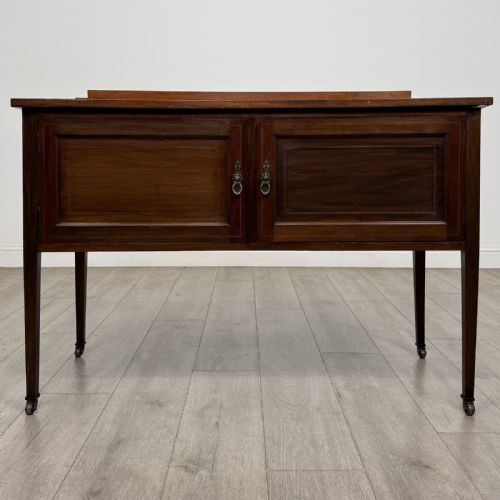
- A narrow table supported against a wall, frequently utilised in hallways and entrance spaces beneath a mirror.
- Stick Stand
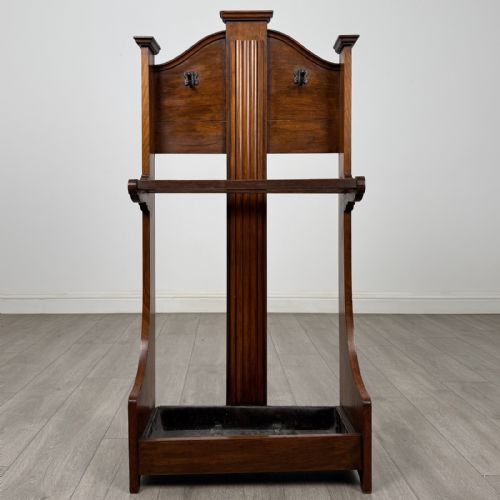
- A dedicated piece or compartment designed specifically for holding walking sticks, canes, and umbrellas near a doorway.
- Window Seat
- A long bench or seat designed for domestic placement, often adapted as hallway seating in nineteenth-century homes.
Hallway Wood Furniture: Frequently Asked Questions
What pieces count as hallway wood furniture?
This category covers practical wooden items made for entrance spaces and lobbies, including benches, settle seats, console tables, hatstands, and umbrella racks.
Most surviving examples date from the Victorian and Edwardian eras, constructed primarily from mahogany, oak, and walnut.
How were hall stands used historically?
Victorian and Edwardian households used hall stands as central stations for outdoor wear, letting visitors hang coats, place hats upon pegs, and store walking sticks in dedicated wells.
Many incorporated small trays for visiting cards and central mirrors for last-minute checks before opening the front door.
How do I fit a console table in a narrow hall?
Buyers select narrow-proportion console tables specifically designed to sit flat against entrance walls without blocking thoroughfares or impeding doors.
These slim tables provide a surface for lamps, keys, and decorative items while preserving floor space in compact hallways.
How can I tell Victorian oak from Edwardian oak?
Victorian oak pieces often display heavier proportions and deeper, more elaborate carving influenced by gothic or revival styles.
Edwardian oak furniture tends towards lighter construction with simpler floral carving and practical integration of compartments for modern umbrella storage.