
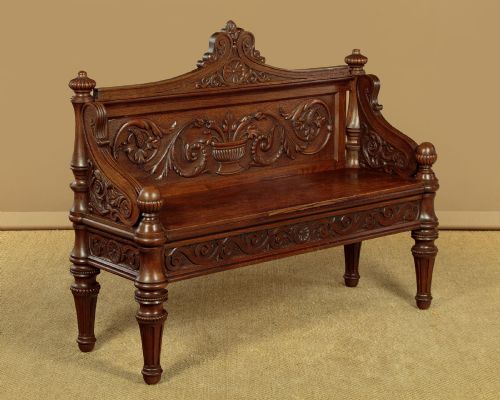
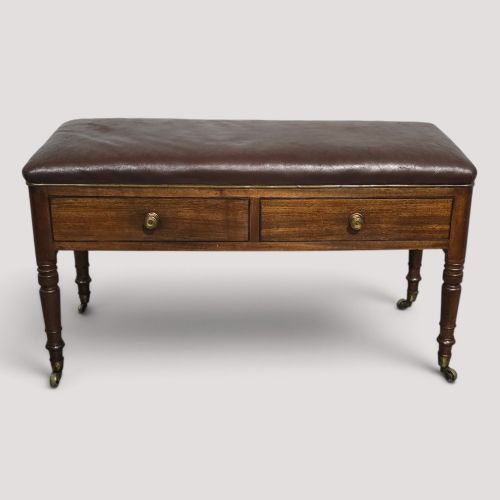
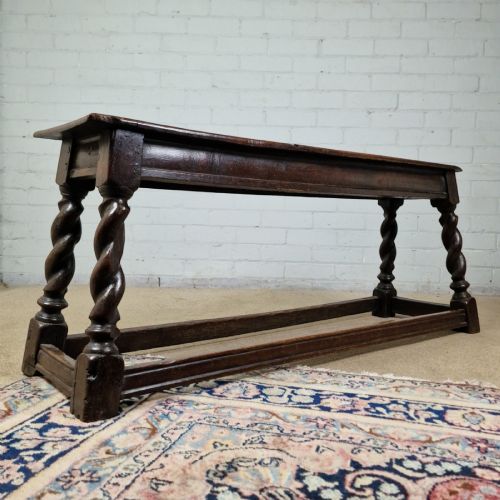
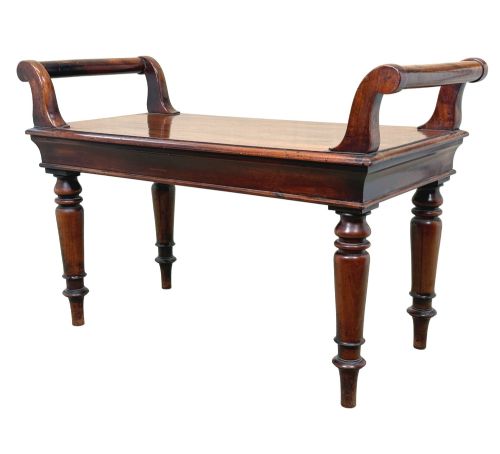

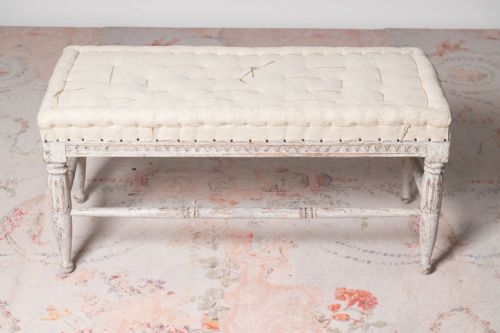
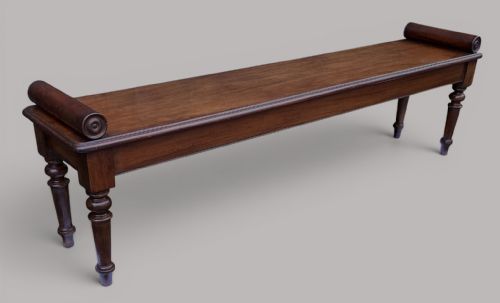

Hallway Window Seat Bench
These hallway window seat bench pieces combine seating with architectural placement, drawing on centuries of cabinet-making to furnish transitional spaces.
Hallway Window Seat Bench
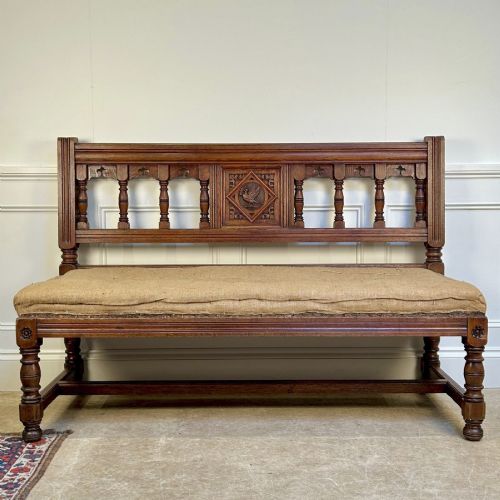
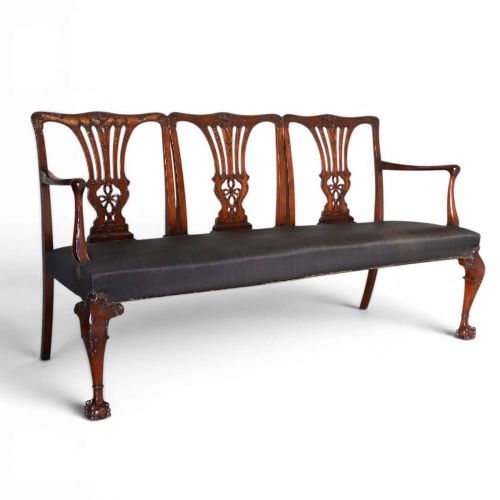
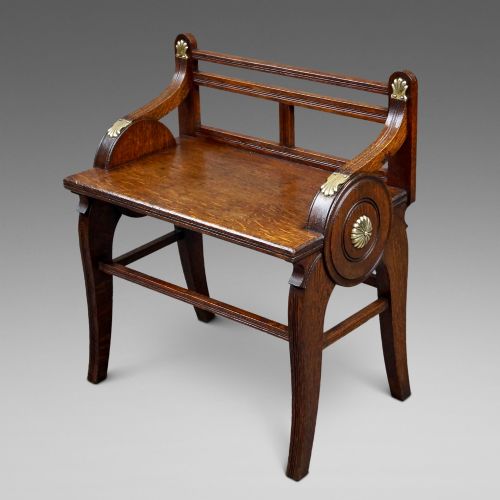
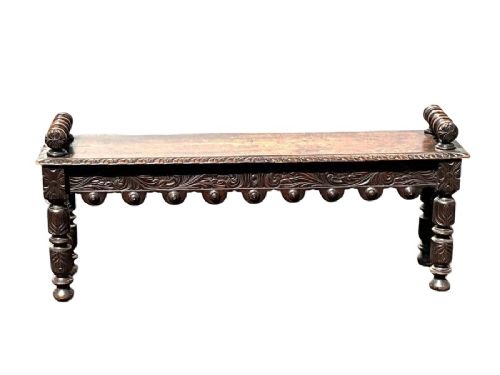
A hallway window seat bench brings together seating designed for corridors, recesses, and light-filled sills across diverse historical periods. Pieces range from long oak and mahogany forms dating to the eighteenth century through to Victorian and Edwardian examples fashioned in walnut and inlaid woods.
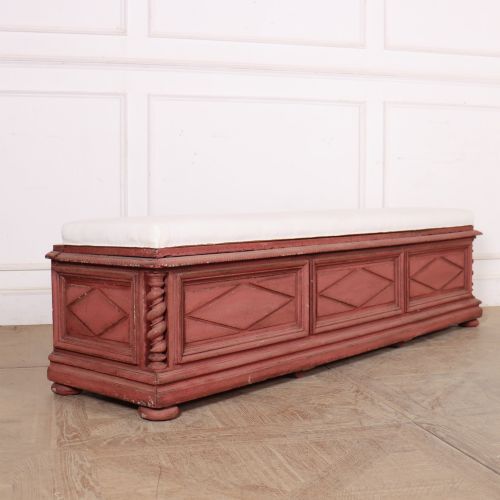
Makers and workshops adapted these seats into various configurations, including duet stools, long benches, settees, and boot stores with upholstered or carved wooden tops. Continental European examples in French walnut and Italian painted finishes appear alongside British styles spanning Jacobean revival to Arts and Crafts.
The inventory on this page centres primarily on nineteenth-century and early twentieth-century creations, reflecting how domestic architecture evolved to incorporate specialised seating in hallways and beside windows.
Quality and Connoisseurship
The standard of a hallway window seat bench rests upon the crispness of its woodwork, the integrity of its timber frame, and the pedigree of its maker or workshop origin. Pieces bearing documented signatures or attributions to prominent cabinet-makers command distinct recognition among collectors.
Execution of carved details, the choice of figured mahogany or walnut veneers, and the quality of subsequent upholstery choices dictate the distinction between standard utilitarian seating and high-status cabinet work.
Listings feature oak, mahogany, and walnut woods alongside upholstered fabric and brass mountings across multiple historical periods.
GIllows·Jas Shoolbred·James Shoolbred & Co.
The Hallway Window Seat Bench Glossary
- Window Seat
- A long bench or stool designed specifically to fit the architectural recess of a window. These forms often feature upholstered tops or padded ends for comfortable lounging.
- Duet Stool
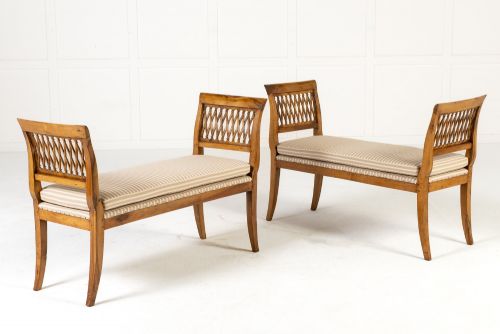
- An extended stool or bench intended to accommodate two people simultaneously. They frequently appear in nineteenth-century walnut and mahogany configurations.
- Hall Bench
- A rigid wooden or upholstered seat placed in an entryway or hallway for temporary seating. Many incorporate storage facilities or decorative carved backs.
- Chippendale-Style
- A design vocabulary characterised by intricate fretwork and flowing carved motifs derived from eighteenth-century pattern books. Edwardian iterations frequently adopted these elements on chair and settee backs.
- Brass Mounted
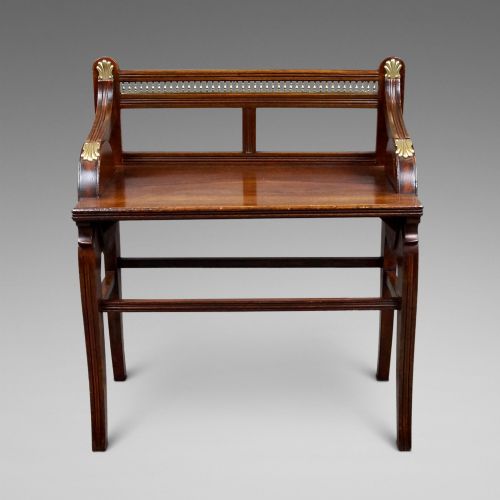
- Furniture enhanced with decorative or functional fittings made from brass. Workshops utilised these mounts to secure joints or accent structural timbers.
Hallway Window Seat Bench: Frequently Asked Questions
Where should I place a hallway window seat bench?
These pieces suit transitional spaces such as long corridors, entrance halls, or beneath large architectural windows where extra seating is required. Their narrow proportions allow them to fit against walls without blocking thoroughfares.
Consider the surrounding interior style when positioning the bench, as pieces range from dark oak revival designs to inlaid Edwardian mahogany frames that complement lighter decorative schemes.
How do I identify a Victorian window seat?
Victorian examples frequently employ dense timbers like walnut and mahogany, often featuring heavier turned legs, scroll ends, or deep upholstery. Construction methods from this period include machine-assisted joinery alongside hand-carved detailing.
Look for proportions and wood patination consistent with the mid to late nineteenth century, alongside stylistic revivals such as Jacobean or Gothic influences.
Can I use a hall bench as a window seat?
Many historical hall benches and window seats share similar linear dimensions, making them interchangeable depending on room layout. Benches originally built for entryways often feature sturdy wooden tops or storage compartments.
Upholstered versions can be placed in front of windows to create a comfortable resting spot, provided the depth of the seat matches the window recess.
What is a duet stool?
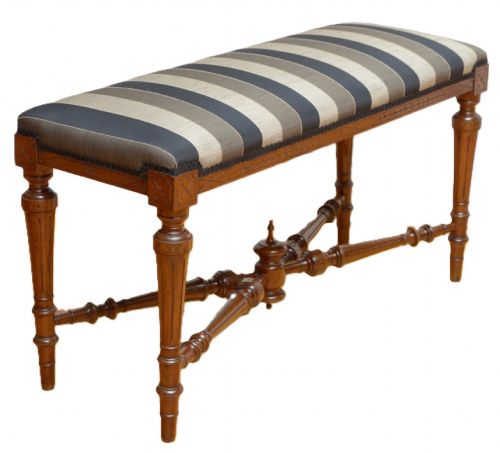
A duet stool is an elongated seat originally created to accommodate two people side by side, frequently found in nineteenth-century domestic interiors. They often double as window seats or end-of-bed furniture due to their generous length.
These pieces typically showcase high-quality timber frames, such as walnut or mahogany, paired with padded upholstery surfaces designed for extended sitting.