




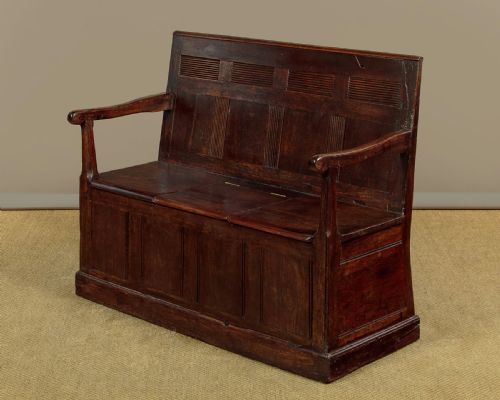
Hallway Box Seat
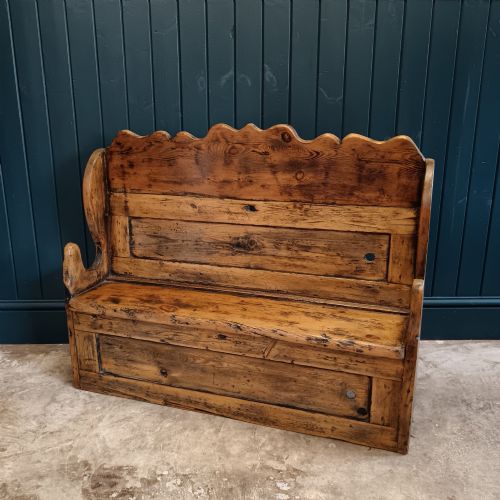
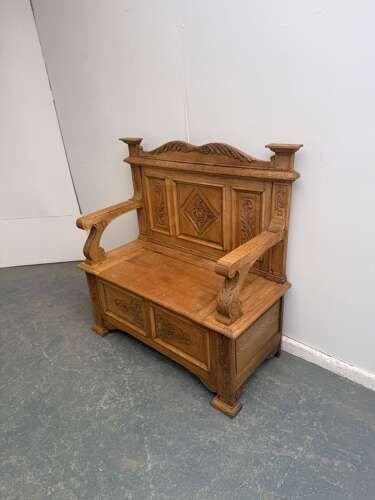
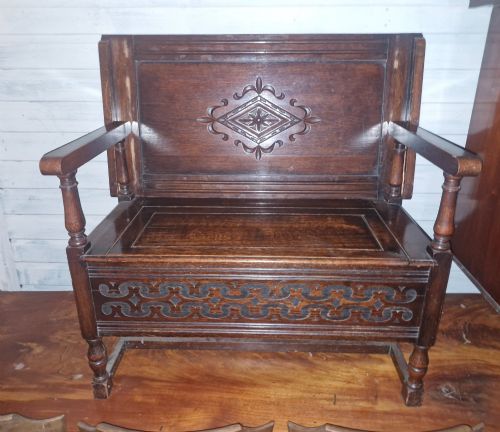
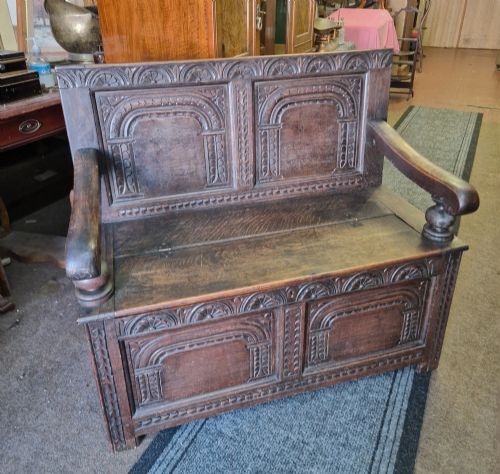
A hallway box seat brings heavy timber storage and a practical perch together right inside the front door.
Hallway Box Seat
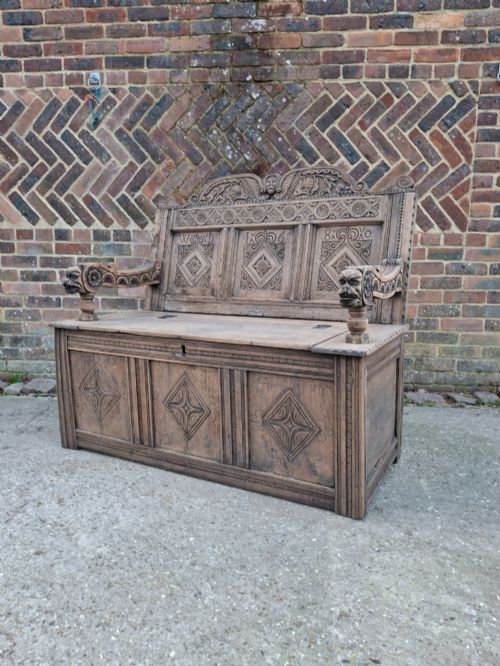
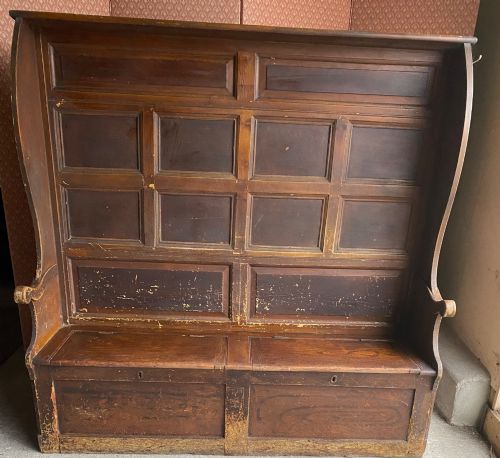
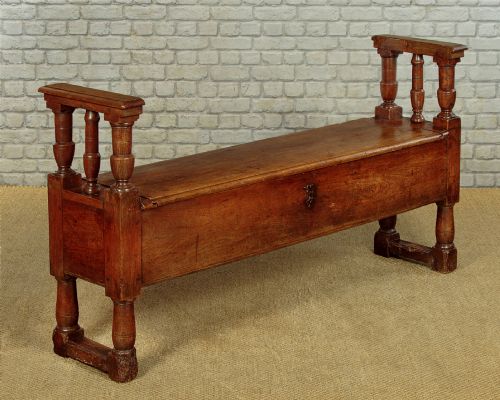
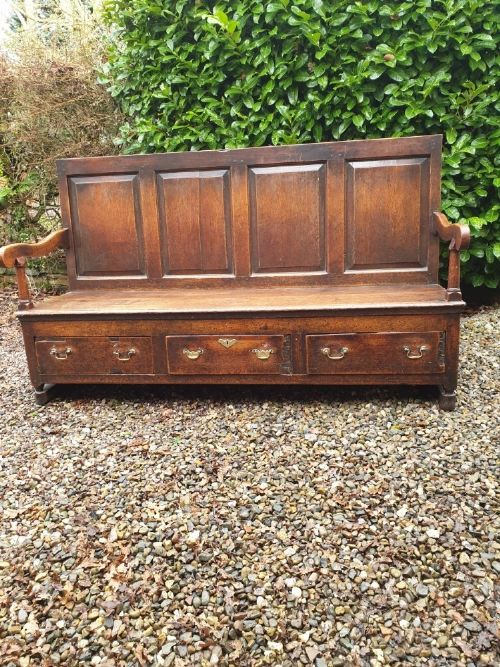
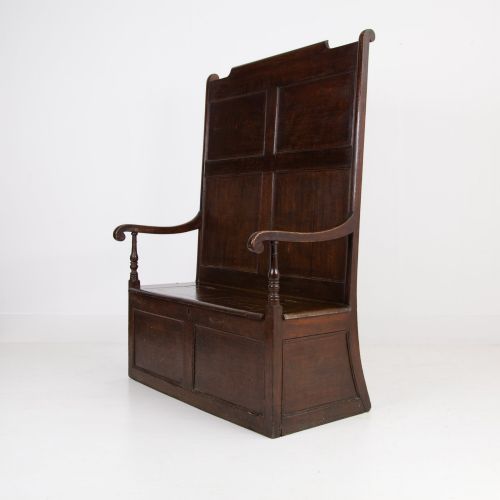
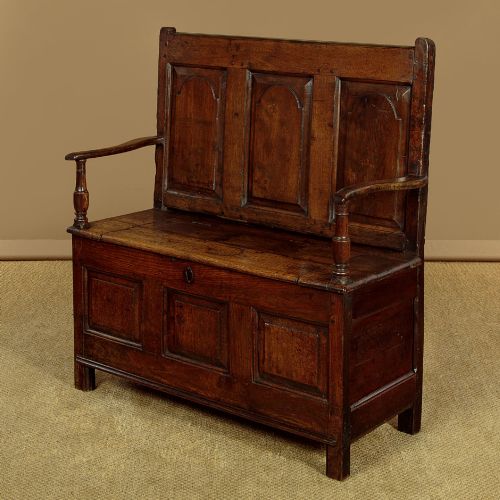
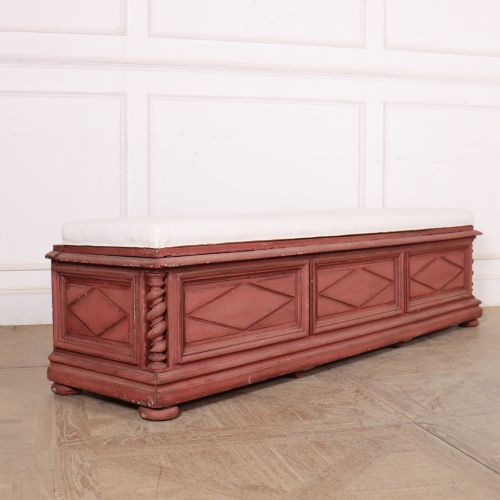
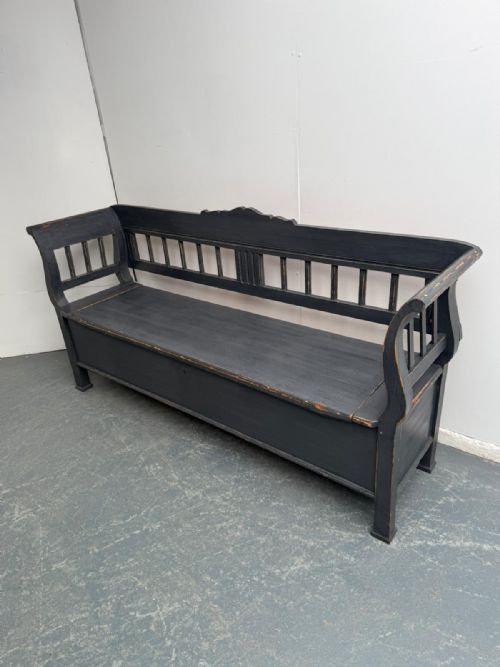
A hallway box seat combines the function of a bench with a concealed compartment beneath the lid, serving as a practical entranceway addition. These pieces appear in forms such as settles, monks benches, and storage benches across domestic spaces.
The selections span significant historical periods, running from the seventeenth century through Georgian and Victorian eras up to the early twentieth century. Regional examples include Welsh, Hungarian, Swedish, and Colonial Indian origins alongside English country workshops.
Oak and pine dominate the structures, often paired with elm, mahogany, or painted finishes to suit the interior tastes of each period. Buyers encounter both robust vernacular seating and pieces featuring revival detailing like Jacobean carving or Art Nouveau inlay.
Materials and Joinery
Makers relied primarily on solid timbers like oak, pine, and elm, selecting durable woods capable of withstanding heavy daily use in narrow entrance spaces. Panels were frequently joined to form deep, hinged storage chests that double as structural bases for the seat.
Surface treatments vary from waxed natural grains to original painted finishes in grey, black, or Italian palettes. Decorative touches include carved details such as Green Man motifs, marquetry inlay, and panelled construction executed with traditional hand tools.
Hallway Box Seat Retail Price Guide 2026
Typical asking prices for hallway box seat among the pieces listed under this phrase on Sellingantiques today, from the lower quarter to the upper quarter. They describe what is for sale here now, not the wider market.
Regional variants range from Welsh and Hungarian pine benches to English oak settles and Colonial Indian carved hardwood storage seating.
Distinguishing Quality in Construction
Superior examples display tight joinery and heavy timber scantlings that maintain structural rigidity across centuries of lifting seats and heavy sitting. The integration of the hinged top reveals careful woodworking where hinges and panel alignments operate smoothly.
Artistry in carving and the preservation of original painted surfaces elevate certain pieces above utilitarian storage benches. The character of the timber grain, whether waxed oak or aged pine, dictates the visual weight and presence of the furniture.
The Hallway Box Seat Glossary
- Settle
- A wooden bench with a high back, solid arms, and a box compartment beneath the seat for storage. This form kept drafts away in historical hallways and kitchens.
- Monks Bench
- A dual-purpose seating form featuring a hinged back that folds down to create a table surface over the box seat base.
- Coffer
- A large wooden chest used historically for storage, which serves as the structural foundation for many hallway box seats.
- Vernacular
- Furniture built by regional craftsmen using local traditions and native timbers rather than following strict classical academic designs.
Hallway Box Seat: Frequently Asked Questions
What is a hallway box seat?
A hallway box seat is a traditional bench featuring a built-in storage compartment hidden beneath a hinged lid, designed specifically for narrow entrance spaces.
These versatile pieces provide a place to sit while putting on shoes alongside concealed storage for boots, scarves, and household items.
How do I date a wooden box settle?
Dating relies on examining the timber species, tool marks, joinery methods, and stylistic details such as Jacobean carving or Art Nouveau inlay.
Earlier seventeenth and eighteenth-century examples often feature heavy oak construction with peg joinery, while Victorian and Edwardian pieces show softer pines or machine-finished hardwoods.
Were these seats used in specific regions?
Yes, box settles and benches were produced across various British regions like Wales and England, as well as continental Europe including Hungary, Sweden, and Italy.
Regional workshops utilised native woods such as local pine, elm, or oak and applied distinctive regional finishes like original painted surfaces.
How should I care for an antique wooden bench?
Preserving these pieces involves keeping them away from direct heat sources and sudden humidity changes that cause solid timber to warp or split.
Regular application of suitable wax helps maintain the lustre of historical waxed oak and pine surfaces without damaging original patinas.