


Hallmarked Sterling Silver Napkin Ring
A hallmarked sterling silver napkin ring brings small-scale metalwork to the dining table, offering personal marks and period weight.
Hallmarked Sterling Silver Napkin Ring
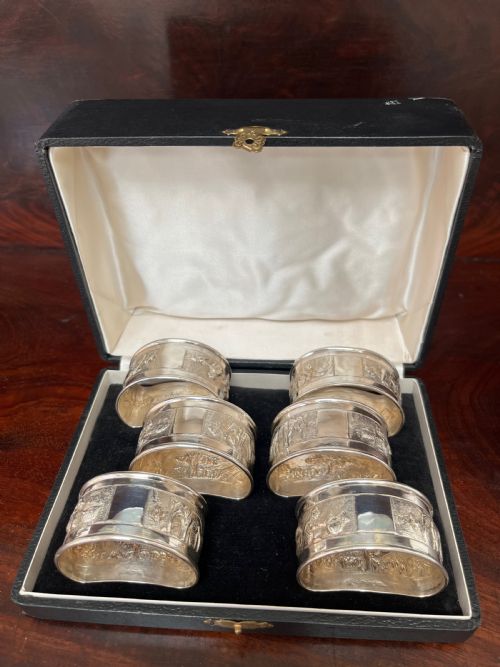
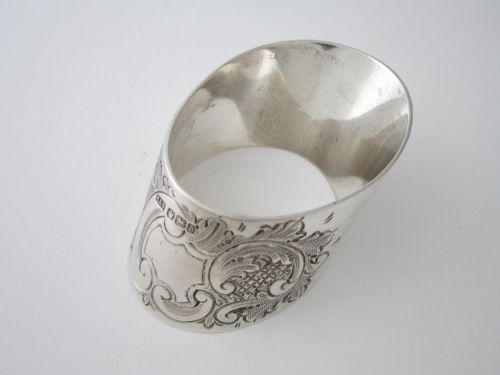
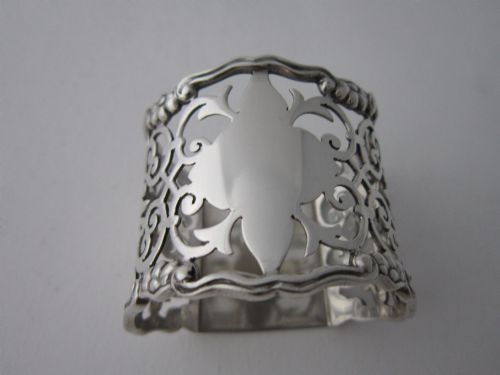
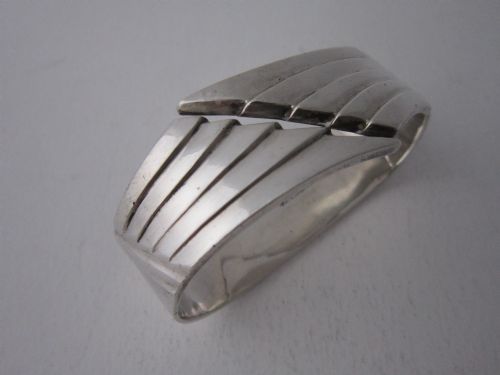
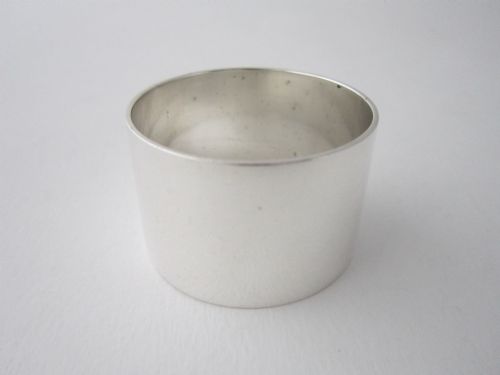
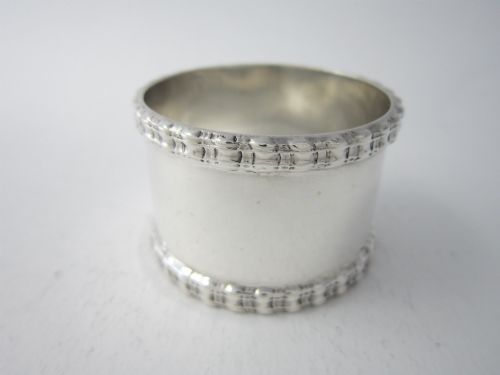
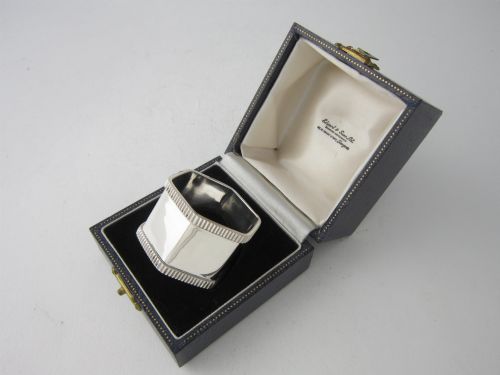
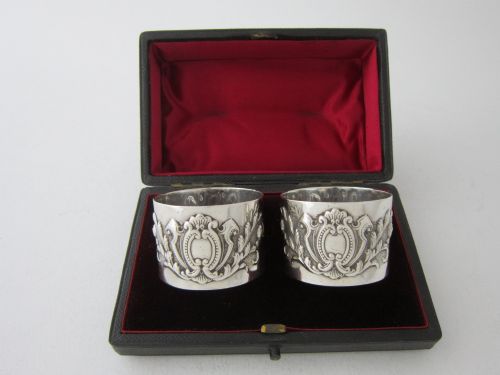
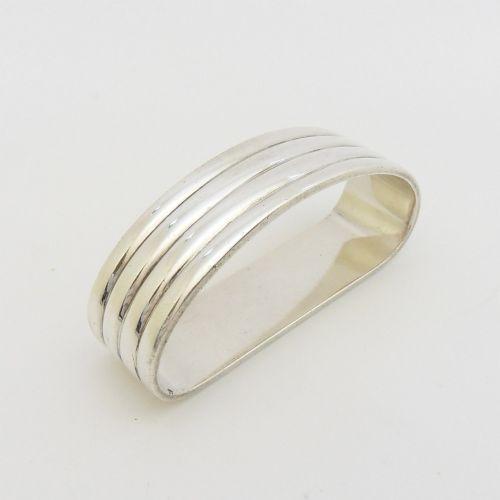
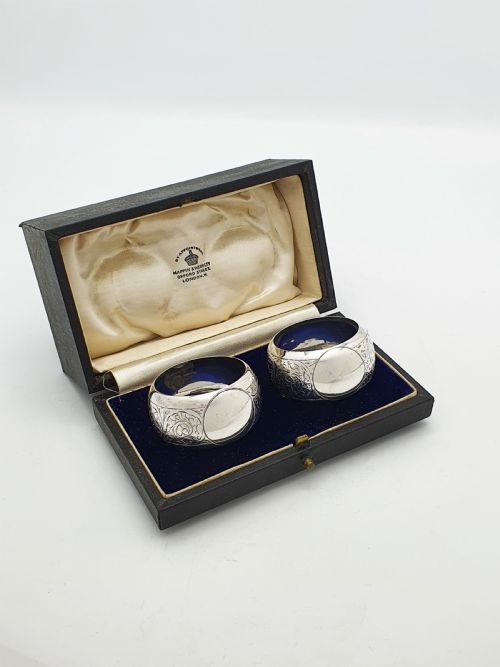
When you search for a hallmarked sterling silver napkin ring, you encounter small cylindrical table accessories designed to mark individual places at dinner. The pieces on this page span from Victorian and Edwardian examples to George V, Art Deco, and Mid-Century Modern designs, appearing singly, in pairs, or within fitted sets. Many arrive complete with original fitted presentation boxes lined in silk or velvet.
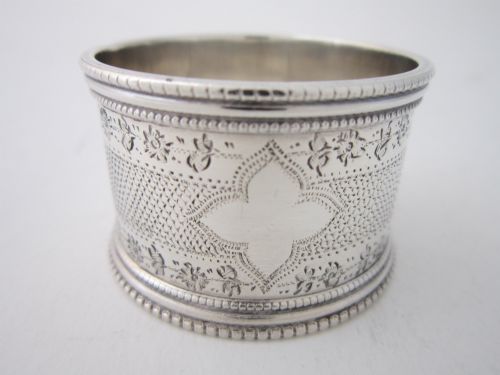
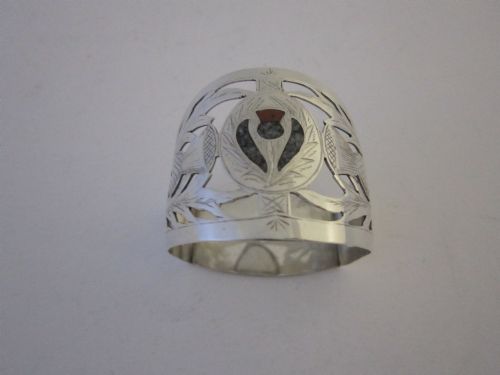
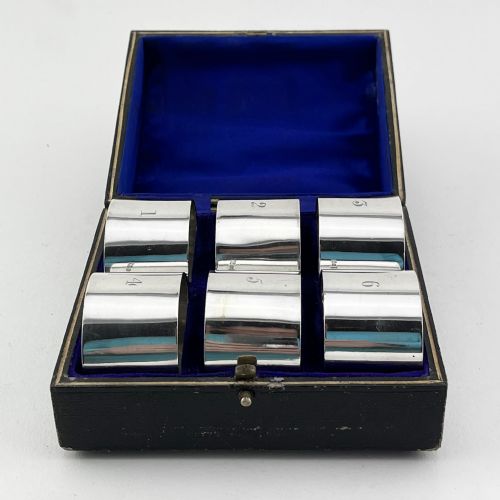
The George V era provides the largest share of individual items, often marked by heavy gauges of metal and restrained cylindrical forms. Alongside single items, you find cased sets of six, sometimes accompanied by associated christening sets that include matching spoons and forks. Agate inlay and aesthetic movement motifs occasionally appear alongside plain polished surfaces.
Materials and construction
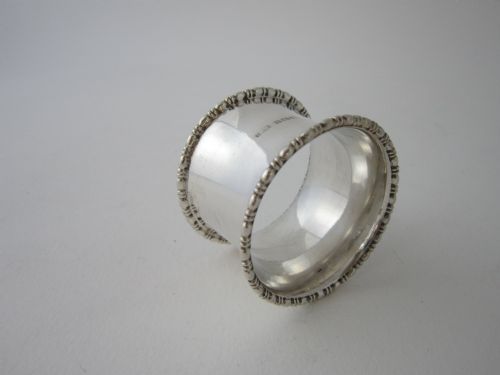
Makers formed these pieces from sterling silver, shaping sheet metal into hollow cylinders and reinforcing rims with applied wire or rolled edges. Goldsmiths and silversmiths utilised hammering, turning, and soldering techniques to achieve seamless joins before applying punch marks for assays and makers.
Original presentation housings utilise timber or card foundations covered in leatherette, leather, or velvet, lined internally with fitted silk beds to cradle individual items. Specific examples incorporate decorative stone panels such as agate directly into the silver body.
Listings feature hallmarked sterling silver napkin rings spanning the Victorian, Edwardian, George V, Art Deco, and Mid-Century Modern periods.
Assessing quality and manufacture
Substance separates ordinary examples from superior ones, visible in the thickness of the silver sheet and the physical weight of the piece in the hand. Substantial gauges prevent denting and maintain crispness in engraved monograms or border patterns.
The clarity and completeness of the hallmarks stamped into the metal dictate historical certainty, while the presence of a matching fitted box adds substantial context. Craftsmanship shows in the neatness of the soldered seam and the precision of any applied aesthetic decoration.
Georg Jensen·Tiffany and Co·Henry Wilkinson·C T Burrows and Sons·R E Stone
The Hallmarked Sterling Silver Napkin Ring Glossary
- Hallmark
- Official stamps struck into precious metal indicating the standard of purity, the assay office, and the year of manufacture. These marks provide the primary means for dating British silver.
- Sterling silver
- An alloy consisting of ninety-two point five percent silver and seven point five percent other metals, usually copper, chosen for durability. British sterling pieces carry the lion passant mark.
- Assay office
- An organisation charged with testing the purity of precious metal items and applying official hallmarks. Towns such as Birmingham, Sheffield, Chester, and London maintained distinct offices.
- Christening set
- A matched group of silver items, often comprising a napkin ring, spoon, and fork, presented as a gift to an infant. They frequently survive inside dedicated fitted boxes.
- Aesthetic design
- A nineteenth-century stylistic movement focusing on visual beauty rather than narrative meaning, often featuring stylised natural motifs. Pieces from this movement display non-traditional asymmetry.
Hallmarked Sterling Silver Napkin Ring: Frequently Asked Questions
How do I date a silver napkin ring?
Look for the date letter stamp within the cluster of hallmarks, which corresponds to a specific assay office year cycle. Comparing the shape and style of the piece against known periods like Edwardian or Art Deco helps confirm this date.
Assay marks also name the city where the testing occurred, narrowing down the origin of the maker. Combined with style evidence, these stamps establish the exact decade of production.
Are cased sets original to the rings?
Fitted presentation boxes often retain the original retailer or maker details printed on the silk interior lining. Silk and velvet beds inside these leatherette or leather cases match the contours of the enclosed items.
Matching numbers stamped onto the rings themselves sometimes correspond to slots within the box. This confirms the set was retailed and kept together from the start.
What is the difference between silver and sterling silver?
Pure silver is too soft for daily use as tableware, so silversmiths alloy it with copper to create sterling silver. This standard maintains structural rigidity while retaining the bright reflective quality of the precious metal.
British hallmarked sterling must meet the legal standard indicated by the lion passant mark. Unmarked items or those labelled simply as silver lack this official quality guarantee.
How should I clean antique silver napkin rings?
Apply a mild, non-abrasive silver polish with a soft cloth to remove tarnish without wearing down engraved details. Rinse the metal thoroughly in warm water and dry it immediately with a lint-free cloth.
Avoid aggressive dipping solutions that can strip away the dark oxidation inside engraved lines. Proper storage in dry conditions prevents rapid retarnishing after cleaning.
How were napkin rings used historically?
Families used individual napkin rings at the dinner table to identify and store linen napkins between weekly washings. Each household member kept their own designated ring marked with initials or numbers.
This domestic practice kept the dining room organised during multi-course meals. Boxed sets were frequently given as wedding presents or christening gifts.