


Cased Sterling Silver Napkin Ring
A cased sterling silver napkin ring brings fitted presentation and bright metal to the dining table.
Cased Sterling Silver Napkin Ring
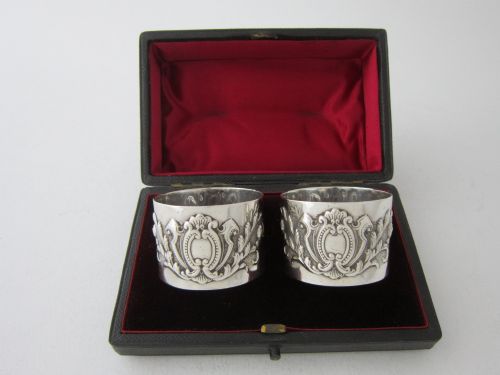
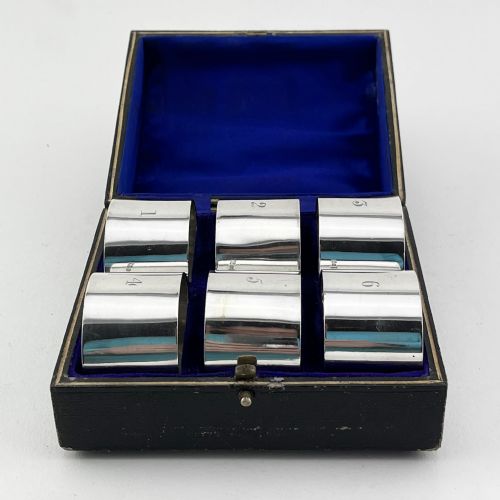
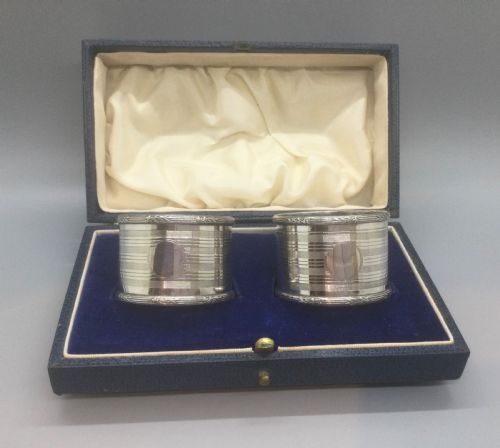
A cased sterling silver napkin ring is a solid metal table accessory presented in a fitted protective box, often lined with silk, satin, or velvet. These items frequently appear as pairs or larger sets intended for family dining or formal presentation.
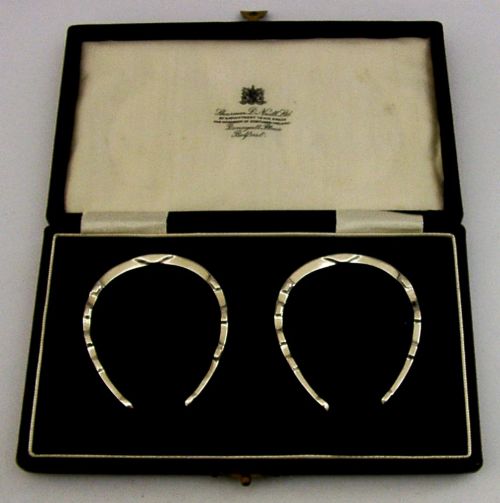
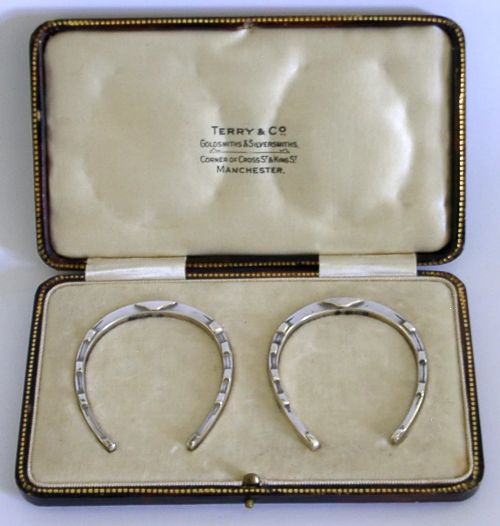
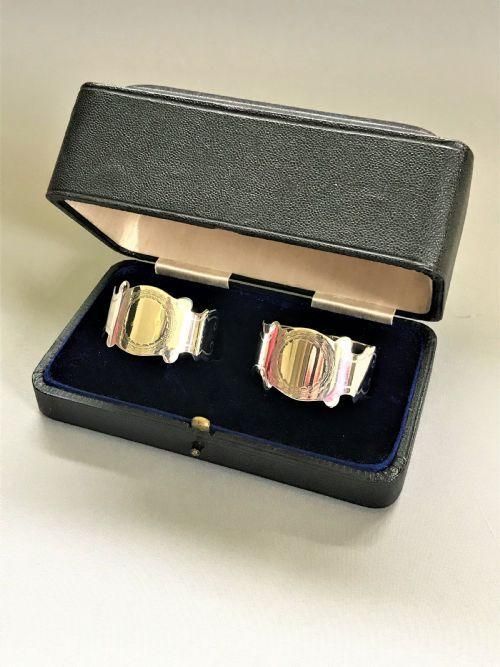
The pieces on this page span the Victorian, Edwardian, George V, and Art Deco periods, stretching from the late nineteenth century into the mid-twentieth century. Alongside standard circular forms, the selection includes decorative motifs such as horse shoes, belt designs, ferns, pine cones, and occasional novelties like chickens.
Christening sets also appear, grouping a napkin ring with matching silverware items inside a dedicated leatherette or fabric-covered case. Most surviving examples originate from English silversmiths working in major assay towns like Birmingham and Chester.
Materials and Construction
The primary material is sterling silver, shaped through stamping, casting, or hammering before receiving engraved, pierced, or embossed surface detailing. Many pieces incorporate applied motifs or enamel work to create varied textures and visual depth.
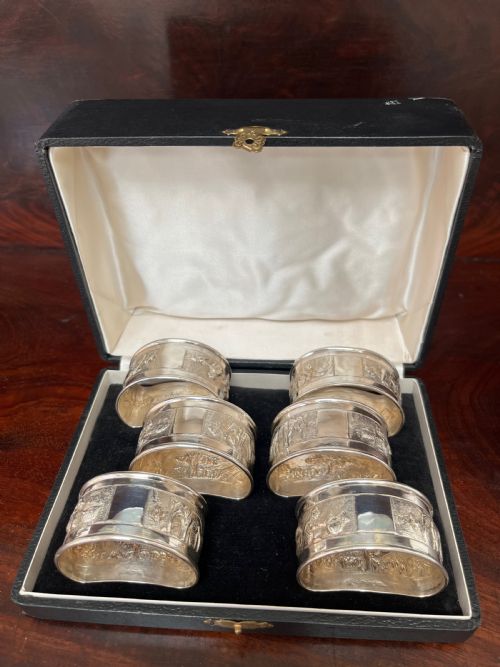
The accompanying boxes utilise a rigid outer shell of leather, leatherette, or card, lined internally with soft fabrics such as silk, velvet, or satin to cushion the metalwork. Fitted interior bases hold each individual ring securely in place.
Several boxes still retain their original fabric linings designed to cradle tiny silver horse shoes and chickens.
Assessing Quality and Distinction
Quality rests upon the weight of the sterling silver and the crispness of the chasing or engraving, where deep, hand-finished motifs surpass light machine pressing. The complexity of the design, such as naturalistic pine cones, ferns, or specialised animal forms, elevates the standard of craftsmanship.
The preservation and original pairing of the fitted case heavily influence the overall standard. Boxes featuring intact silk linings, functional clasps, and well-preserved outer coverings indicate careful preservation alongside the silver within.
C.T. Burrows & Sons·Mappin & Webb·Asprey & Co.
The Cased Sterling Silver Napkin Ring Glossary
- Sterling silver
- A standard alloy consisting of ninety-two point five percent silver and seven point five percent other metals, chosen for durability in tableware. British pieces typically bear hallmarks to verify this standard.
- Assay office
- An official body responsible for testing the purity of precious metals and stamping them with statutory hallmarks. Towns such as Birmingham and Chester maintained prominent offices for this work.
- Leatherette
- A simulated leather material manufactured from fabric bases coated with plastic or polyurethane. It appears frequently as the protective outer covering for mid-period presentation boxes.
- Chasing
- A metalsmithing technique where designs are hammered into the front surface of the silver without removing metal. This method creates raised decorative contours on napkin ring bodies.
- Christening set
- A curated collection of silver items, including napkin rings and matching cutlery, presented together in a fitted box to mark a birth or baptism.
Cased Sterling Silver Napkin Ring: Frequently Asked Questions
What periods do these cased sets come from?
The pieces span from the late nineteenth century through the Edwardian era and the reign of George V, reaching into the Art Deco period and mid-twentieth century.
Victorian and Edwardian examples are particularly common, alongside later George V sets and occasional 1950s productions.
Are these napkin rings sold individually or in sets?
They appear in various configurations, ranging from single cased items to pairs, sets of four, and complete sets of six.
Christening sets also combine a napkin ring with complementary silver pieces within a single fitted presentation box.
What materials line the presentation boxes?
The interior beds of the cases are typically lined with soft fabrics designed to protect the polished metal surface.
Silk, satin, and velvet are standard lining materials, paired with rigid outer shells made of leather or textured leatherette.
How do I identify the maker or date?
British sterling silver pieces carry standard hallmarks stamped directly into the metal, denoting the assay office, the silver standard, and the date letter.
Maker's marks, consisting of initials or names such as Mappin & Webb or Asprey & Co., are stamped alongside these assay symbols.
What decorative motifs are found on the rings?
Designs range from plain polished bands to elaborate embossed patterns inspired by nature and fashion.
Common decorative themes include horse shoes, belt buckles, fern leaves, pine cones, and rarer novelty animal shapes like hens.